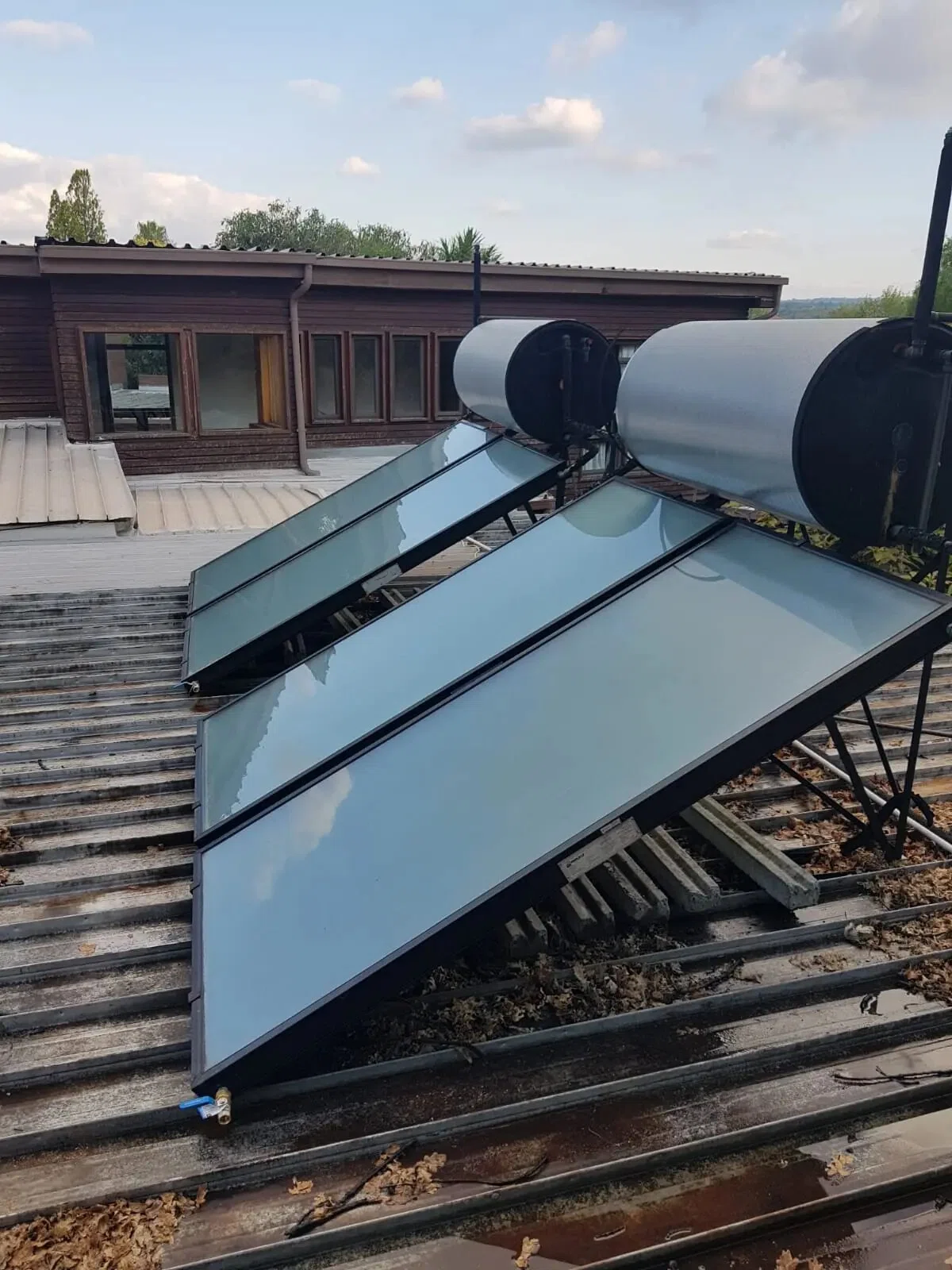
Solar geysers combine a storage cylinder with collectors, circulation components and often electrical backup. Maintenance therefore involves more than the tank alone. Reduced temperature, leaks, pump faults or damaged collectors can lower performance and increase backup electricity use.
Start here
Solar output changes with season, weather and household demand. Compare current performance with similar conditions rather than expecting identical temperatures every day.
How to recognise the problem
- Hot water is consistently cooler than usual.
- Electrical backup runs more often.
- Leaks appear at collectors or roof pipework.
- A circulation pump is noisy or inactive.
- Collector glass is damaged or heavily soiled.
- Pressure or temperature warnings occur.
Common causes
- Scale or sediment.
- Pump or controller faults.
- Air locks or circulation problems.
- Damaged insulation.
- Collector leaks or broken glazing.
- Valve and pressure-control problems.
What you can safely check yourself
- Observe controller readings.
- Check for visible roof leaks from ground level.
- Monitor backup electricity use.
- Keep accessible collector surfaces clear only where safe and permitted.
- Record changes in performance.
What you should never do
- Do not climb onto a wet or steep roof.
- Do not open pressurised solar loops.
- Do not bypass temperature or pressure protection.
- Do not mix incompatible heat-transfer fluids.
When to call a plumber
Arrange service when performance drops persistently, collectors leak, pumps fail, electrical backup behaves abnormally or the system has not been inspected for an extended period.
How we can help
A technician checks collectors, circulation, pumps, sensors, valves, insulation, pressure and the storage cylinder. The system is tested in solar and backup modes, and damaged or inefficient components are repaired or replaced.
Reducing the chance of another problem
- Inspect after severe weather.
- Maintain roof insulation and pipe protection.
- Service pumps and controllers as specified.
- Keep records of fluid and component changes.
- Repair small collector leaks promptly.
Frequently asked questions
How often should a solar geyser be serviced?
Intervals depend on system type, manufacturer guidance, water quality and local conditions.
Why is the electric backup using more power?
Poor solar circulation, dirty or damaged collectors, control faults or seasonal conditions may be reducing solar contribution.
Can hail damage a solar geyser?
Yes. Collector glazing and exposed components can be damaged and should be inspected after severe hail.
Want practical advice on solar geyser maintenance?
Send details about solar geyser maintenance and our team will recommend the most appropriate service.