Home/200 Litre Evacuated Tube Solar Geyser Conversion
200 LITRE SOLAR GEYSER CONVERSION SYSTEMS
200 Litre Evacuated Tube Solar Geyser Conversion
Professional 200 Litre Evacuated Tube Solar Geyser Conversion with careful assessment of your existing geyser, roof layout, pipework and household hot-water requirements. We explain the recommended system and provide a clear quotation before work begins. We offer free call-out and quotation before work starts, so you always know work and price upfront.
We consider your hot-water use, existing geyser, collector space and backup heating together. You get a quotation for a compatible conversion, installation or repair, with the plumbing, controls and agreed electrical work clearly set out.
Will a solar conversion work with my existing geyser?
That depends on the cylinder, available roof space and connection layout. A site assessment can establish whether the existing equipment can be retained.
Will I still have hot water on cloudy days?
It depends on the system and its backup heating. Ask how the proposed controls and backup would work for your household’s normal demand.
How do I choose a solar hot-water cylinder size?
Consider how many people use hot water, when they use it and what backup heating is available. Capacity alone doesn’t show whether the whole system suits the property.
Can a faulty solar geyser be repaired without replacing the panels?
Sometimes. Check whether the fault lies in the collector, cylinder, control, circulation or backup heater. The repair should address the affected part of the system.
What should a solar hot-water quote cover?
Ask about the collector, cylinder, mounting, pipework, controls and backup heating. Confirm which items will be reused and what access or electrical work is included.
Will my converted solar geyser still heat water during a power cut?
It depends on how the circulation pump is powered. A mains-only pump stops during an outage. A 12 V pump with its own solar panel and a charged battery can keep circulating when the controller calls for it. The electric backup element needs its own power supply to heat water during an outage.
Can I convert my 200 litre geyser if my roof gets frost?
Yes, if the proposed system is designed for frost and is compatible with your cylinder. Ask the installer to explain how the collector and exposed pipework will be protected and whether that protection depends on powered circulation.
What plumbing compliance paperwork should I ask for after the conversion?
Ask whether the installer will issue a PIRB Plumbing Certificate of Compliance for the solar water-heating work, and confirm before approving the quote when you’ll receive it.
◴
Fast ResponseHelp when it matters most.
24
Available 24/7Day or night, we’re ready.
◇
Trusted ApproachClear, honest and professional.
Capacity and household fit
Why Choose a 200 Litre Evacuated Tube Solar Geyser Conversion?
A 200 litre evacuated tube solar geyser conversion gives homeowners a practical way to reduce the electricity used for water heating without automatically discarding a serviceable geyser. The existing cylinder can often remain part of the system while a correctly sized evacuated tube collector uses available sunlight to provide much of the heat needed during the day. For family homes and households with higher daily hot-water requirements, this can be a sensible upgrade when the system is selected according to actual hot-water demand rather than capacity alone.
Evacuated-tube conversion options for your geyser
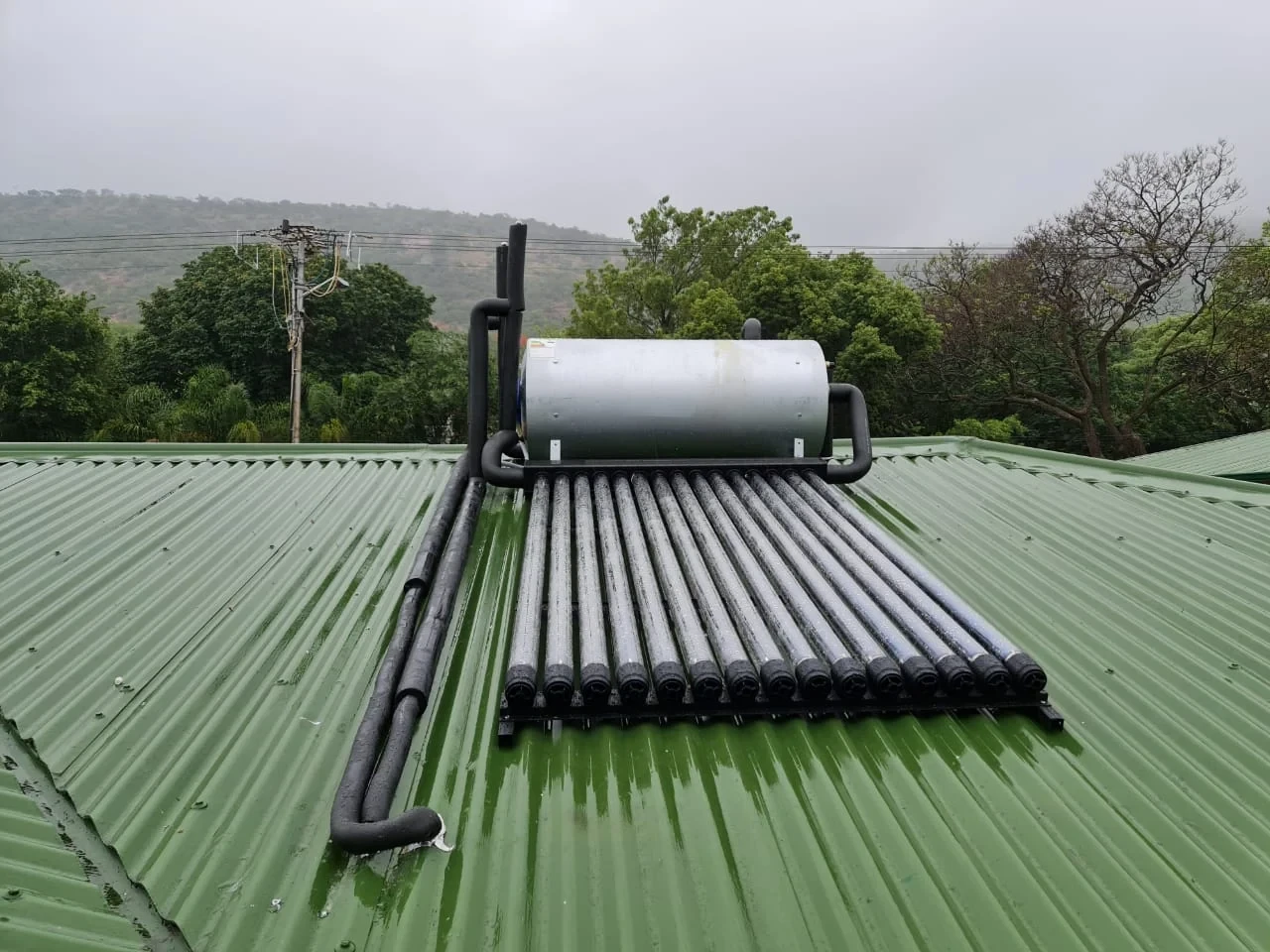
The photo shows an evacuated-tube collector below a horizontal cylinder, with insulated pipework running along the roof. When quoting a 200-litre conversion, we check whether your existing geyser can be reused and size the collector to suit your household’s hot-water demand.
Assessing the Existing Geyser Before Conversion
We inspect the existing geyser, roof position, pipe routes, water pressure and condition of the safety components before proposing an installation. If repairs or upgrades are required first, we explain them clearly. If the existing installation is unsuitable for installation, we say so rather than forcing an option that may not perform reliably.
How installation works
Is a 200 Litre Evacuated Tube Solar Geyser Conversion the Right Size for Your Household?
A 200 litre system is often considered for three or four people, depending on bathing habits and peak demand, but the correct choice depends on how and when hot water is used. Two households with the same number of occupants can have very different requirements. Long showers, simultaneous bathroom use, frequent laundry and visitors can increase demand, while careful water use may make the same capacity comfortable for a larger household.
Matching Capacity to Real Household Demand
We do not base a recommendation on household size alone. Our plumbers discuss daily routines, existing geyser recovery, available roof space and whether electrical backup will remain in use. This prevents undersizing, which can leave a family short of hot water, and oversizing, which can increase the initial cost without providing meaningful benefit.
Hot-Water Demand Matters More Than a Simple Headcount
Bathing habits, shower flow rates and the timing of hot-water use are often more important than the number of people in the home. We ask practical questions so the final recommendation reflects real demand rather than a generic capacity chart.
Planning for Seasonal Changes and Backup Heating
Solar contribution varies with weather, roof orientation and daily consumption. We explain how the electrical element or controller may support the system when solar input is lower, helping you understand both expected savings and normal backup operation.
Repairing a damaged evacuated-tube collector
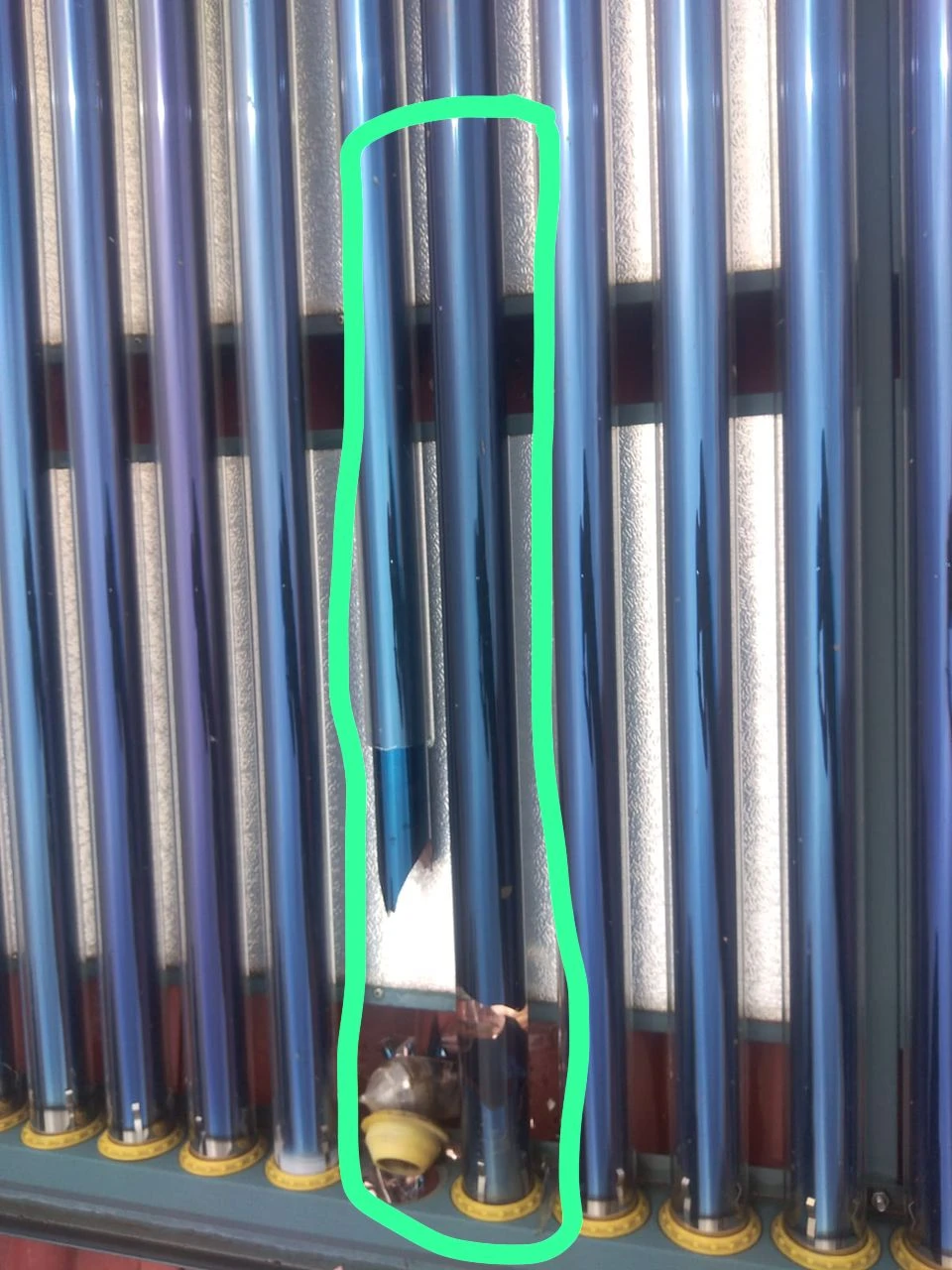
We repair damaged evacuated-tube systems as well as installing conversions. A broken glass tube needs careful handling and a suitable replacement. Send a safe photograph from ground level where possible; our team can inspect the collector and explain the required repair.
Flat-panel solar water heating
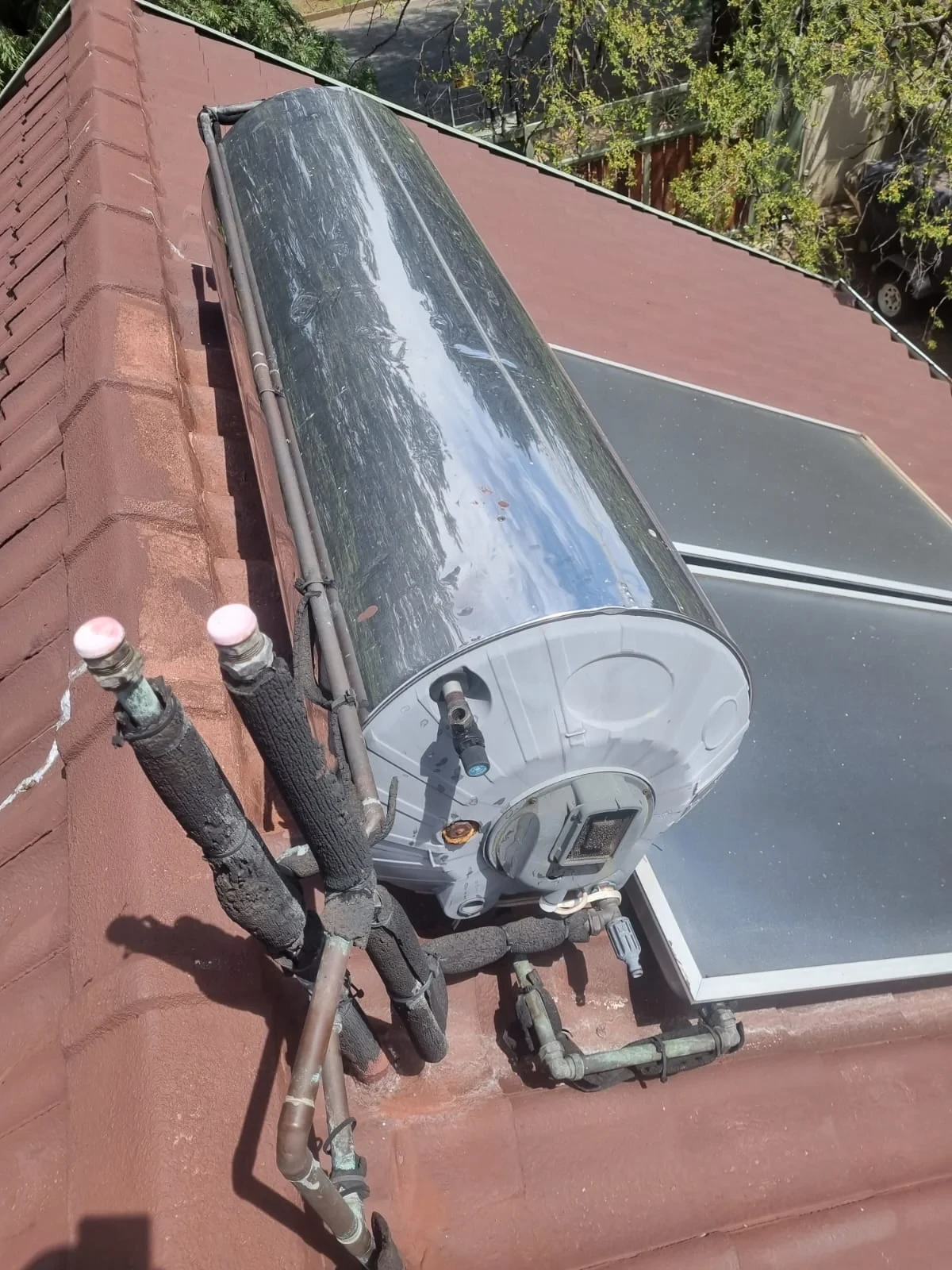
This rooftop example shows a horizontal cylinder beside flat-plate solar collectors. We supply and install flat-panel systems and assess your roof, existing geyser and hot-water demand to help you compare one with a 200-litre evacuated-tube conversion.
Practical system knowledge
How Evacuated Tube Solar Heating Works
Evacuated tubes are designed to collect solar heat while limiting heat loss to the surrounding air. Each tube contains an insulated vacuum layer that helps retain absorbed energy, allowing the collector to produce useful heat even when ambient temperatures are cooler. The captured energy is transferred through the solar circuit and used to heat the water stored in the geyser.
How Orientation, Angle and Insulation Affect Performance
The effectiveness of the system depends on correct orientation, collector angle, circulation and insulation. Poorly routed or uninsulated pipework can waste heat before it reaches the cylinder. Incorrect mounting can reduce sun exposure or create unnecessary strain on the roof. Our plumbers plan the installation as a complete system so that the collector, existing geyser and plumbing components work together safely.
Why the Vacuum Inside Each Tube Is Important
The vacuum reduces heat transfer from the hot absorber to the outside air. This insulation is one of the reasons evacuated tube collectors can remain effective in cooler conditions and can provide strong solar input during much of the year.
Why Professional Pipe Insulation Cannot Be Ignored
Solar-heated water or heat-transfer fluid must travel between the collector and cylinder. Correct insulation protects that heat, improves efficiency and reduces weather damage to exposed pipework. We inspect the full route rather than focusing only on the collector.
Circulation pump and connections
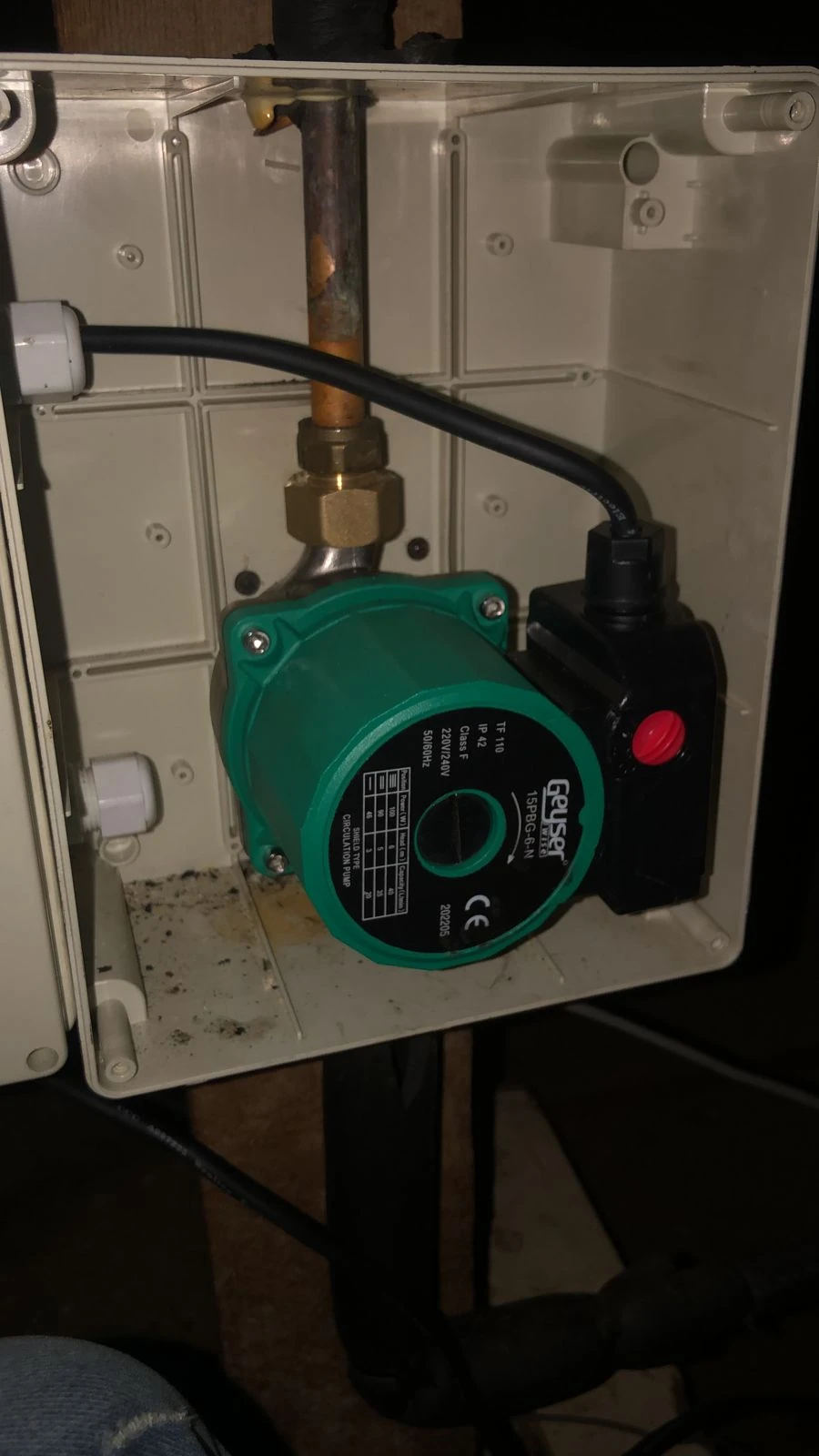
The photo shows a circulation pump connected to copper pipework. Where a solar conversion needs pumped circulation to transfer heat from the collector to the geyser, we include the pump, controls and water connections in the quote so you can see what the installation requires.
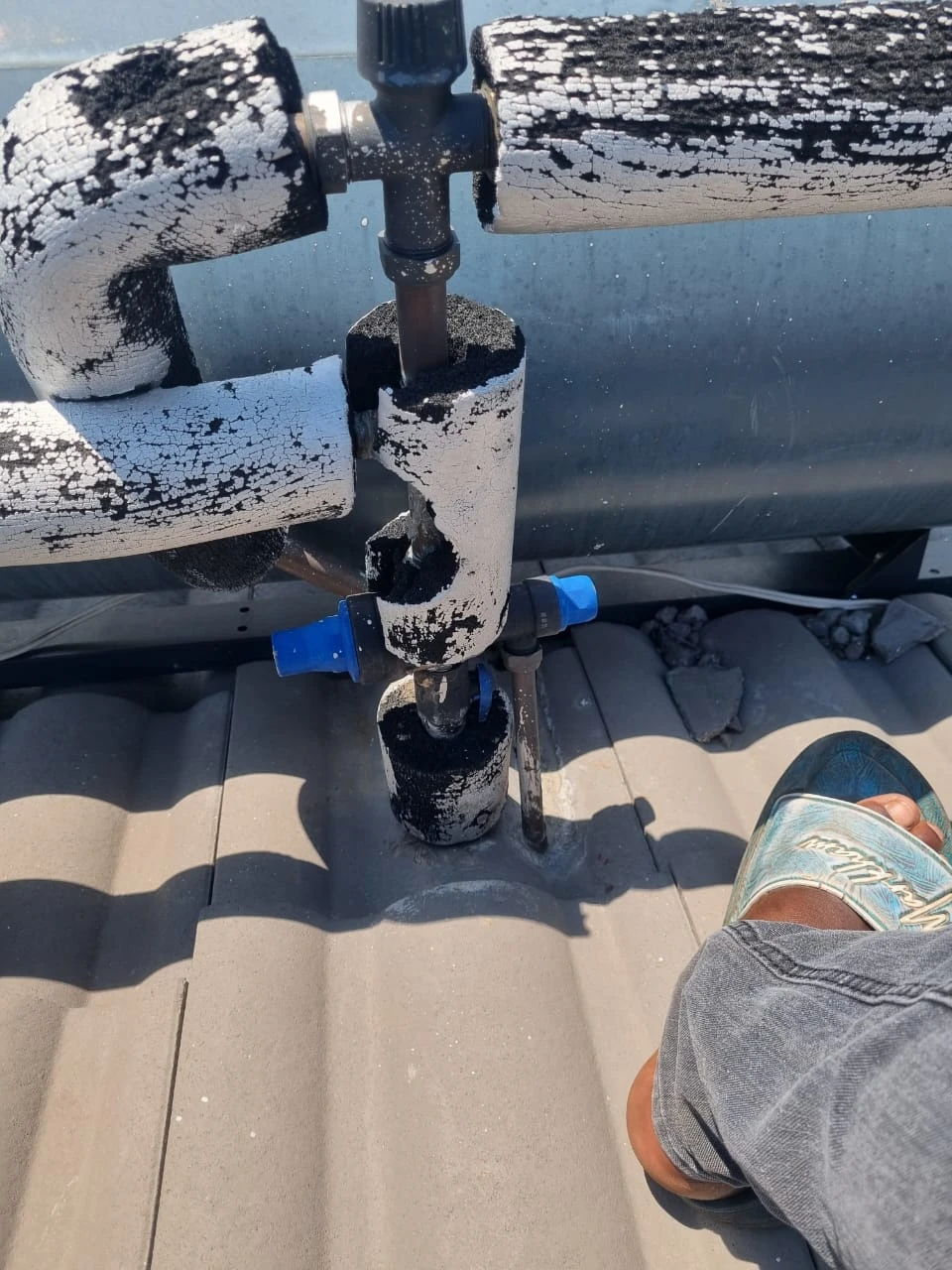
Split and crumbling insulation leaves parts of the rooftop pipework exposed. When servicing or converting a solar geyser, we replace damaged insulation where needed to reduce heat loss between the collector and the cylinder.
Choices that affect performance
Our Professional Solar Geyser Installation Process
A reliable installation begins long before the first evacuated tube is fitted. We inspect the existing geyser and its safety components, assess the roof structure, review access and identify the best available position for the collector. We also consider how the new pipework can be installed neatly and protected from heat loss and weather exposure.
Planning the Collector and Pipework
Before work starts, we explain the recommended work and provide a clear quotation. Customers should understand what is included, which existing components can remain and which items need replacement. This approval-first approach avoids surprises and allows the homeowner to make an informed decision.
Commissioning the Completed System
During installation, the collector is mounted securely, pipework is connected and insulated, and the system is filled and checked according to its design. We test for leaks, confirm circulation and verify that backup heating and controls operate as intended. The work area is left orderly, and we explain the completed system before leaving.
Inspection and Honest Recommendation
We check whether the existing geyser is in suitable condition, whether roof access is safe and whether the proposed system is likely to meet the household’s needs. Where a different approach would be more dependable, we explain why.
Neat Installation and Careful Commissioning
Secure brackets, protected pipe routes and correct connections support long-term reliability. Commissioning is not a quick visual check; it is the stage where we verify that the complete system operates correctly before we leave.
Clear Handover and Practical Guidance
We show customers how normal operation should look, discuss backup settings and identify basic warning signs that may justify a service visit. Good communication is part of professional workmanship.
Geyser access and pipework checks
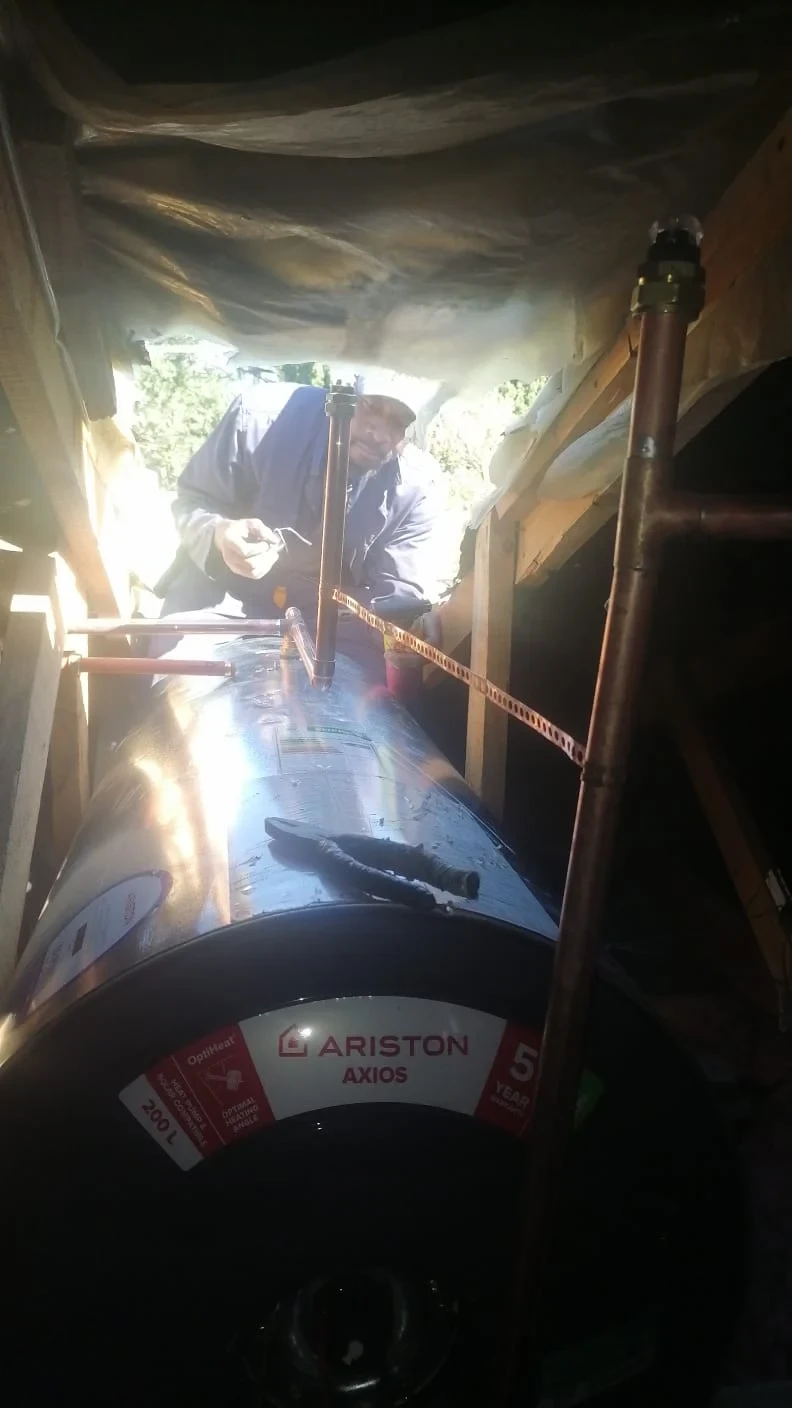
A worker is shown beside a horizontal geyser and its copper pipework in a tight roof space. Before recommending a solar conversion, we check access, the cylinder and its connections so you know whether the existing geyser can be reused and what repairs the quote needs to cover.
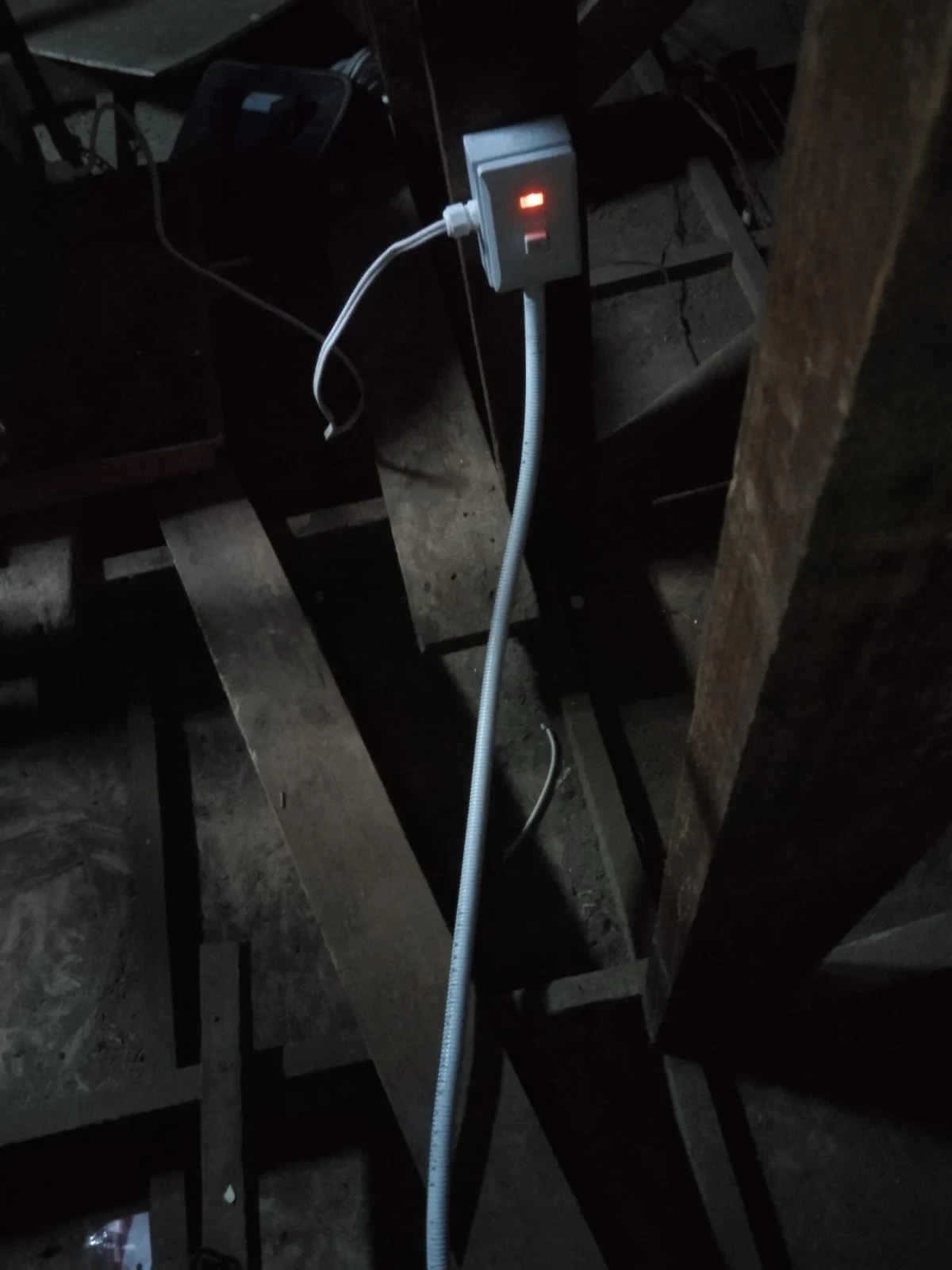
The switch box and conduit show the type of roof-space electrical equipment we assess when planning a solar geyser conversion. We coordinate any isolation work with an electrician so the geyser can be safely disconnected for servicing.
Protecting the installation
Benefits of a Correctly Installed Solar Geyser
The most immediate attraction is the opportunity to reduce the electricity used for water heating, which is often one of the larger energy demands in a home. Actual savings vary according to weather, consumption, system settings and installation quality, so we avoid unrealistic promises. Instead, we focus on creating the conditions for efficient, reliable performance.
Long-Term Value From a Correctly Specified System
An installation can also extend the usefulness of an existing geyser when the cylinder and related components remain in good condition. This may reduce unnecessary replacement costs while allowing the homeowner to benefit from solar energy. The system still needs proper safety controls and maintenance, and our assessment identifies whether the existing equipment is suitable to retain.
Lower Dependence on Electrical Water Heating
Solar energy can provide a meaningful share of the heat required during suitable conditions. Sensible timer or controller settings can further reduce unnecessary electrical heating while maintaining household comfort.
A Practical Upgrade Without Unnecessary Replacement
Where the existing cylinder is sound, installation may offer a more economical route to solar-assisted hot water. We confirm suitability instead of assuming every old installation should be retained.
Workmanship That Supports Long-Term Reliability
Efficiency and lifespan depend on mounting, valves, pipe insulation and commissioning. We take responsibility for the complete installation rather than treating the collector as an isolated product.
Solar geyser control box and battery connections
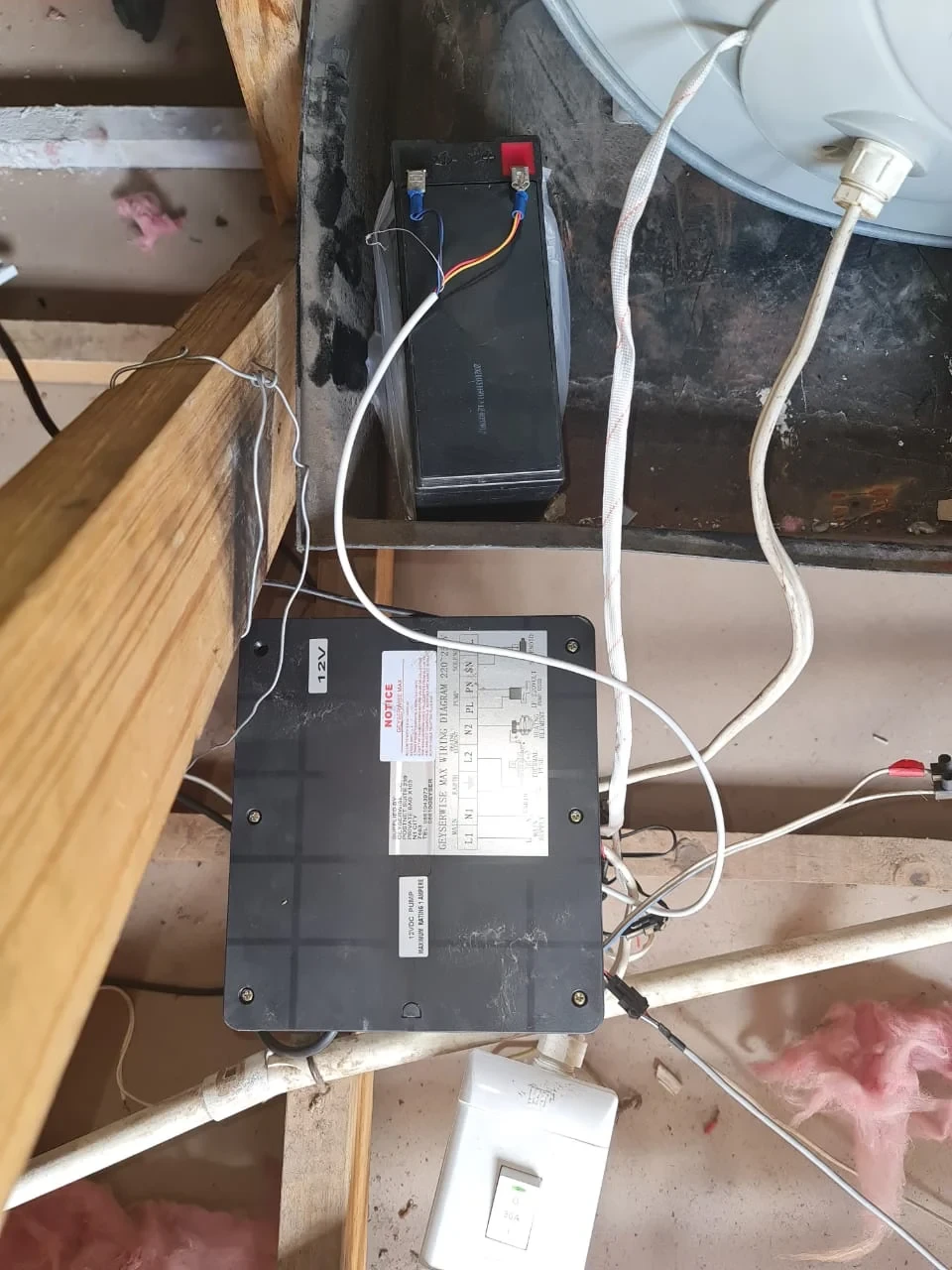
The roof-space photo shows a control box marked 12 V, a battery with wired terminals and nearby pipework. When converting a geyser, we check which control components can be retained and plan access for future servicing.
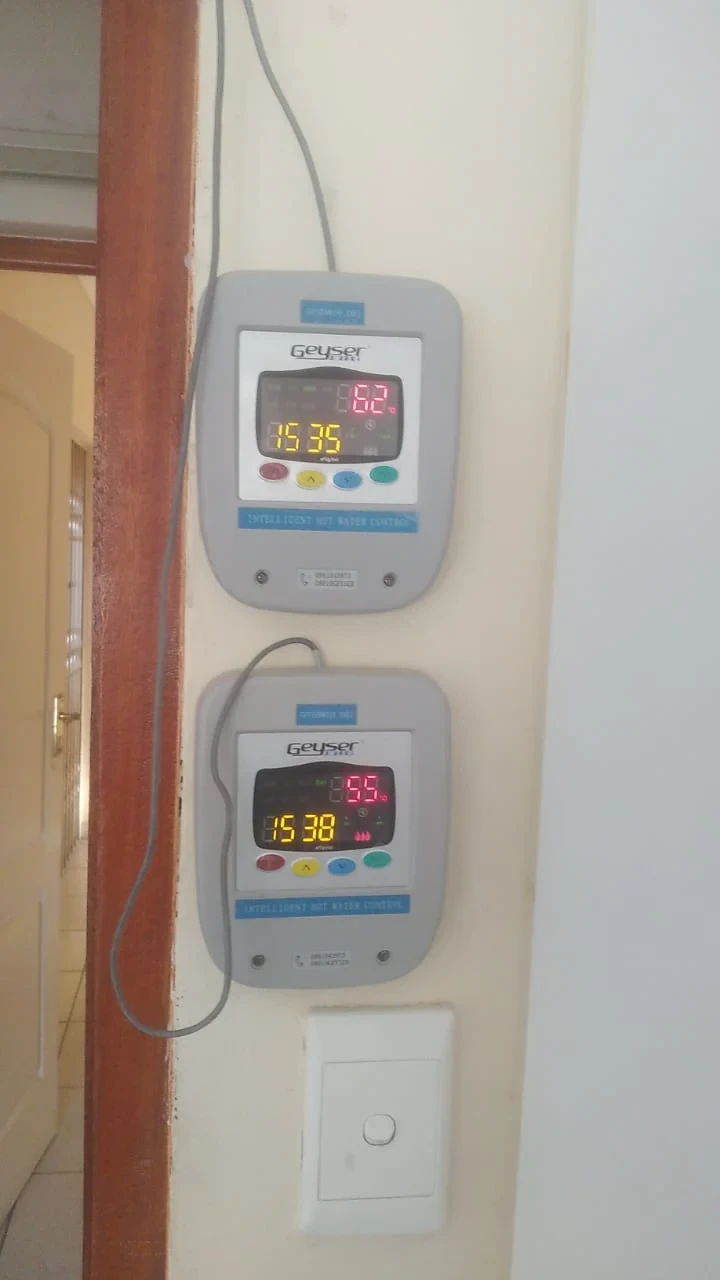
GeyserWise setup and operating guidance We fit and configure GeyserWise controls where specified for the system. At completion, we explain the display and heating settings. Tell us about existing controllers when requesting the conversion quote so their role can be assessed.
Long-term value
Solar Geyser Faults, Maintenance and Repairs
Evacuated tube systems are dependable when installed correctly, but no hot-water system is maintenance-free. Broken tubes, damaged insulation, leaking fittings, failed valves, circulation problems and control faults can reduce performance. Early attention often prevents a small defect from becoming a larger repair or causing water damage.
Diagnosing Faults Before Replacing Parts
Our plumbers assess the symptom before replacing parts. A lack of hot water may be caused by reduced solar collection, an electrical backup fault, a valve problem or unusually high demand. By checking the complete system, we can recommend a repair based on evidence rather than guesswork.
Clear Repair Options and Approval Before Work Continues
Customers value clear explanations, especially when a system is unfamiliar. We show what has failed, explain the proposed repair and confirm the cost before proceeding. That transparent approach builds trust and helps homeowners make confident maintenance decisions.
Broken or Underperforming Evacuated Tubes
A visibly damaged tube should be assessed, but poor performance can also occur without obvious breakage. We inspect the collector and related components to determine whether tube replacement is appropriate.
Leaks, Valves and Insulation Deterioration
Weather exposure can affect external insulation and fittings over time. Regular inspection helps identify heat loss, corrosion or leakage before it affects the roof, ceiling or water supply.
When to Book a Professional System Check
Unexpectedly high electricity use, inconsistent hot water, visible leakage, unusual discharge or damaged tubes are good reasons to request an inspection. Prompt diagnosis protects both performance and property.
Clear answers
Why Homeowners Trust Our Solar Geyser Plumbers
Trust is earned through consistent actions: arriving as arranged, explaining the work clearly, respecting the property and completing the installation carefully. We understand that customers are inviting a tradesperson into their home and relying on that person to make decisions that affect safety, comfort and household expenses.
Honest Recommendations Without Pressure Selling
Our plumbers focus on honest recommendations rather than pressure. We do not claim that every property needs the same system, and we do not promise identical savings for every household. We assess the installation, explain the available options and allow the customer to approve the work with a clear understanding of the work.
Clear Quotations Before Work Begins
A customer should know what is being installed and what the quoted price covers. We discuss necessary repairs or upgrades before proceeding so decisions are informed and documented.
Respect for Your Home and Roof
We plan access, protect the work area and aim for neat, secure installations. Roof work and plumbing alterations are handled carefully because preventing damage is part of the job.
Reliable Support When You Need Assistance
A professional relationship should not end when we finish. Customers can contact us for maintenance, fault diagnosis and practical guidance as the system continues operating.
The next sensible step
Frequently Asked Questions About 200 Litre Evacuated Tube Solar Geyser Conversions
These are common questions homeowners ask before approving an installation. We answer them in plain language and confirm property-specific details during the assessment.
How many people can a 200 litre evacuated tube solar geyser conversion serve?
It is often considered for three or four people, depending on bathing habits and peak demand, but shower duration, flow rates and peak demand can change the recommendation. We assess actual usage before confirming the size.
Will the system still provide hot water in winter?
Evacuated tubes can collect useful heat in cooler conditions, but solar contribution varies with sunlight and demand. Electrical backup may still be used when solar input is insufficient.
Can my existing electric geyser be converted?
Many existing geysers can form part of an installation if the cylinder and safety components are suitable. We inspect the installation first and explain any necessary upgrades.
How long does a professional installation take?
Time depends on roof access, pipe routing and the condition of the existing system. We provide a realistic estimate after inspection rather than promising the same duration for every property.
What maintenance does an evacuated tube system need?
Periodic checks of tubes, insulation, valves, fittings and system performance help maintain efficiency. Any visible damage, leakage or sudden performance change should be inspected promptly.
Request a 200 Litre Evacuated Tube Solar Geyser Conversion Assessment
Speak to our plumbers about your household’s hot-water use, existing geyser and roof layout. We will assess the installation, explain the suitable options and provide a clear quotation before work begins.
What details should I send when booking a solar geyser conversion assessment?
Send your current geyser capacity, when your household uses the most hot water and whether you regularly run out. Mention any existing controller or electrical backup. If you’re booking a repair, include any fault message shown on the controller.
What should a quote for a 200 litre evacuated tube conversion include?
The quote should list the collector, pipework and insulation, any pump or controls the system needs, and any agreed electrical work. It should also show which existing components can stay and which need repair or replacement.
How do I choose between evacuated tubes and a flat-panel solar collector?
Compare the two options based on the usable space and sun exposure on your roof, your existing geyser and when your household uses hot water. A site assessment can establish which collector can be positioned well and connected to your geyser.
Why is my evacuated tube solar geyser lukewarm even after a sunny day?
Poor circulation, damaged pipe insulation or a collector fault can reduce how much heat reaches the geyser. Heavy hot-water use or a backup heating fault can also leave the water lukewarm. If it keeps happening on sunny days with normal usage, book a system check.
Does one broken evacuated tube mean I need a whole new collector?
A single broken tube may be replaceable if a compatible tube is available and the rest of the collector is in good condition. Leave the broken glass and roof access to the plumber. A photo taken safely from ground level can help when booking.
Helpful plumbing guides
Learn more about 200 Litre Evacuated Tube Solar Geyser Conversion
Use these articles to learn more about 200 litre evacuated tube solar geyser conversion — from emergency steps and maintenance tips to repair options and cost factors. Each guide focuses on real situations we see on site across Gauteng.
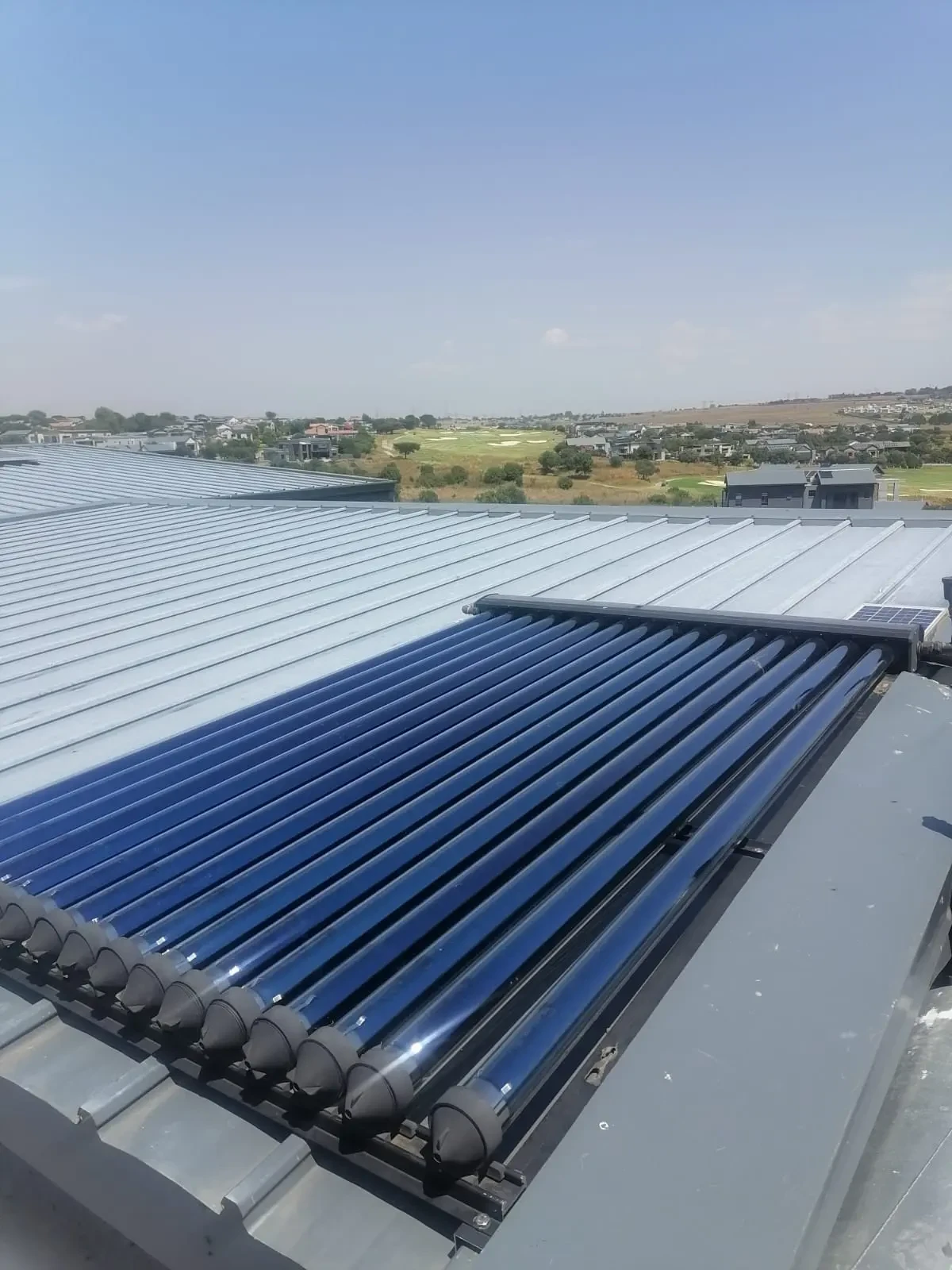
The evacuated-tube collector mounted on this metal roof captures solar heat for water heating, which can reduce the electricity needed by the geyser. When planning a conversion, we assess the roof and size the collector for the household’s hot-water demand.
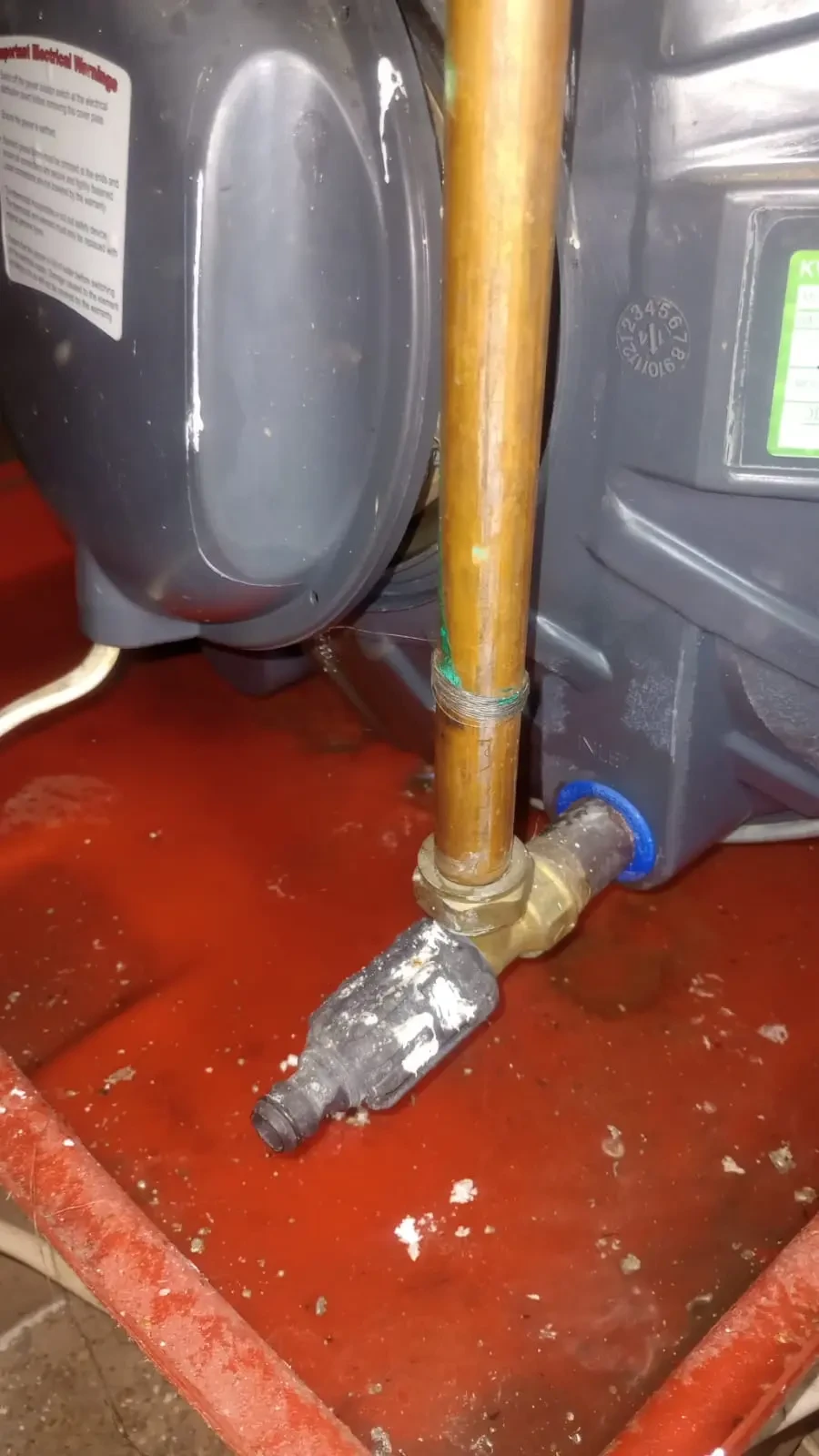
The copper pipe and brass fitting are examples of connections we inspect when a customer reports a leaking geyser. Checking the fittings and cylinder helps identify where the water is coming from and whether a repair is possible.
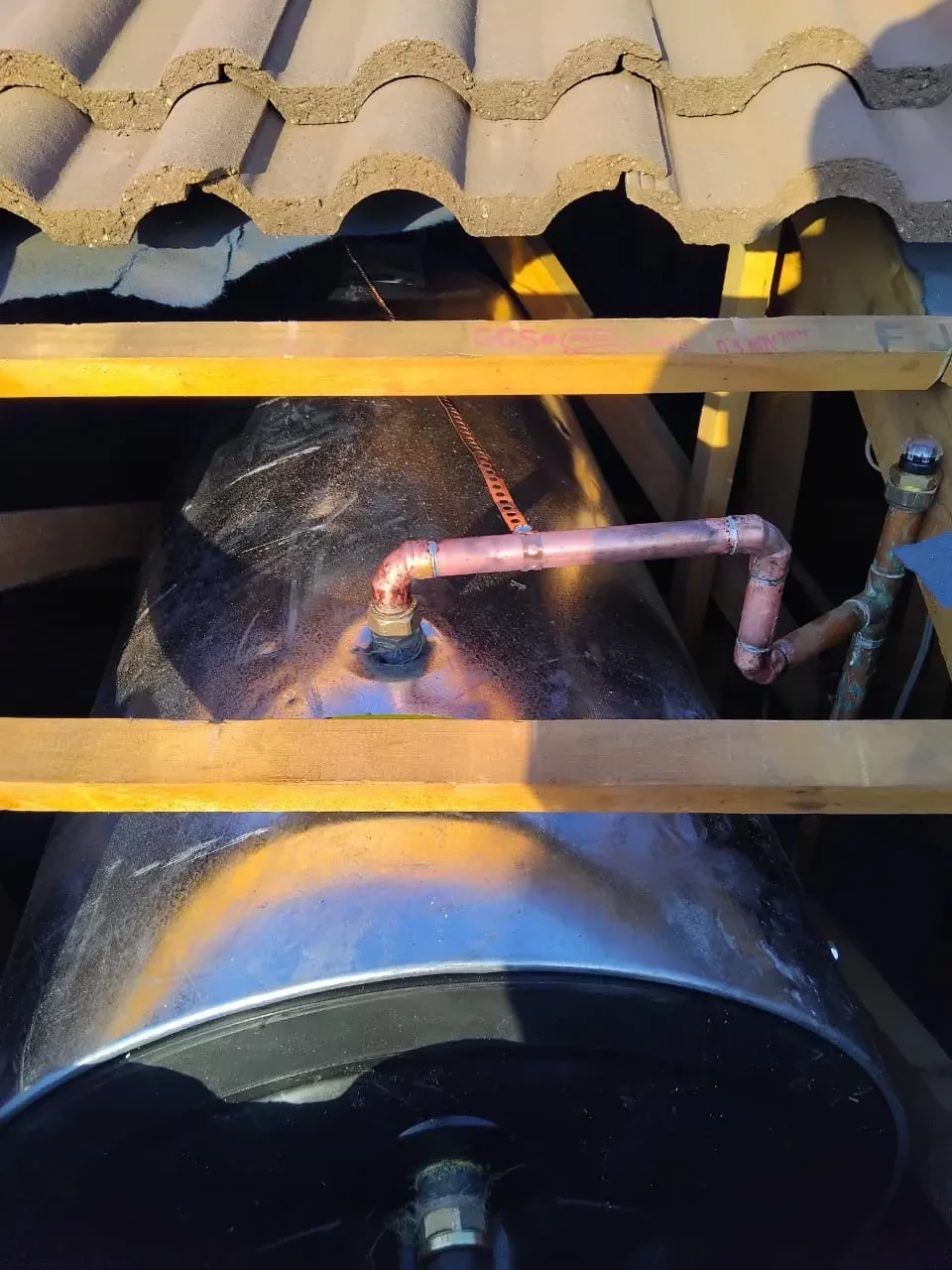
This horizontal geyser sits beneath roof battens, with copper pipework connected at the top. When quoting for replacement, we assess access to the cylinder and the pipework that needs reconnecting so the customer can compare the full cost with repair or conversion.
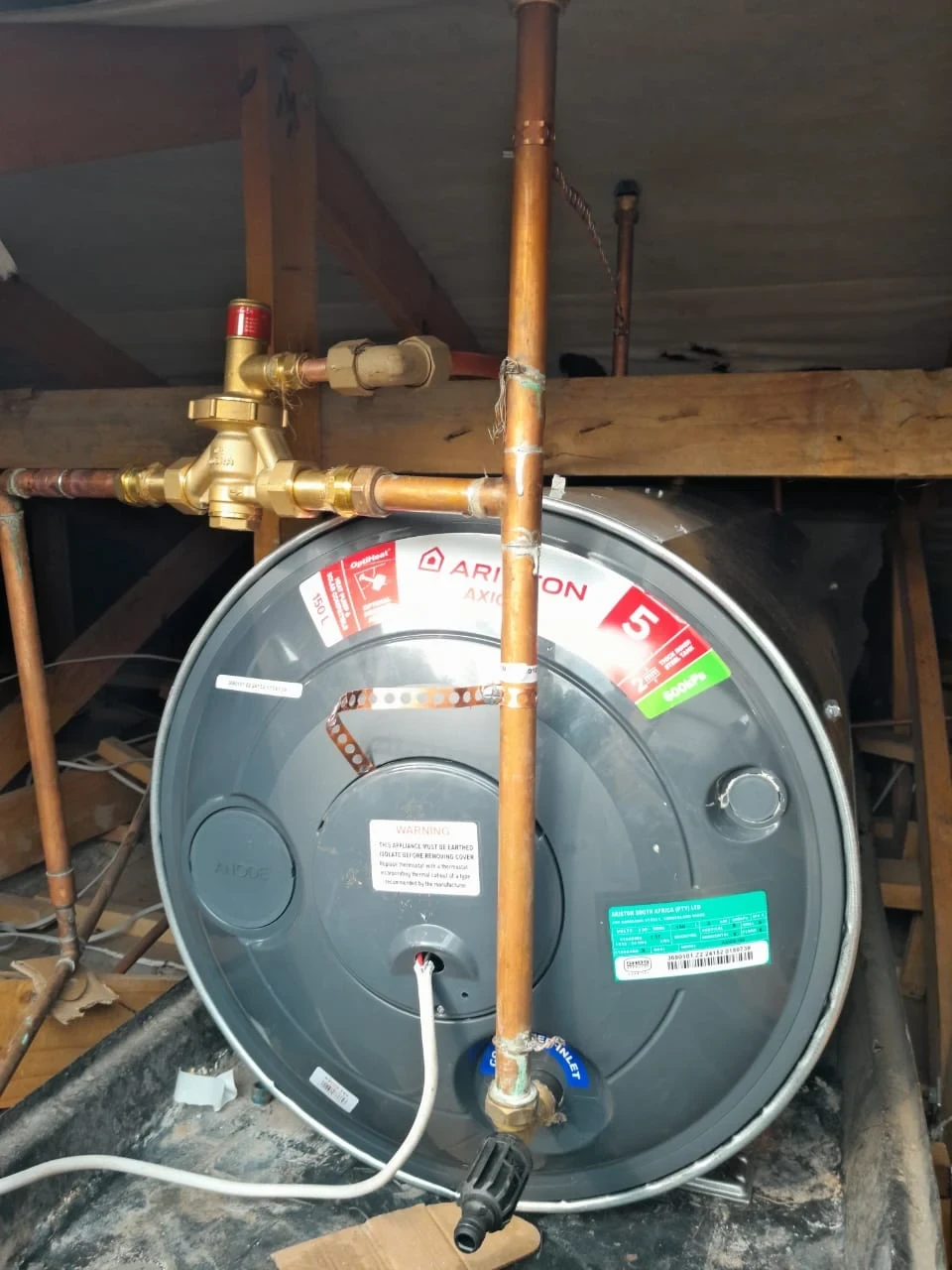
This roof-space geyser shows the copper pipework, brass valve and drip tray. When we quote a solar geyser conversion or replacement, we explain which installation checks and documents apply and how the valve and drip tray help manage water discharge and leaks.