Limit further water loss
We identify the affected supply and isolate it where practical, so the leaking section can be reached without letting more water escape.

Water leaking through a ceiling, wall or cupboard needs attention. Call us for help finding the leak and repairing the damaged pipe. Keep clear of wet electrics and don’t open walls or ceilings to investigate it yourself.
A leaking connection needs more than a temporary wrap. We identify the failed section, quote for the repair and check the repaired pipe under pressure before it is covered or put back into normal use.
Often. We start with the meter, accessible connections and the pattern of dampness. We explain where opening a surface is needed if the checks point to concealed pipework.
Note where the dampness first appeared, when it worsens, and whether it follows rain or fixture use. A safely taken photo can help show how it has changed.
Water can travel along building materials before it becomes visible. We check the nearby supply and waste routes before treating the damp spot as the leak location.
Check that appliances and cisterns have finished filling, then note whether the meter continues to move. That observation helps a plumber investigate water use you can’t account for.
Often the work can be focused on one section once the line and fault have been traced. Ask what access and reinstatement are included in the repair quote.
If the City of Cape Town bills you for water, you may qualify for a rebate after a plumber confirms and repairs an eligible underground leak. Ask for a report or invoice that records when and where the leak was repaired, what failed and what work was done. The City verifies the leak and repair before deciding whether to grant the rebate.
Wait until the wall and any affected cavity are dry before repainting. Start drying promptly after the leak is stopped. If plasterboard has swollen or its seams have opened, have it assessed before redecorating. Damaged sections may need replacement.
We identify the affected supply and isolate it where practical, so the leaking section can be reached without letting more water escape.
We check the pipe or connection involved and establish the access needed, whether it is exposed, behind a wall or below ground.
You receive a quotation for the repair, parts and agreed opening-up or excavation, with paving and other finishing work included where required.
We carry out the agreed pipe or valve repair, restore the water and check the repaired connections before closing the access and completing the agreed finishing.
When a water pipe starts leaking, the first job is to limit the water loss and get to the failed section. We repair copper pipework, underground supply pipes and the valves and fittings connected to them.
Tell us whether water is running continuously, appearing through a wall or collecting outside. If you can safely reach the stopcock, closing it can limit further damage while we arrange the visit.
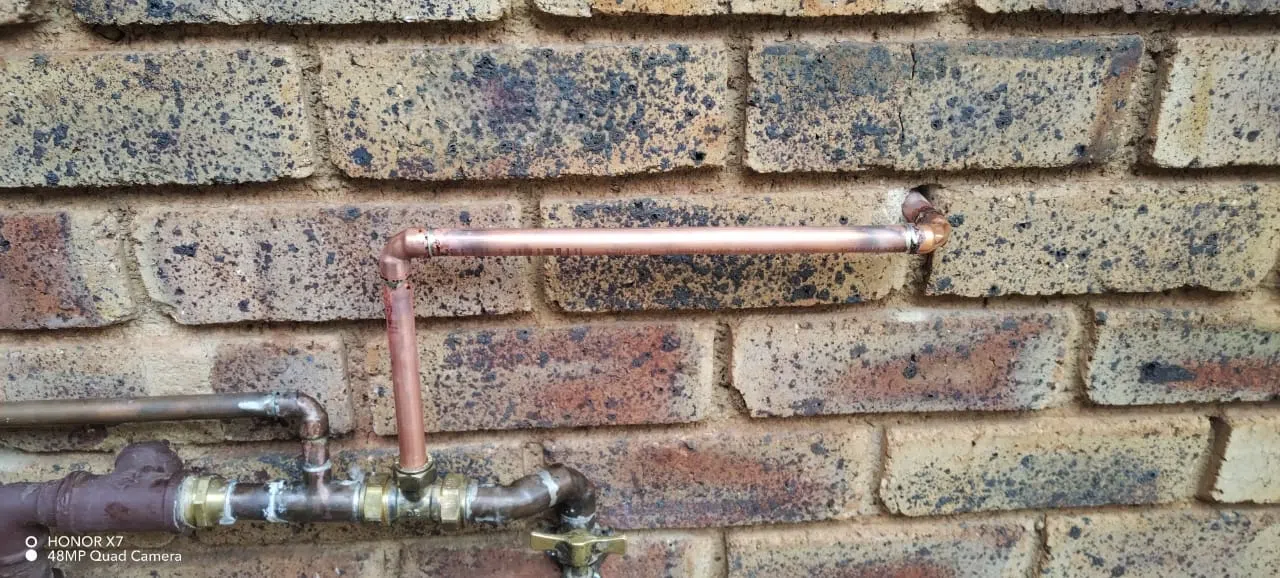
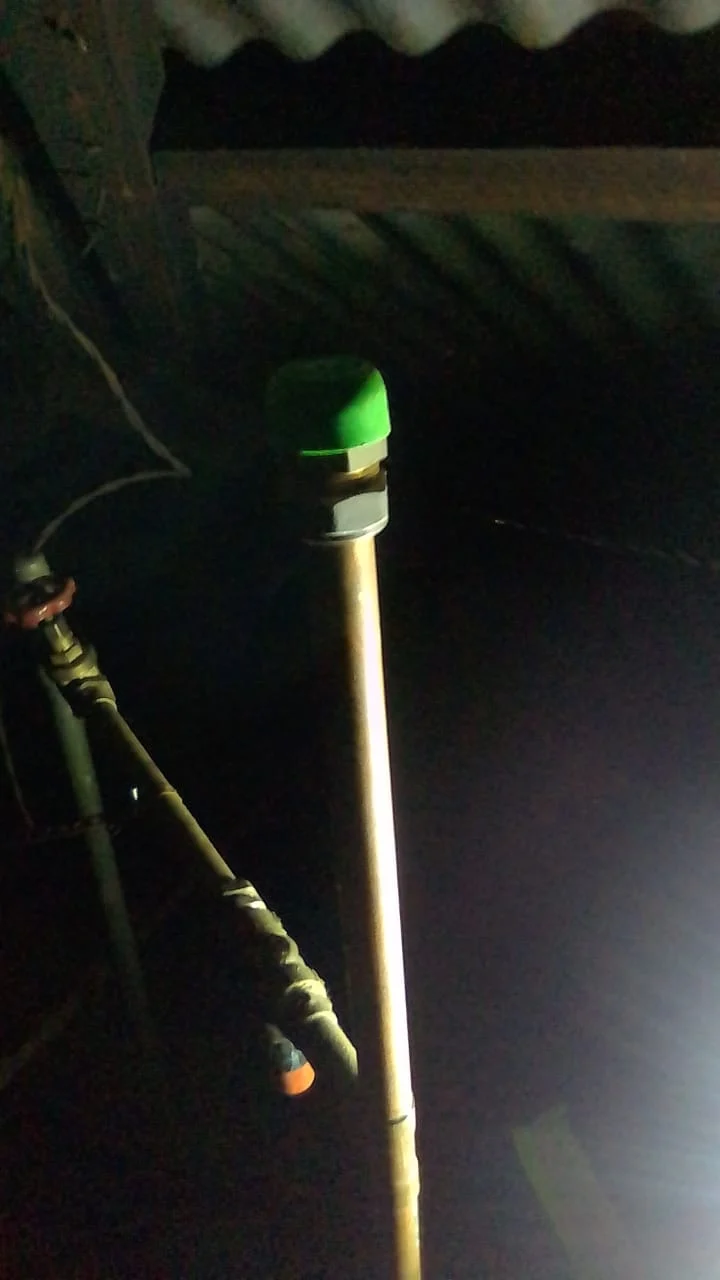
We repaired this leaking water pipe with a replacement copper section and connections. Exposed supply lines can be repaired without opening an interior wall, and we can include an accessible isolating valve where the installation needs one.
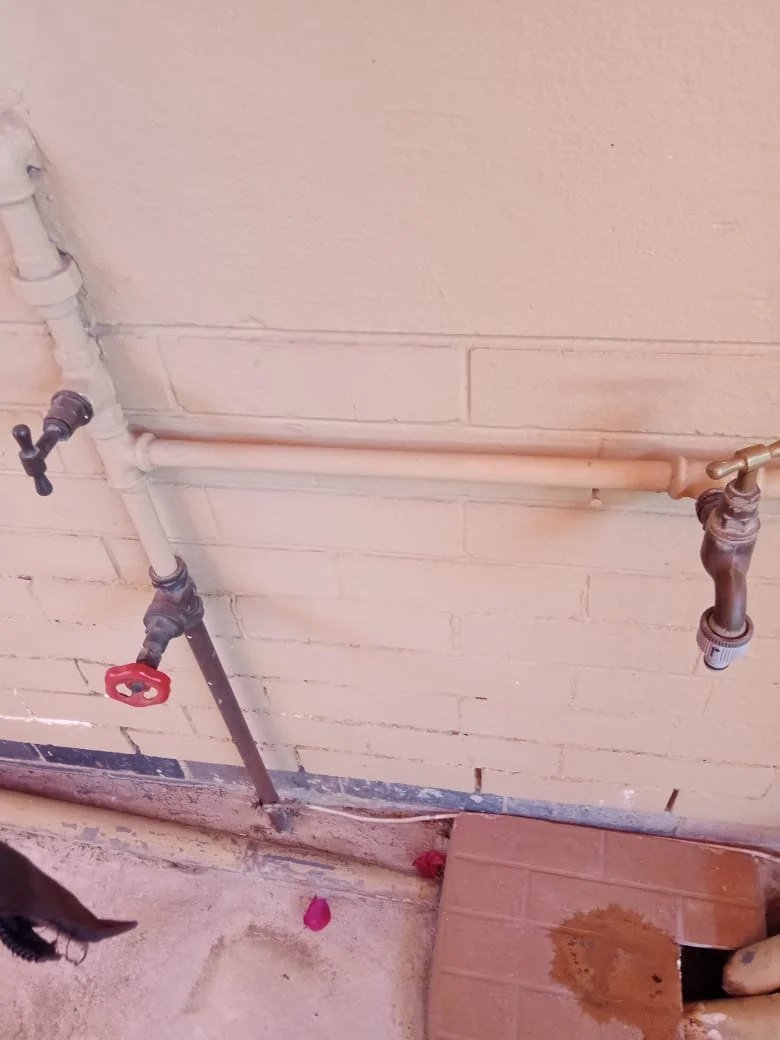
We repaired the water pipework on this wall. Surface-mounted pipes give direct access to the joints and valves; we can replace a leaking connection and keep the isolation points accessible for future maintenance.
Not every pipe leak needs a long run of pipe replaced. The fault may be at an elbow, a connector or the valve feeding a basin, toilet or appliance. We repair the part that has failed and explain any surrounding pipework that also needs attention.
A damaged angle valve can also make future servicing difficult. Where replacement is needed, we fit a suitable valve and keep the connection accessible.
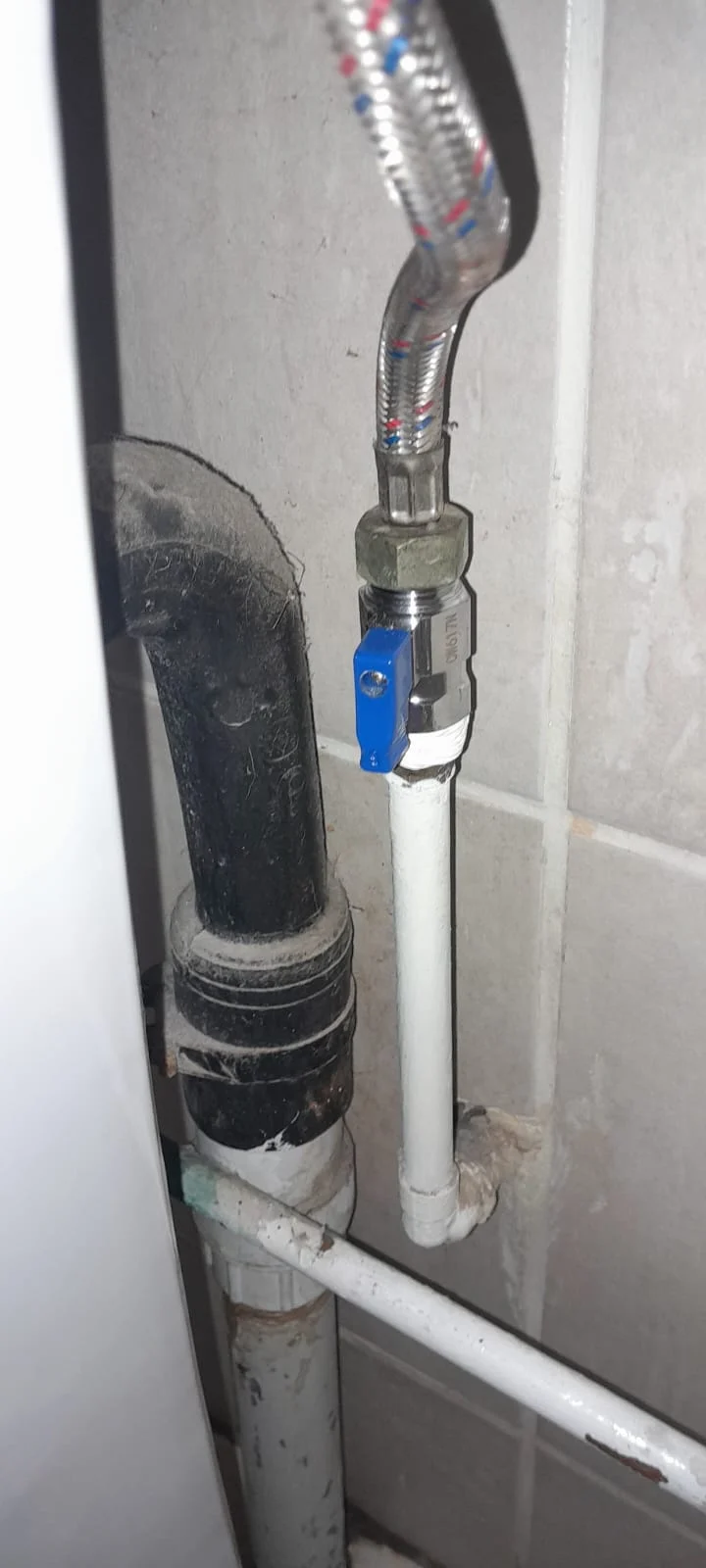
We replaced the angle valve serving this water connection. A working valve lets the supply to this fitting be shut off for servicing, without needing to isolate the whole property each time.
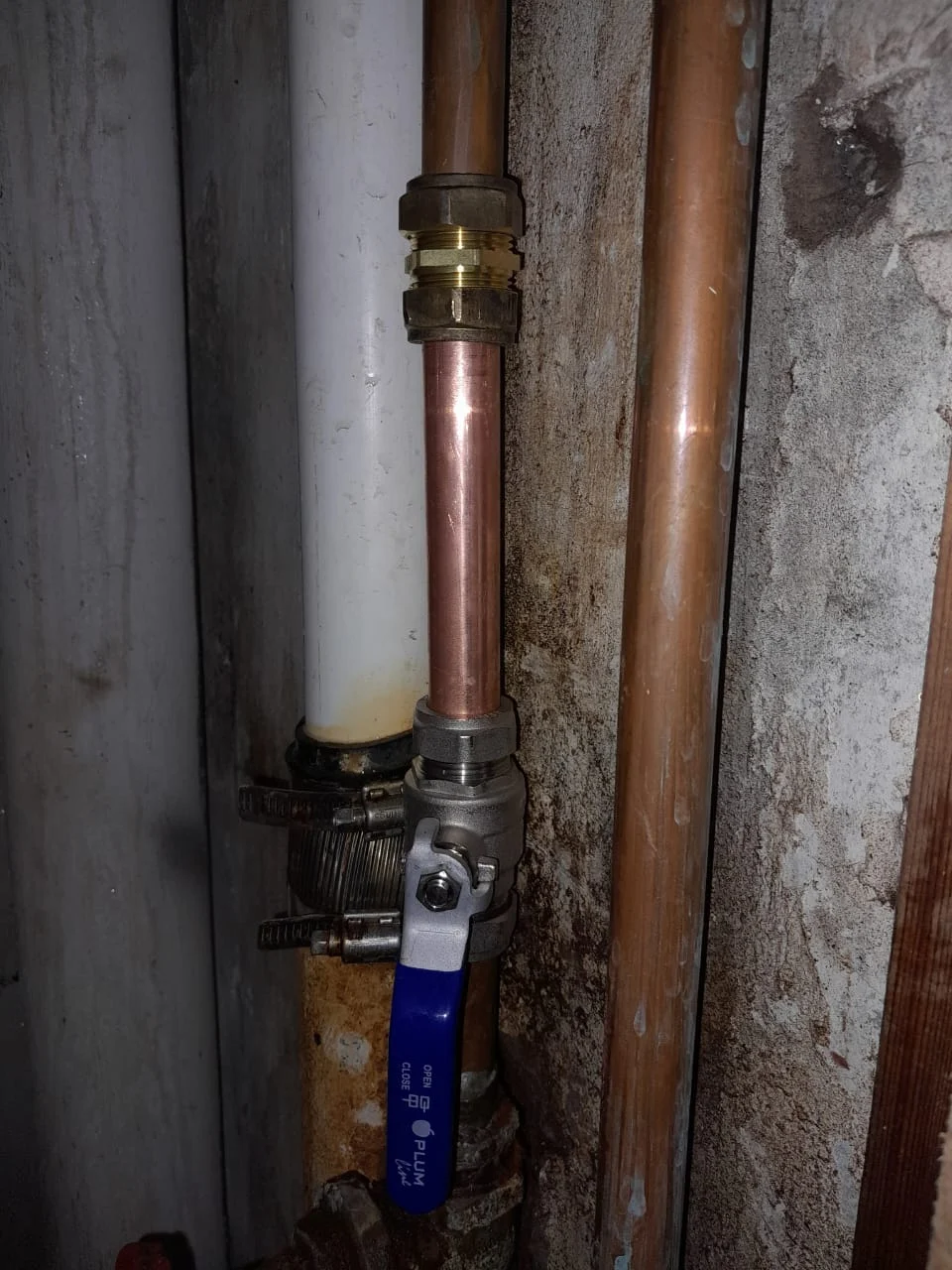
We repaired the copper water connection shown alongside this isolating valve. Where the work needs wall access, our building and tiling teams can handle the agreed making good after the plumbing repair.
A wet patch does not always sit directly over the leaking joint. Water can follow a pipe or spread behind plaster, so we locate the affected section before deciding where to open the wall.
When the source is hidden, our leak detection service can help narrow down where access is needed. We explain the opening required and who will handle the plastering, tiling or other agreed finishing.
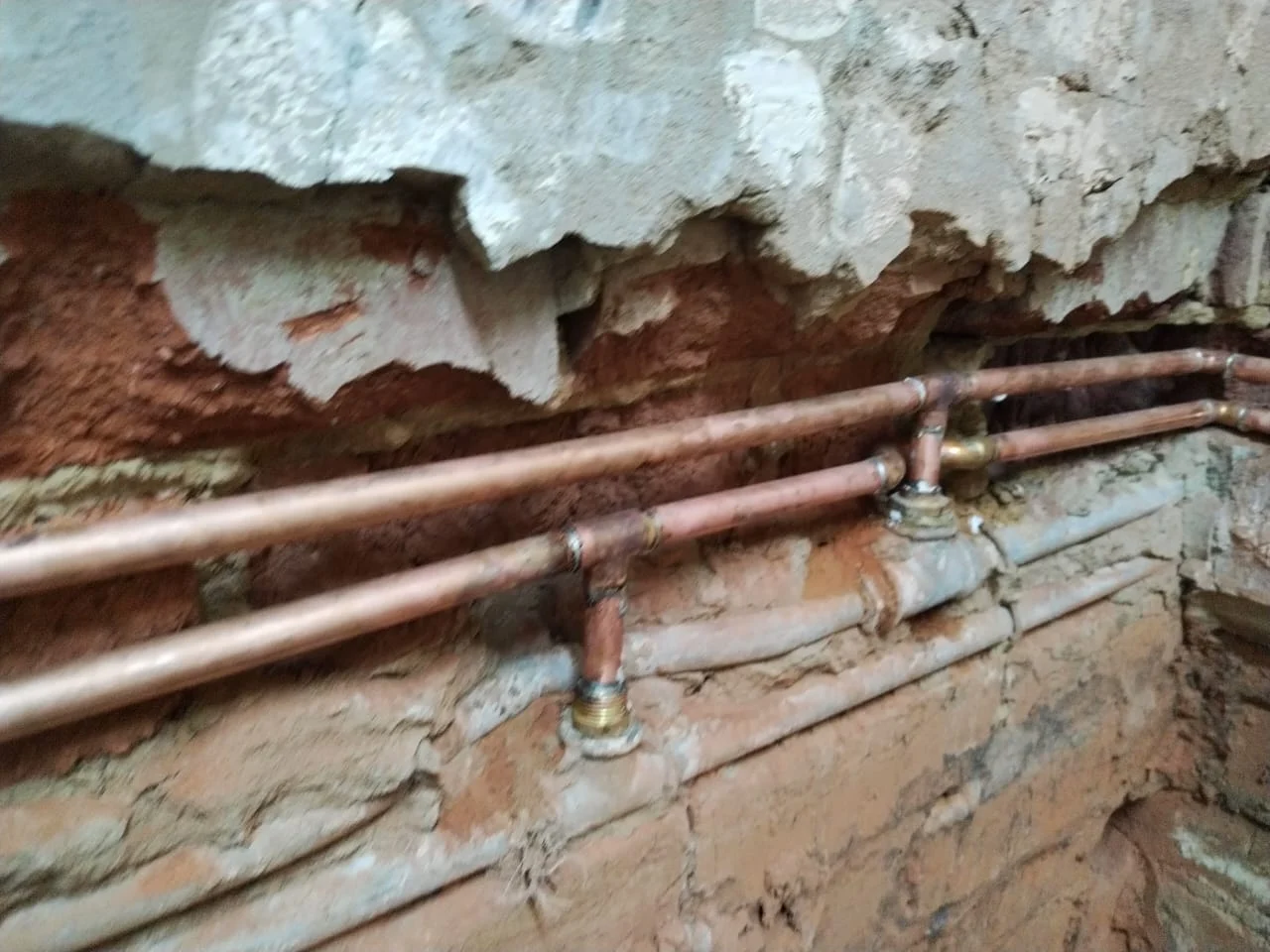
We opened the affected wall to reach and repair the leaking copper pipe. A damp patch can spread beyond the actual leak, so the pipe repair comes before plastering and painting the affected area.
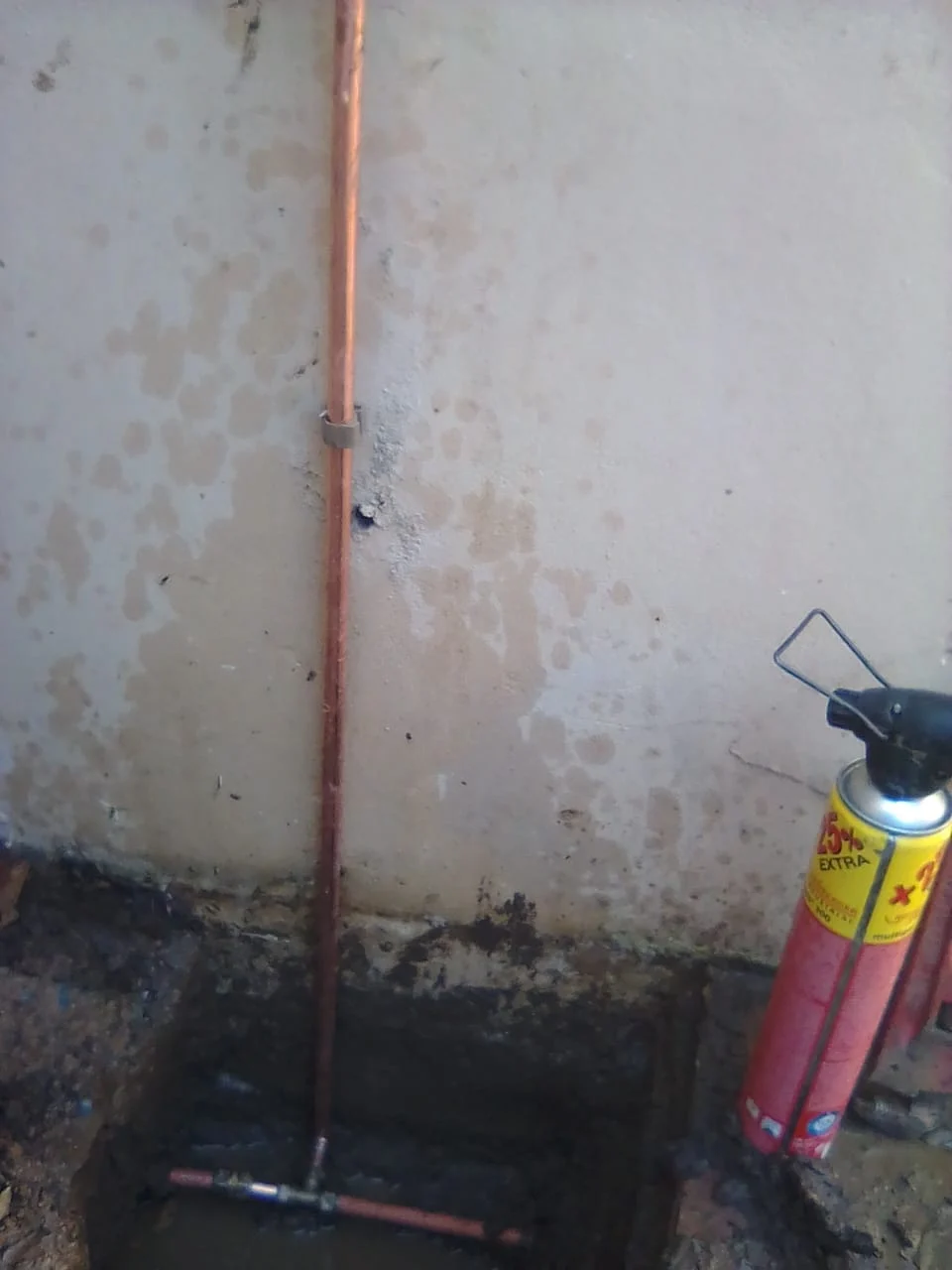
We repaired this leaking copper line at the base of the wall. Low-level leaks can wet the floor and nearby finishes, so the failed pipe connection needs attention before the opening is closed and the area is finished.
We excavate to reach a leaking underground water pipe and repair the failed fitting or damaged section. The quotation covers the access needed, the pipe repair and the agreed work to put the area back.
If the pipe is beneath paving, our team can lift the necessary paving for access. After the plumbing work and backfilling, our pavers can reinstate the paving. Please tell us about paved driveways, paths and any access restrictions when you book.
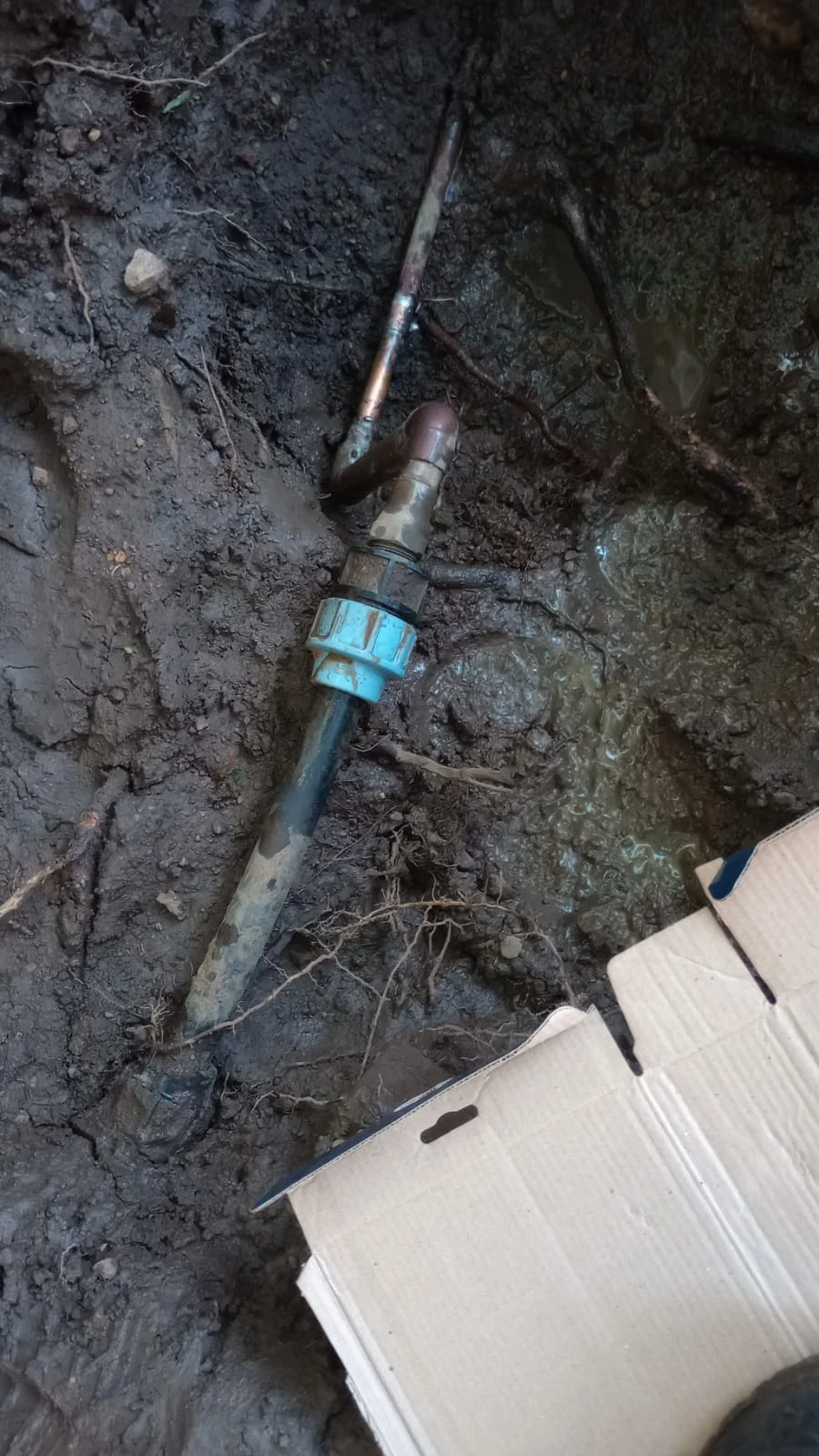
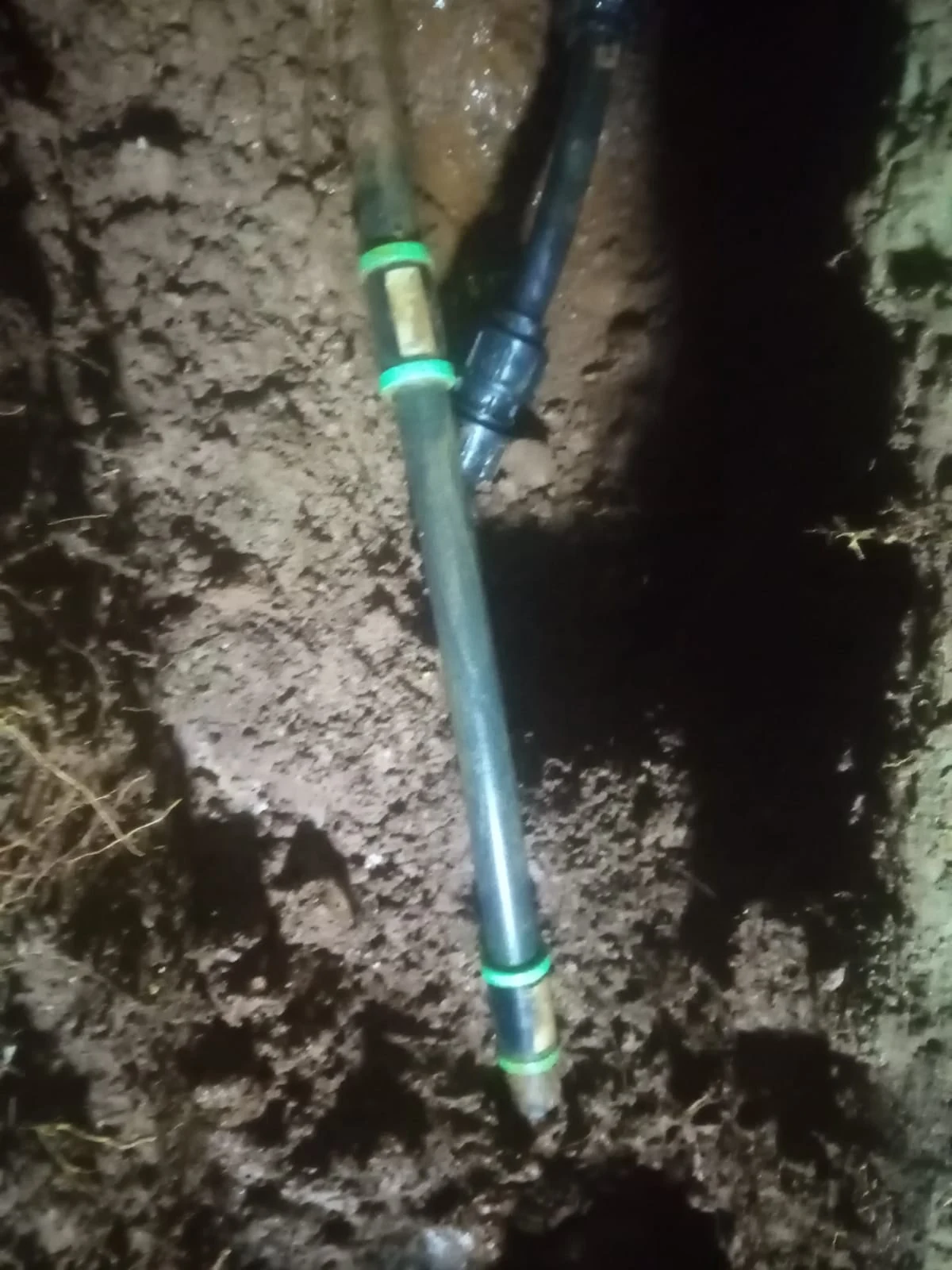
We excavated to reach this leaking underground water pipe and repaired the connection. For a pipe beneath paving, we can lift the paving needed for access and have our pavers reinstate it as part of the agreed work.
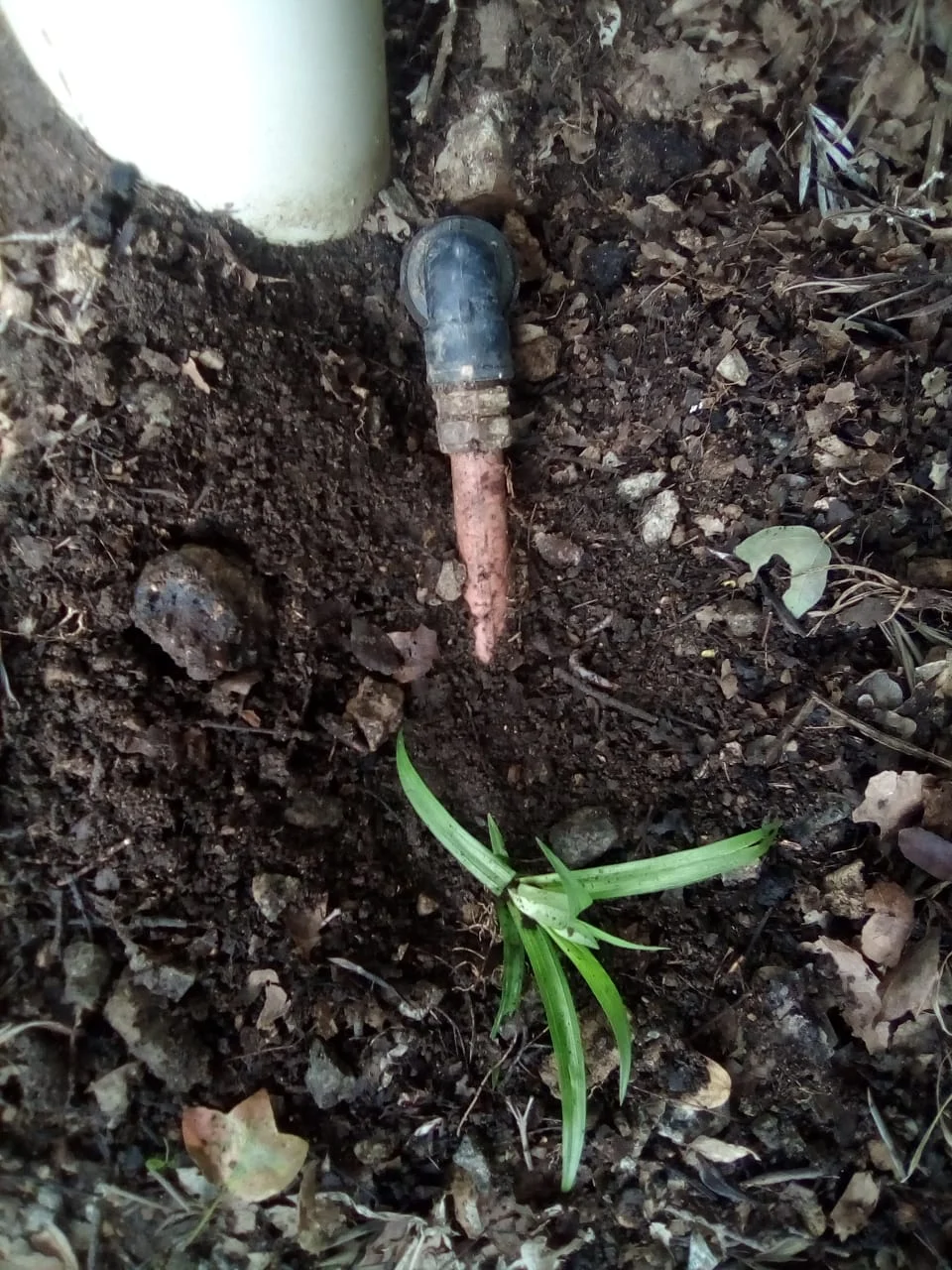
We repaired the leaking underground copper connection shown here. Our below-ground repair work covers leaking elbows, joints and damaged pipe sections, with excavation, backfilling and surface reinstatement set out in the quotation.
A leaking pipe in the roof can damage a ceiling before much water reaches the room. Keep clear of wet electrical fittings and a sagging ceiling; leave the roof-space access to our team.
We repair the water connection involved and can coordinate any agreed electrical or ceiling work. If the problem is with the geyser itself, we explain the appropriate geyser repair or replacement options.
An emergency repair can leave an opening in a wall, floor or paved area. You do not have to organise each trade separately: our plumbers, builders, tilers, electricians and pavers can handle the work included in your quotation.
We agree the finishing requirements before closing the job. Our renovation team can coordinate the making good around the plumbing repair, including plastering, replacement tiles or paving where needed.
The price depends on where the pipe is, how much needs repairing and the access and finishing work involved. An exposed valve replacement and a pipe beneath a paved driveway are different jobs, so we quote for the actual work.
There is no call-out or quotation fee. Repair work, parts and any agreed excavation or reinstatement are priced separately before you approve the work. Our pipe-repair cost guide explains the main factors to compare in a quotation.
Contact our emergency plumbers when a pipe leak cannot wait. We identify the affected section, limit further water loss and complete the most practical repair after explaining the work required.
Note where water appears and whether it runs continuously or only when a tap or appliance is used. A spreading wet patch or falling pressure needs prompt attention.
Don’t open a wall to follow the water, force a stiff valve or touch wet electrical fittings. Keep clear of a ceiling that is bulging or sagging.
If the stopcock is easy to reach, close it to limit further water loss. Leave the damaged pipe alone and move nearby belongings out of the wet area safely.
Tell us where the leak is, how quickly water is escaping and whether you’ve isolated the supply. A photo of the pipe and its surroundings helps us prepare.
We trace the leak, explain which pipe or fitting needs repair and quote for the work. After the repair, we restore the supply and check the connection under pressure.
Practical guides to help you understand emergency leaking pipe repair, spot warning signs early, and decide when professional help is the safest choice. Written for homeowners and property managers who want clear answers before calling a plumber.
Learn how hidden pipe leaks can show up as damp ground, pressure changes or unexplained water use, and when to arrange leak detection.
Read guide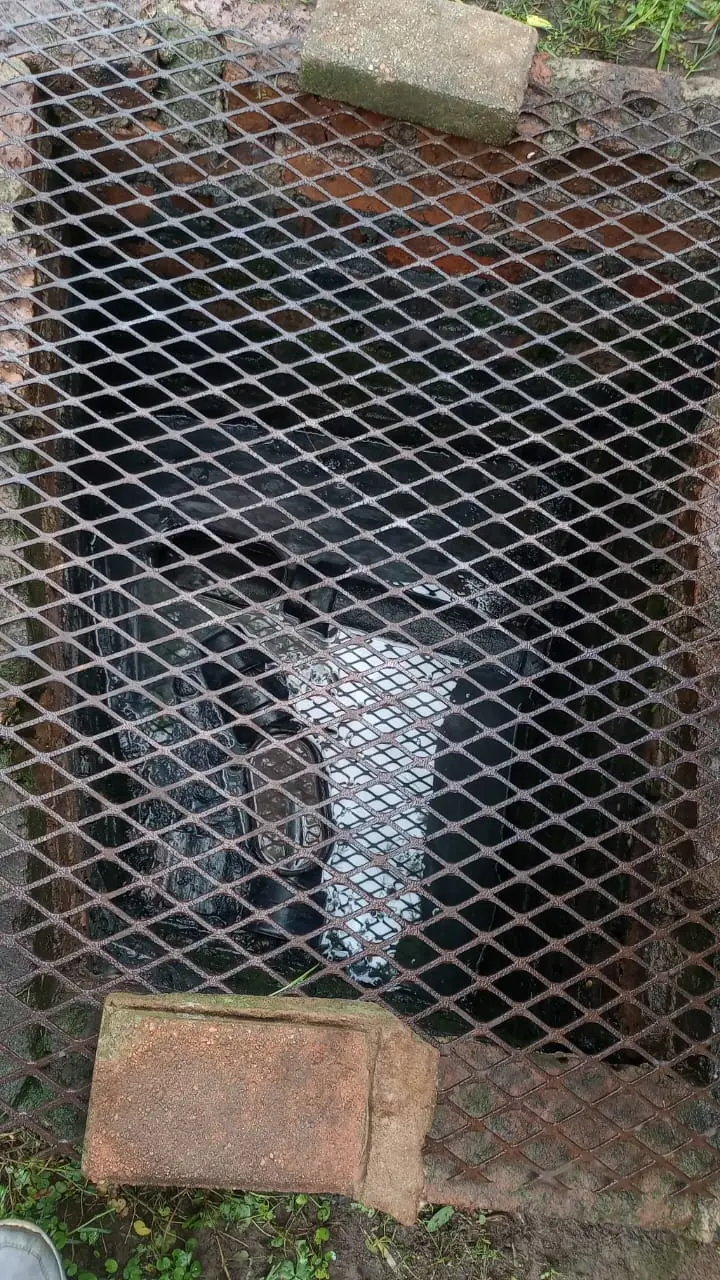
Understand why water collecting after a leak needs attention and how to keep people away from the affected area while the cause is dealt with.
Read guide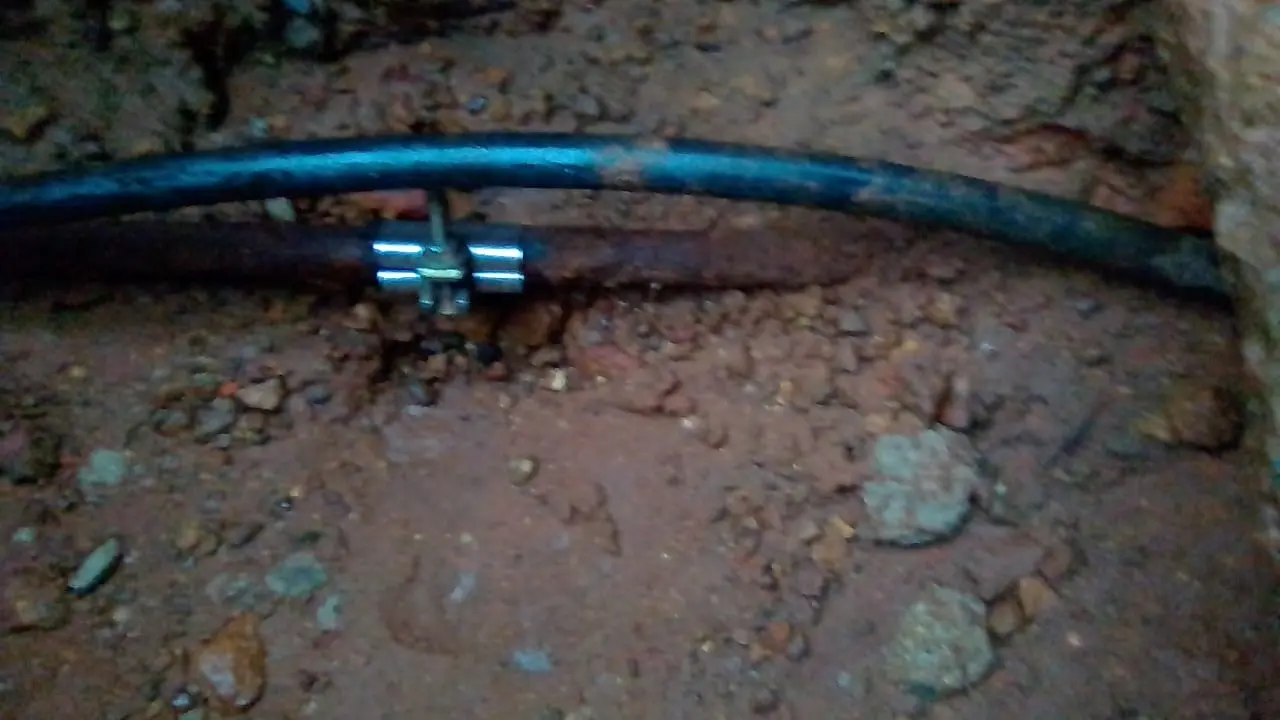
Compare the access, parts and making-good work that affect a pipe-repair quotation, including excavation and reinstatement.
Read guide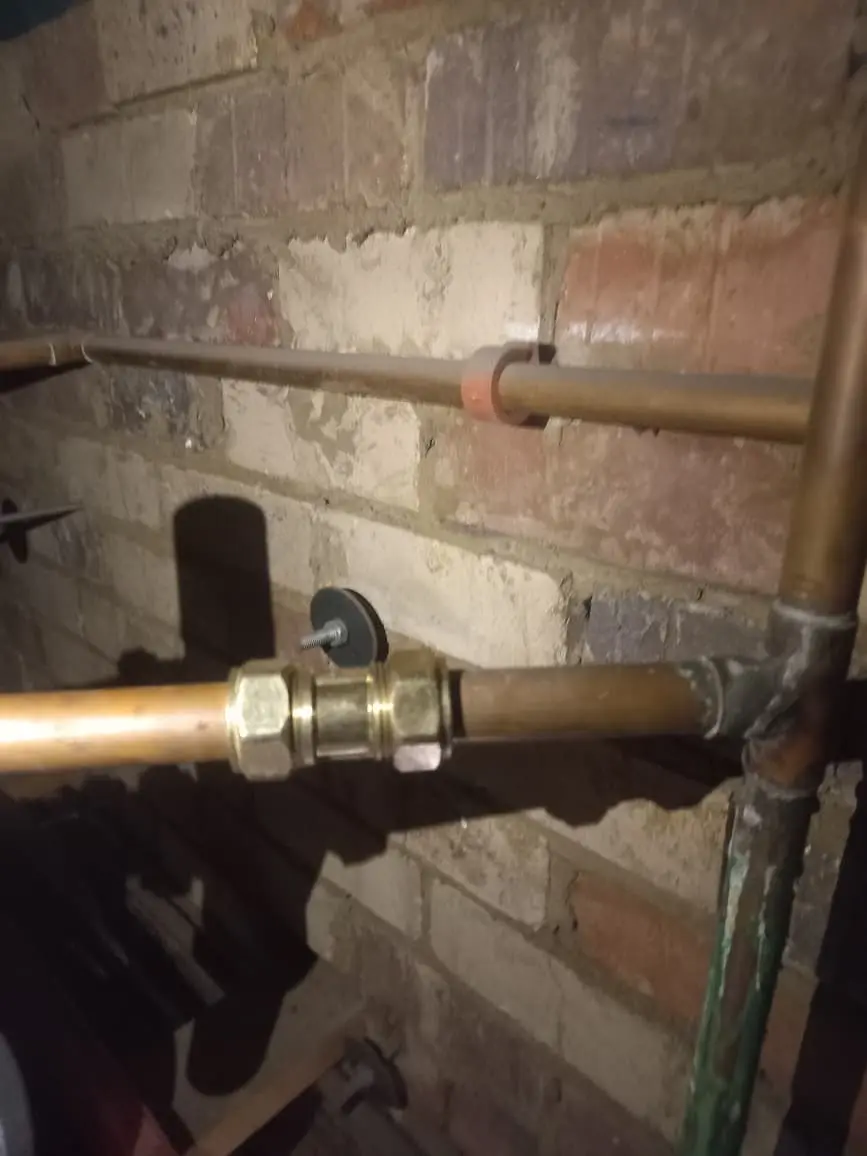
Find out what to ask about the quotation, insurance and guarantee when choosing a plumber for your repair.
Read guide