Home/Professional Geyser Repair for Reliable Hot Water
GEYSER FAULT DIAGNOSIS AND REPAIR
Professional Geyser Repair for Reliable Hot Water
Professional Professional Geyser Repair for Reliable Hot Water with the standards you should expect: prepared technicians, accurate diagnosis, and repairs proven under normal use. We offer free call-out and quotation before work starts, so you always know work and price upfront.
Tell us whether the problem is a visible leak, no hot water, water that runs cold too soon or a circuit that trips. Note where any discharge is coming from.
What should I be careful of?
Never plug a geyser discharge pipe or open electrical covers. Don’t climb into a roof space or repeatedly reset a circuit that keeps tripping.
Can I do anything useful now?
For an active geyser leak, switch off its electrical supply and close the cold-water feed only where both controls are safely accessible. Keep clear of wet ceilings.
What details should I send you?
Send the symptoms, visible leak position and model or capacity if you already have them. Tell us whether the geyser is in a roof space, cupboard or outside.
What happens next?
We check the fault and explain whether a component repair or geyser replacement makes sense. You approve the quotation before work starts, and the system is checked afterwards.
Get reliable hot water again
A geyser fault may involve the water connections, controls or heating components. We identify what has failed and explain the repair or replacement options, including the necessary plumbing and electrical work, before you approve the price.
Can a geyser that has stopped heating be repaired?
Often. The power supply, thermostat and element can be checked separately from the cylinder. The assessment determines which part is faulty and whether the cylinder can stay in use.
Where can a geyser appear to leak from?
Water can come from a valve, pipe joint, discharge line or the cylinder itself. Tell us where you see the water and whether it runs continuously.
Does a dripping discharge pipe mean I need a new geyser?
Not on its own. A plumber needs to check the valve, installation and discharge pattern. Leave the outlet clear and report whether the dripping is occasional or continuous.
What information helps when booking geyser work?
Say where the geyser is, whether the water is cold or the unit is leaking, and whether the breaker has tripped. If a label is safely visible, a photo can help identify the model.
What should be included in a geyser replacement quotation?
Ask about the cylinder, valves, pipe connections and whether electrical work, removal of the old unit or access work is included. The scope depends on the installation.
Should I check my geyser’s manufacturer warranty before approving a repair?
Yes. If the geyser may still be under warranty, contact the manufacturer before approving the repair. Ask who is authorised to do the work and which parts the warranty allows. Have the serial number handy if the label is safely visible, or find your proof of purchase or installation.
Should I call my building insurer before arranging a repair for a burst geyser?
If you plan to claim, call your insurer’s emergency or claims line before approving the repair or replacement. Ask whether the insurer will send a plumber or whether you can use your own. Report any water damage to ceilings, walls or floors when you call.
Is it worth asking the plumber to check the anode while repairing my geyser?
Yes, if your model has a serviceable sacrificial anode. The anode helps protect the cylinder from corrosion and wears down over time. Ask whether it is due for inspection and whether checking or replacing it would be included in the quote.
◴
Fast ResponseHelp when it matters most.
24
Available 24/7Day or night, we’re ready.
◇
Trusted ApproachClear, honest and professional.
COMMON GEYSER FAULTS
Problems that may be suitable for geyser repair
Many geyser problems are caused by components around the cylinder rather than the cylinder itself. Accurate diagnosis protects the customer from unnecessary replacement and helps ensure that the selected repair addresses the real cause. For more background, read Hot Water Shortage Diagnosis: Fix Steps for Geyser Faults.
Geyser not heating
No hot water may be caused by an element, thermostat, electrical supply issue, wiring fault or control problem. The correct approach is to test the system safely instead of replacing the first suspected component.
Where electrical work falls outside plumbing work, the customer should be told clearly so the correct trade can be involved.
Water temperature is unreliable
Water that is too cold, excessively hot or inconsistent may indicate thermostat trouble, element performance problems, mixing, demand issues or a system that is not recovering as expected.
We consider the pattern of the fault, not only the temperature at one tap, because household usage and pipe distance can influence what the customer experiences.
Leaks from valves or connections
A leak near a geyser may come from a valve, union, pipe, overflow arrangement or failed seal. These faults can often be repaired when the cylinder is still sound. You can also review our local coverage for Water Leak Detection and Repair in Gauteng.
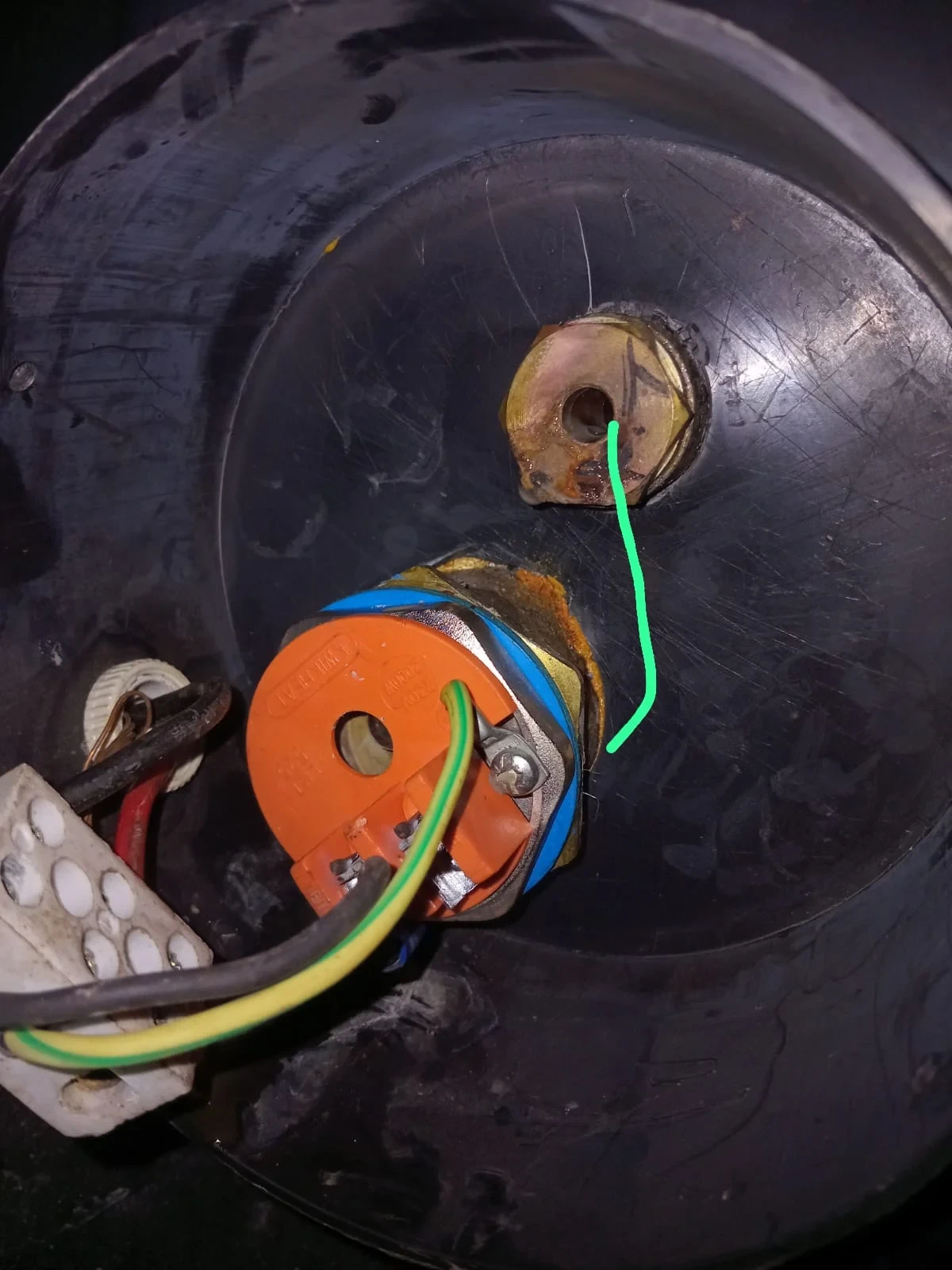
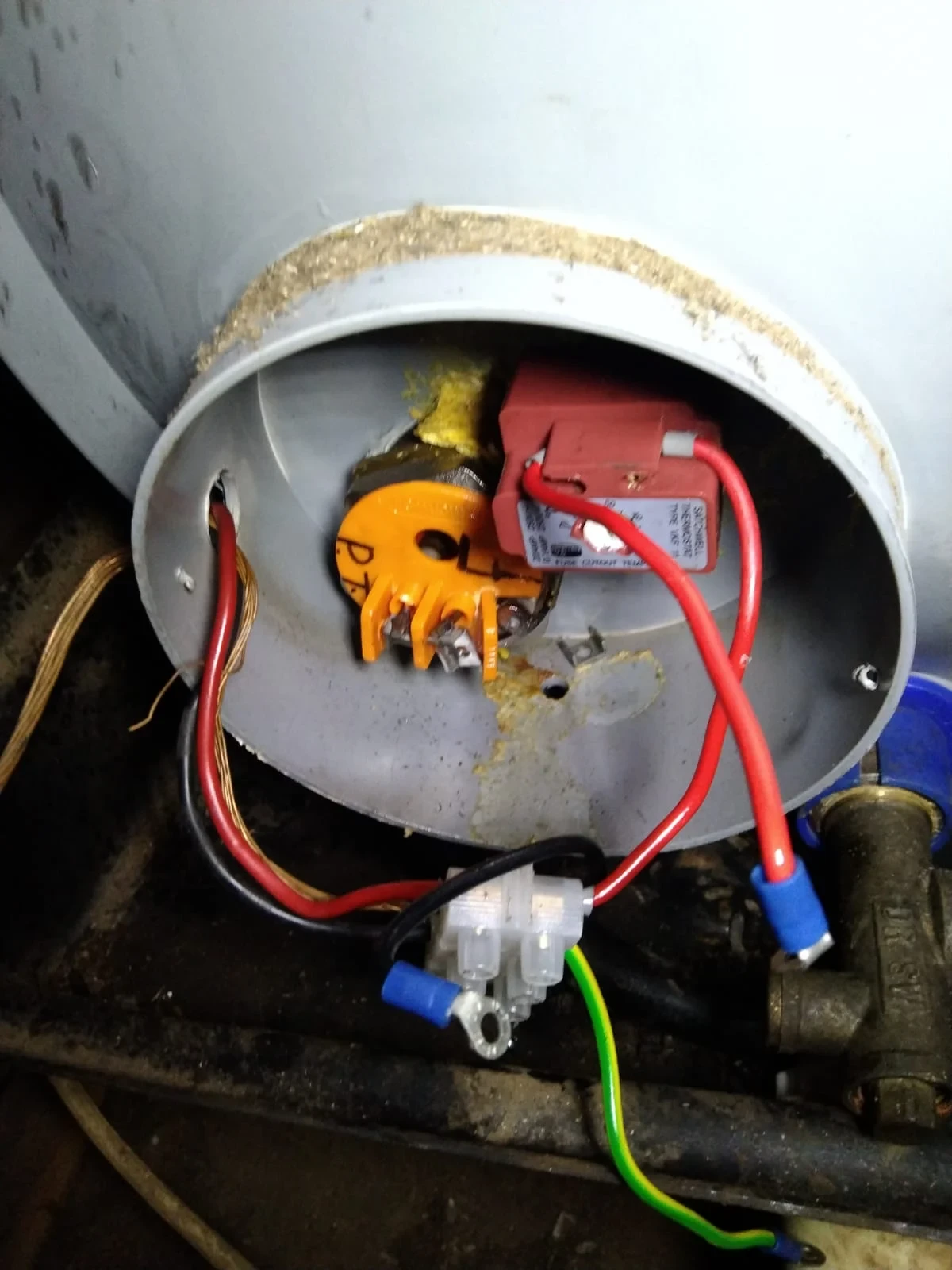
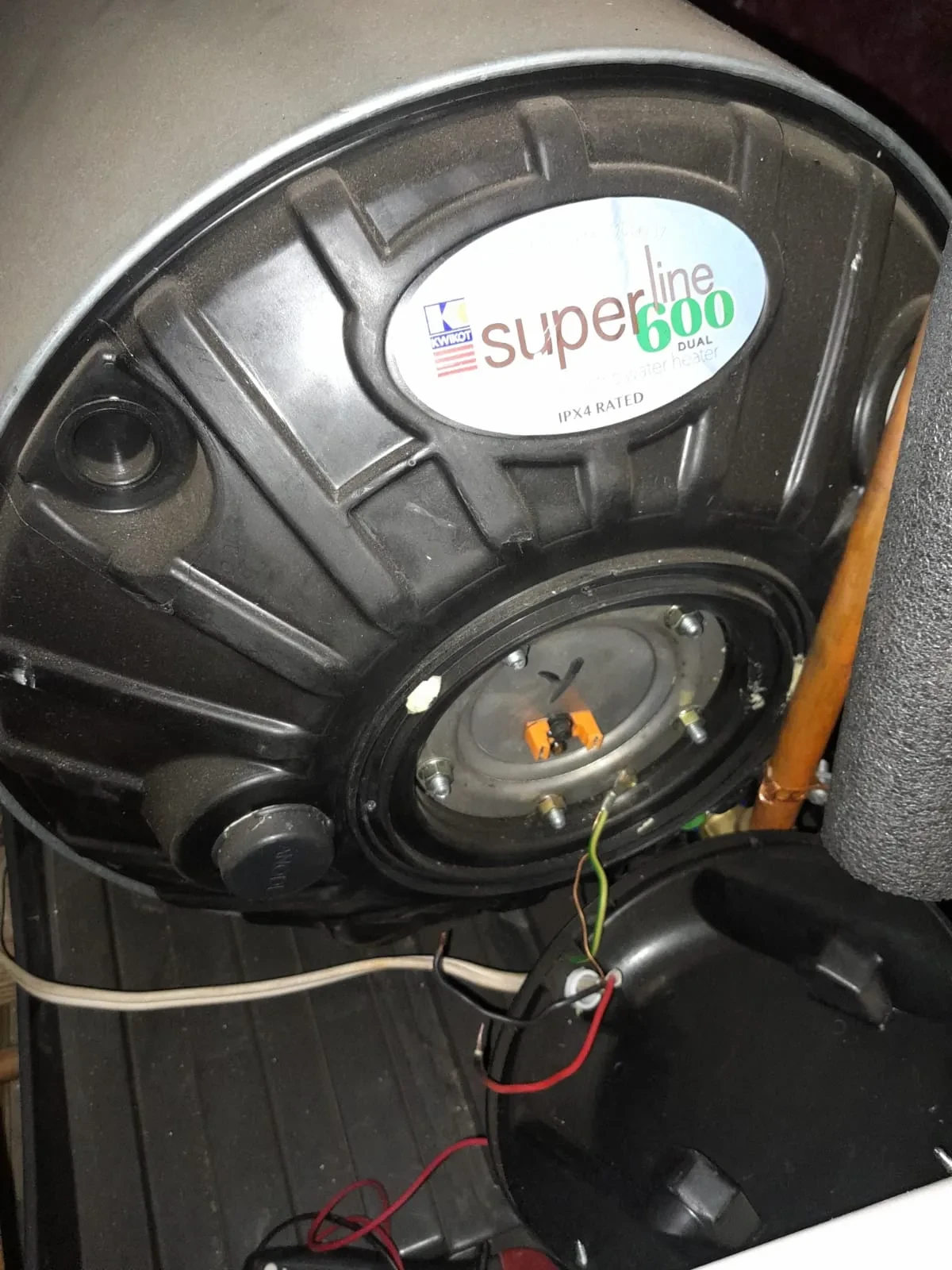
Repairing the geyser heating assembly We opened the heating assembly to work on this geyser. No hot water does not automatically mean the cylinder needs replacing: the element, thermostat and electrical supply need to be checked separately. Our plumbers and electricians can handle the relevant repairs within the agreed work.
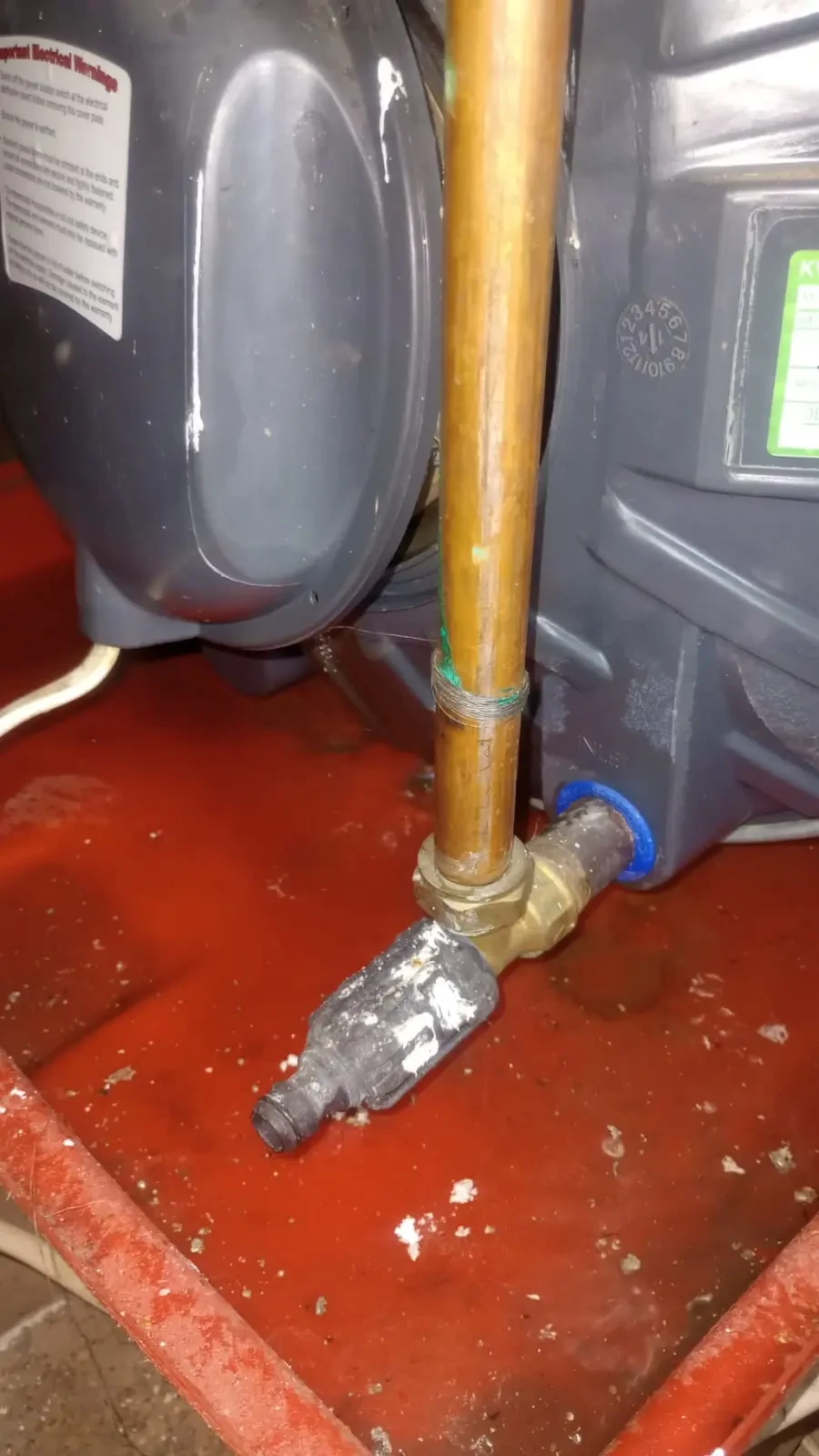
Repairing a valve connection at the geyser
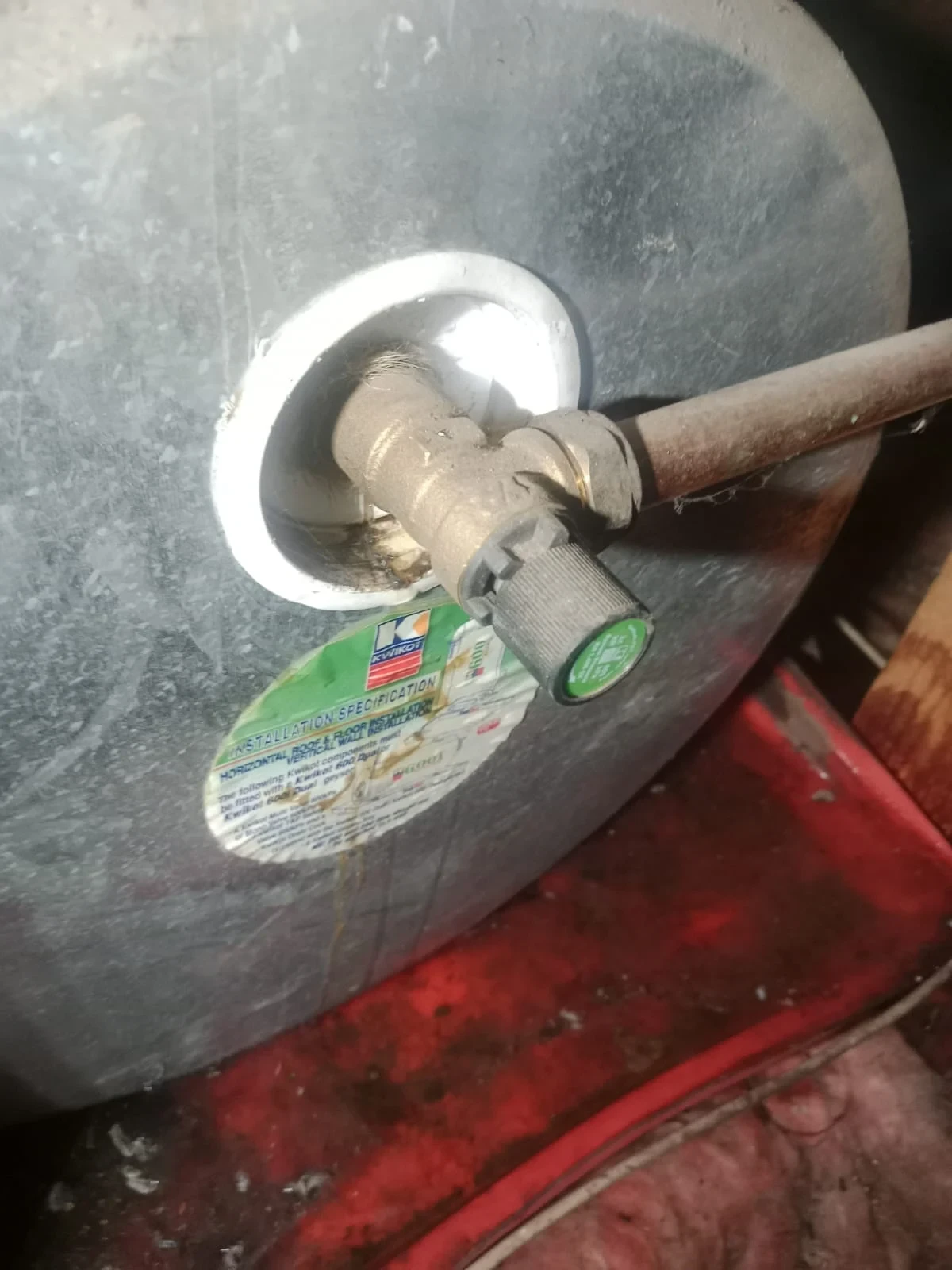
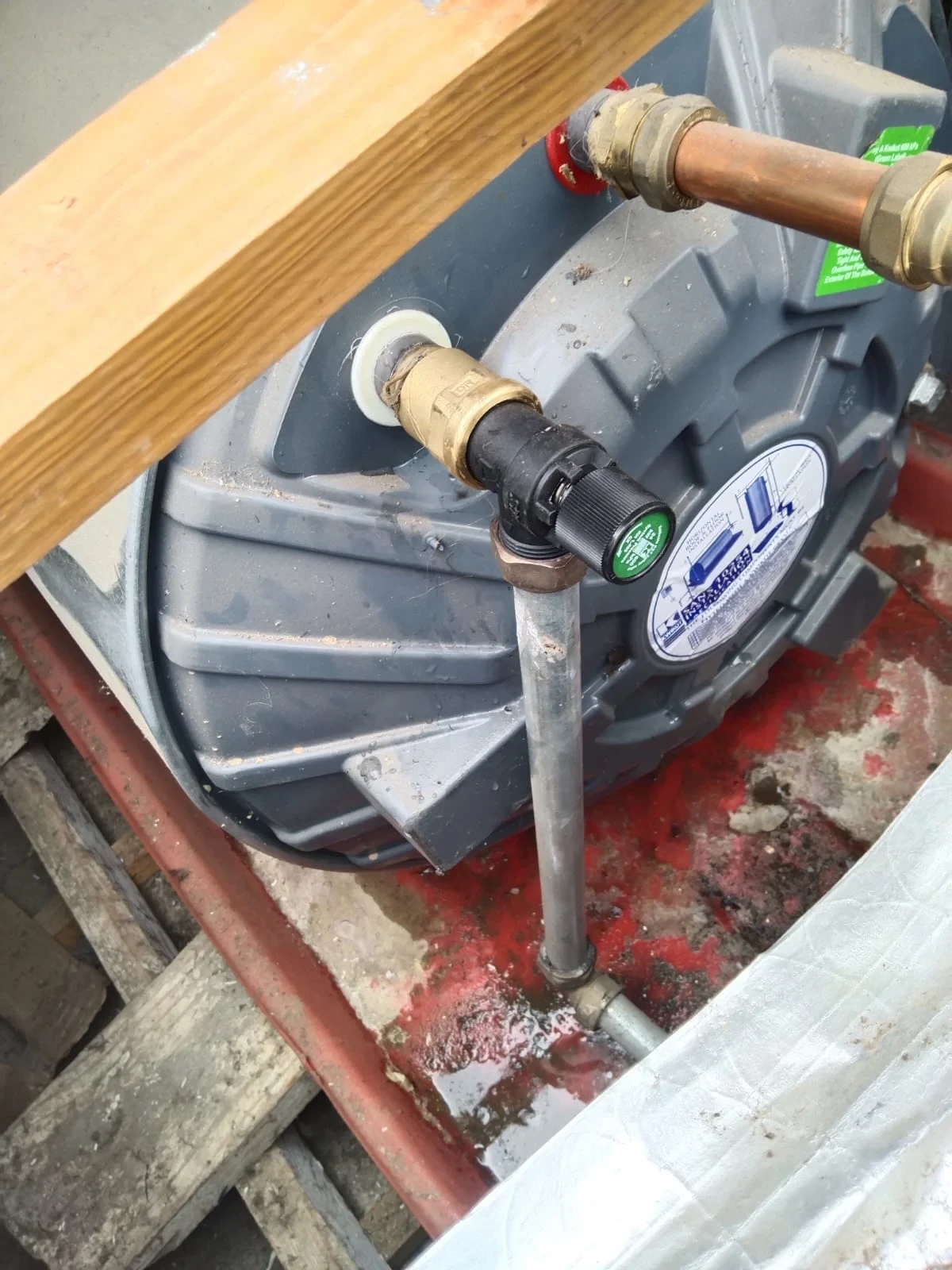
We worked on the valve and pipe connection at this cylinder. Water around a geyser can come from a connected fitting rather than the cylinder shell. We locate the source before recommending a fitting repair or a replacement geyser, and explain which work is included.
SAFE DIAGNOSIS
Why proper testing matters before any repair
A geyser combines stored hot water, pressure and electricity. Guesswork can waste money and may leave an unsafe condition unresolved. Diagnosis should be systematic and proportionate to the visible problem.
Start with the symptom and history
We ask when the fault began, whether it is constant or intermittent, what changed before the problem and whether previous repairs were completed. This history often narrows the likely causes.
Customers can help by noting whether the problem affects all hot taps, whether water pressure has changed and whether the distribution board has tripped.
Inspect related components
The cylinder cannot be considered in isolation. Valves, pressure controls, discharge pipes, connections, supports and accessible electrical parts all influence geyser performance and safety.
A fault in one component may create a symptom elsewhere, which is why the complete accessible installation is reviewed.
Confirm the repair under operation
A repair is not complete merely because the leak has stopped while the system is cold. The geyser should be refilled, checked and observed as it returns to normal operating conditions.
This final stage helps reveal movement, seepage or abnormal discharge that may not appear immediately.
Checking the controller as part of a heating fault
We check the controller settings and the heating components when a geyser is not delivering hot water as expected. A display reading helps the enquiry, but it does not identify the failed part on its own. Send the displayed message and describe when the heating stopped.
Checking the thermostat before replacing heating parts
We inspect and test the thermostat and element connections when investigating a heating fault. Replacing parts without checking the supply and controls can leave the same complaint unresolved. Our electrician can attend to electrical faults alongside the plumbing work where needed.
REPAIR DECISIONS
Balancing repair cost with long-term reliability
A good repair recommendation considers more than whether a part can technically be changed. The age and condition of the installation, previous failures, access difficulty and likely remaining service life all affect value.
Repairing a serviceable component
When the cylinder is sound and the defect is isolated, replacing the failed component may be the most economical option. The new component must be suitable for the system and installed without creating strain on adjacent pipes.
Customers should understand exactly which component is being replaced and why.
Recognising a failed cylinder
A cylinder leak, severe corrosion or structural failure normally points toward replacement rather than repair. Attempting to patch a failed pressure vessel is not a responsible long-term solution.
The surrounding cause should still be considered so the replacement is not exposed to the same poor support, pressure problem or installation defect.
Planning for an ageing geyser
An older geyser with several deteriorated components may remain repairable, but the combined cost of repeated call-outs can exceed the value of replacement. We discuss the practical options without forcing the customer toward the larger job.
The final decision should reflect safety, budget, expected reliability and the consequences of another failure in that location.
Tracing water at the geyser valve and discharge pipe
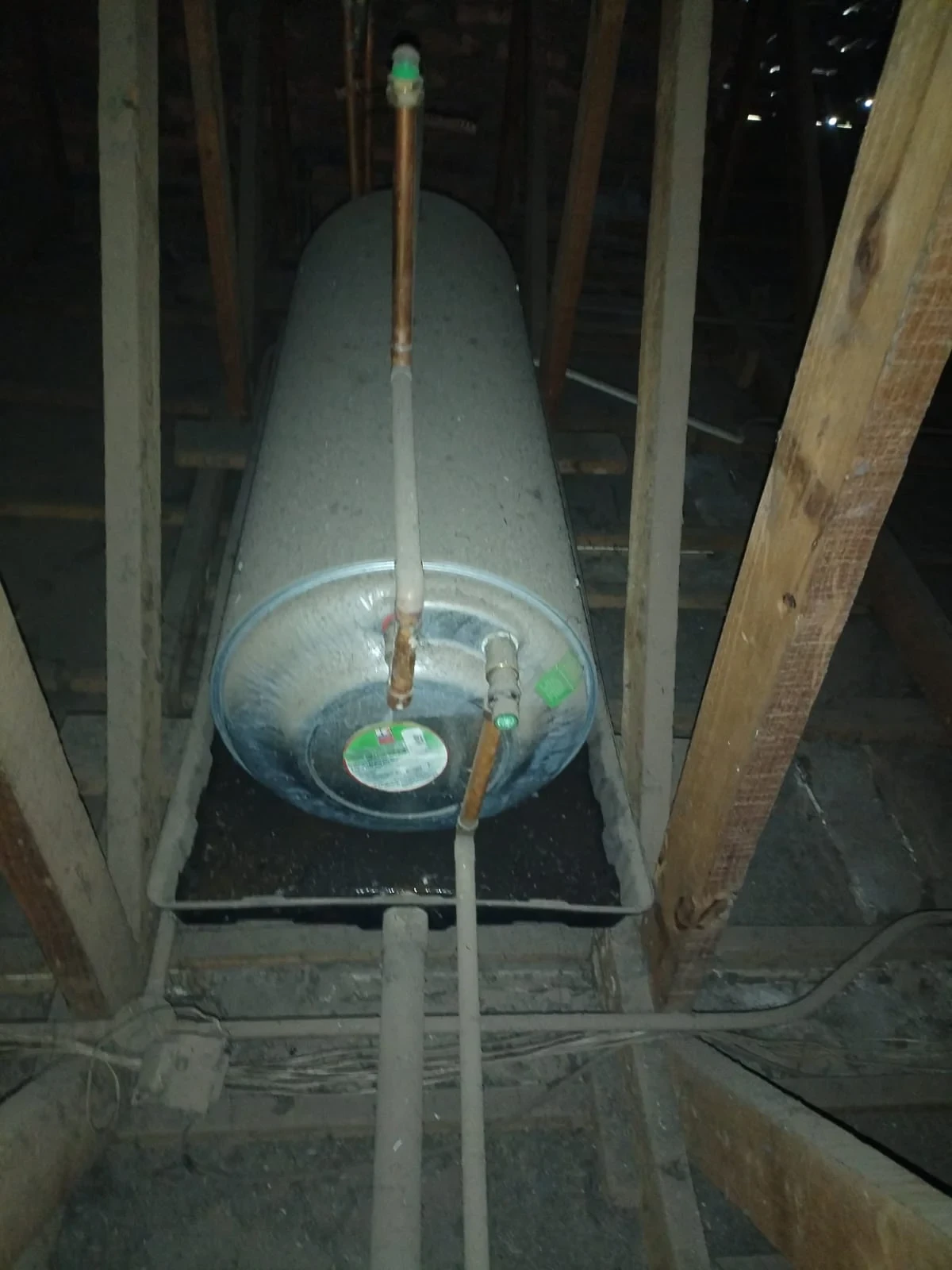
We check where the water is coming from before deciding which fitting needs repair. Report whether discharge is occasional or continuous, and whether water is also collecting in the tray. Do not plug a discharge outlet or stop it with a cap; let us investigate the cause.
Planning repair access around the installed geyser
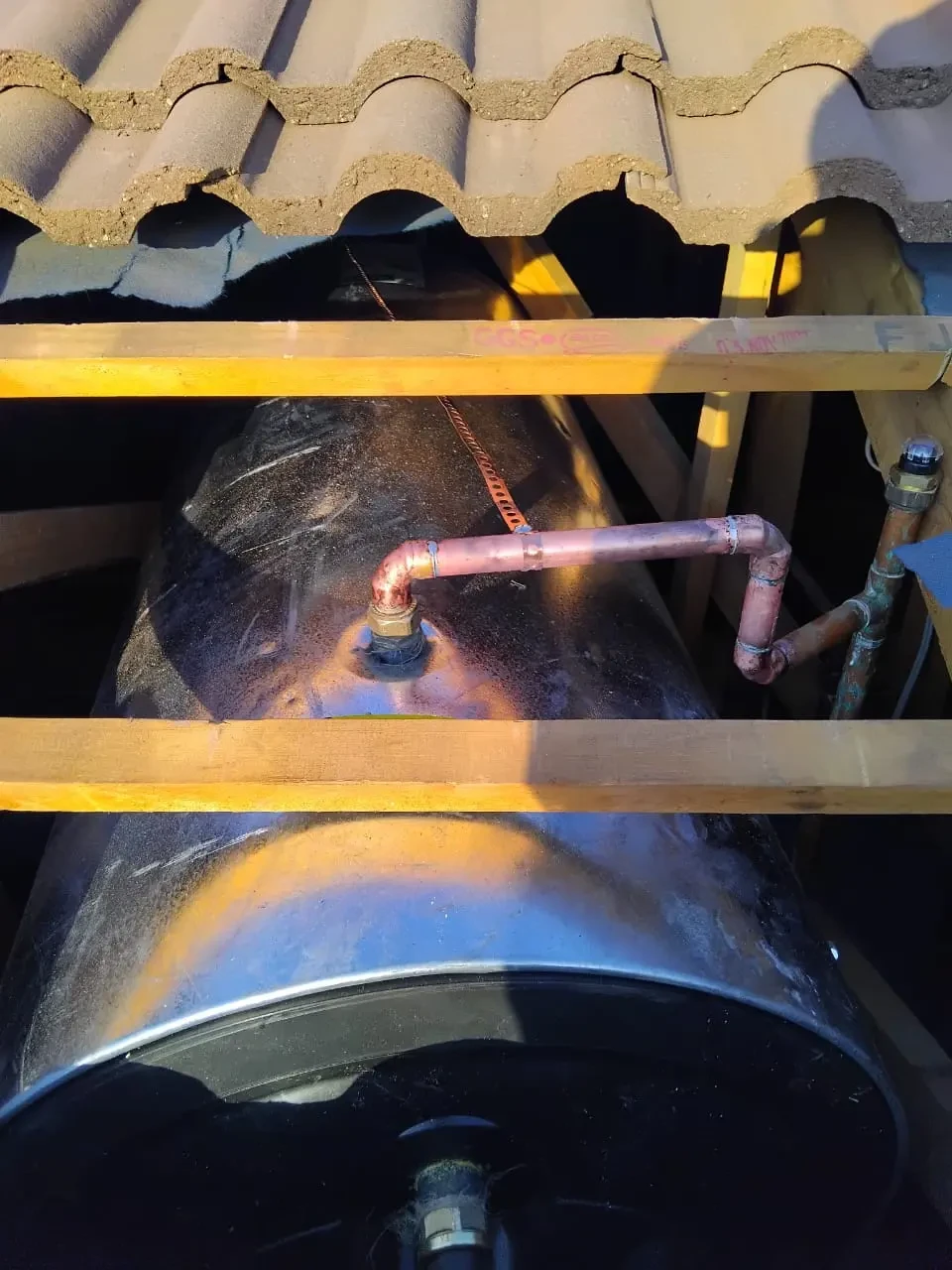
We assess access around the installed cylinder before starting repairs. Restricted roof space affects how a leaking connection or heating component can be reached. If a cylinder replacement becomes necessary, we explain the lifting, connections and access work in the quotation.
QUALITY REPAIR WORK
What careful geyser repair should include
The quality of a repair is determined by preparation, component suitability, workmanship and testing. Small shortcuts around a pressurised hot-water system can create repeated leaks and unnecessary disruption.
Safe isolation and controlled draining
Water and electricity are isolated appropriately before components are removed. Controlled draining reduces mess and protects ceilings, cupboards and floors around the work area.
Where the geyser is difficult to access, the plumber plans movement and drainage before beginning rather than improvising after the system is open.
Correct parts and secure connections
Replacement parts should suit the installation and be fitted according to their intended function. Threads, seals and pipe alignment are handled carefully so that the repair does not rely on excessive force.
Visible supports and connections are checked because vibration or unsupported pipework can shorten the life of a new component.
Clean handover and customer guidance
After testing, the work area is left orderly and the customer receives a plain-language explanation of the fault and repair.
We also point out any separate concern that was visible during the visit, distinguishing between urgent defects and future maintenance advice.
Working on the exposed heating controls
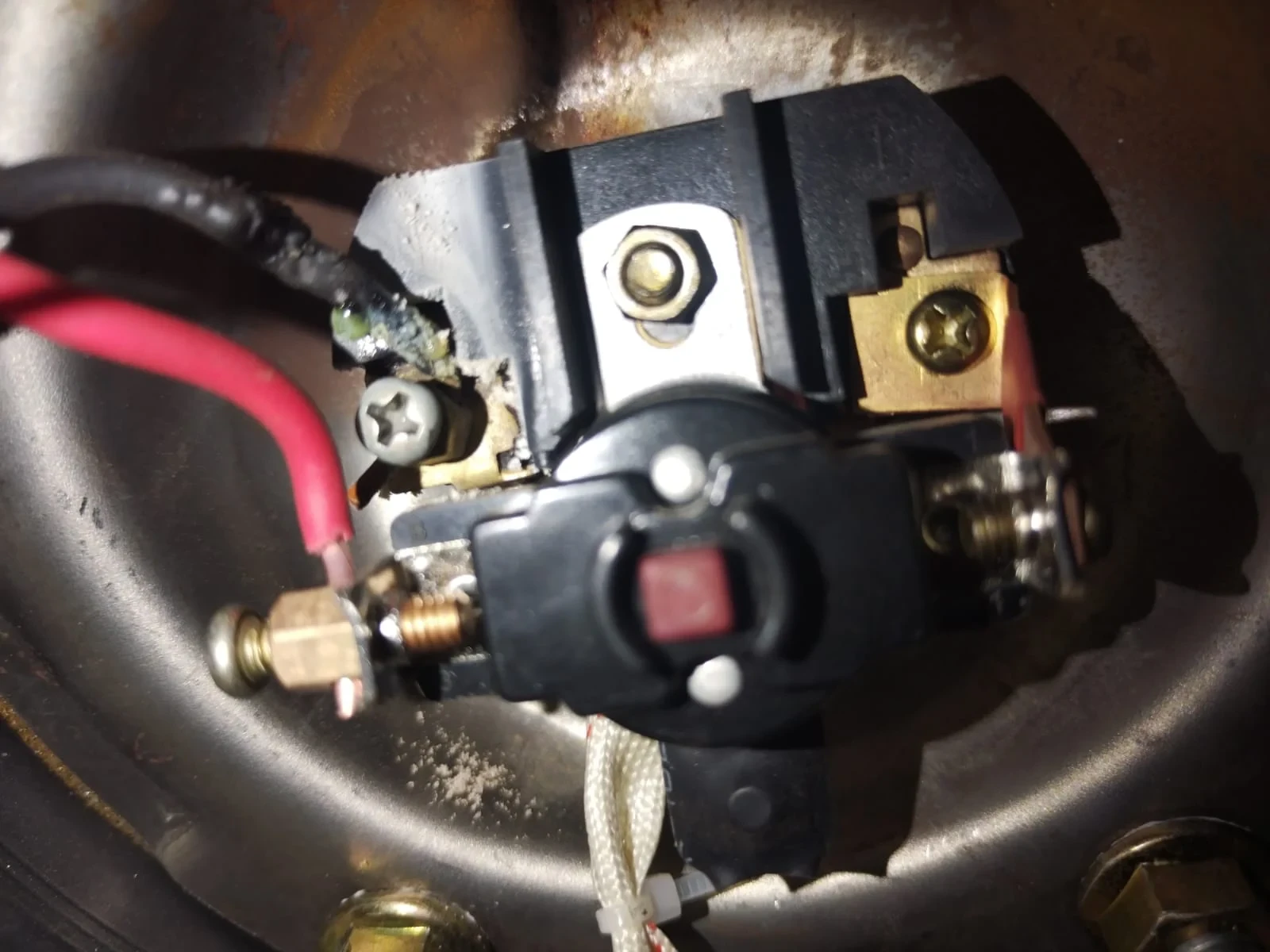
We use the service opening to repair heating controls without disturbing sound plumbing unnecessarily. The work is followed by checks appropriate to the fault before the cover is secured. If water has reached the electrical area, keep the geyser switched off until our team has assessed it.
Checking the pipework alongside the cylinder repair
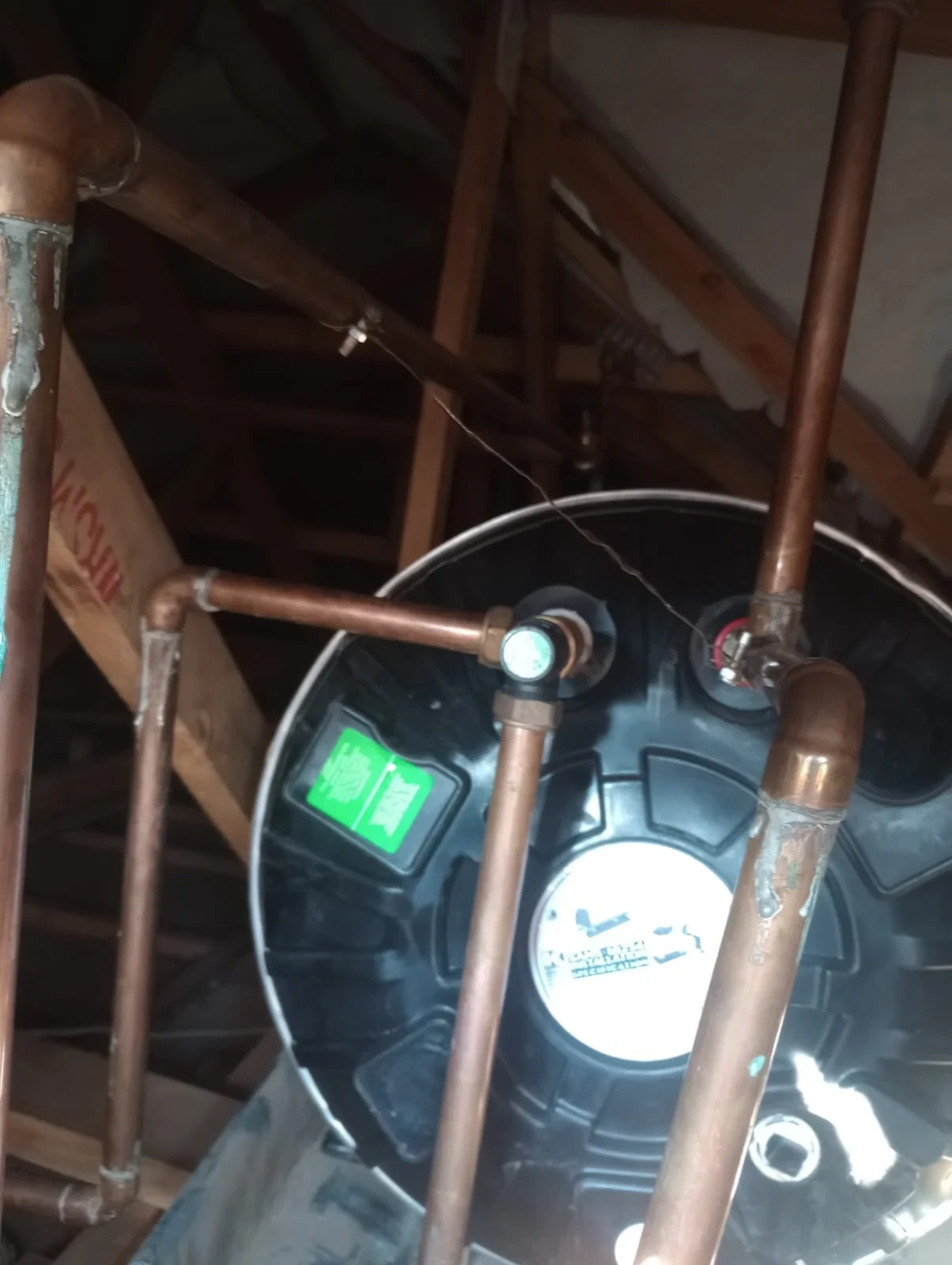
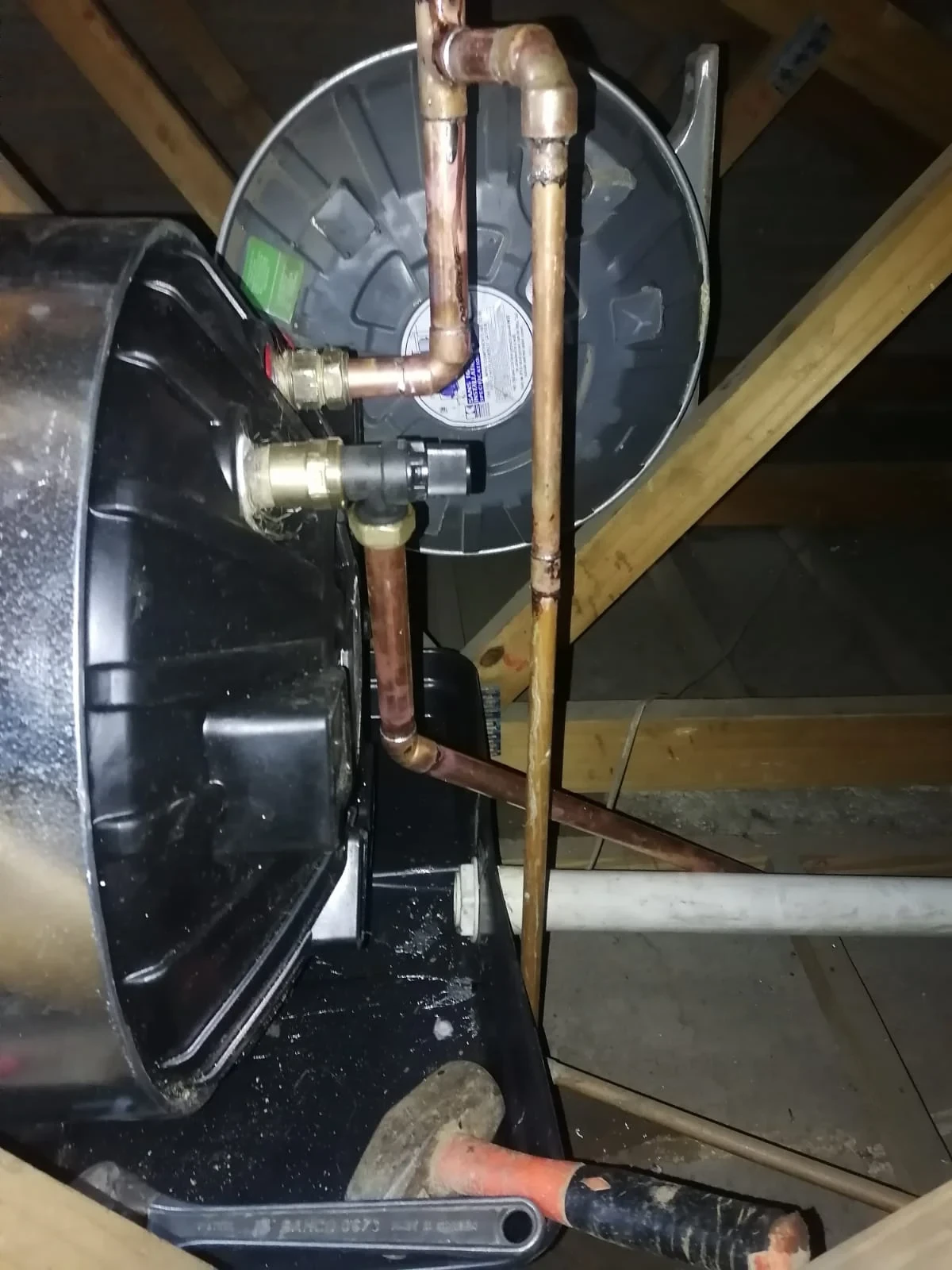
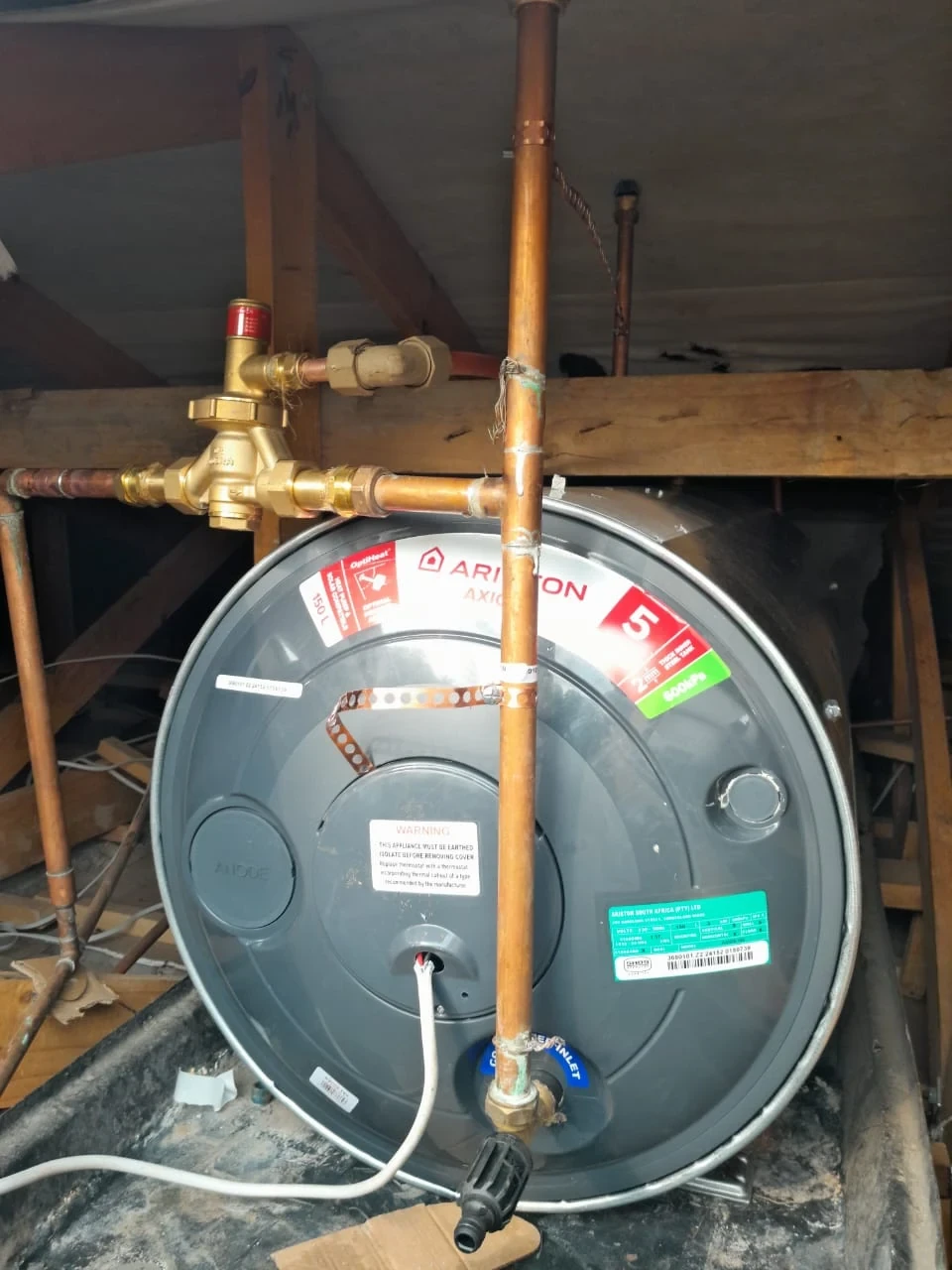
We check the adjacent copper connections when repairing a geyser leak. A sound cylinder with a failed joint needs a different repair from a leaking cylinder body. We explain that distinction so you can approve the required work rather than an unnecessary replacement.
OUR REPAIR PROCESS
A disciplined route from fault report to tested repair
Customers do not need to identify the technical component. Clear symptoms and access details allow the plumber to begin with the right questions.
1. Report the symptomTell us whether the geyser is leaking, cold, noisy, tripping power or producing unusual discharge.
2. Make the area safeWhere appropriate and safe, isolate the geyser electricity and water, and keep people away from wet ceilings or electrical points.
3. Inspect and testThe plumber examines the cylinder and related components to identify the most likely cause.
4. Explain the optionsYou receive a clear recommendation for repair, further specialist testing or replacement.
5. Complete the approved repairThe failed component or connection is repaired using suitable materials and controlled methods.
6. Restore and verifyThe system is refilled, checked under operating conditions and explained before handover.
Geyser leaking, cold or behaving unpredictably?
For active flooding, sewage exposure, failed isolation or water near electricity, call immediately. For a contained fault in your area, WhatsApp the location, a short description and a photo where practical. The call-out and quotation are free, and repair work only proceeds after the work and price are approved.
We service and repair geyser heating faults through the access opening shown here. Tell us whether the water stays cold, heats intermittently or trips the electricity. Leave the cover closed and the electrical checks to our team; a fault needs diagnosis before a component is replaced.
Helpful plumbing guides
Learn more about Professional Geyser Repair for Reliable Hot Water
Practical guides to help you understand professional geyser repair for reliable hot water, spot warning signs early, and decide when professional help is the safest choice. Written for homeowners and property managers who want clear answers before calling a plumber.
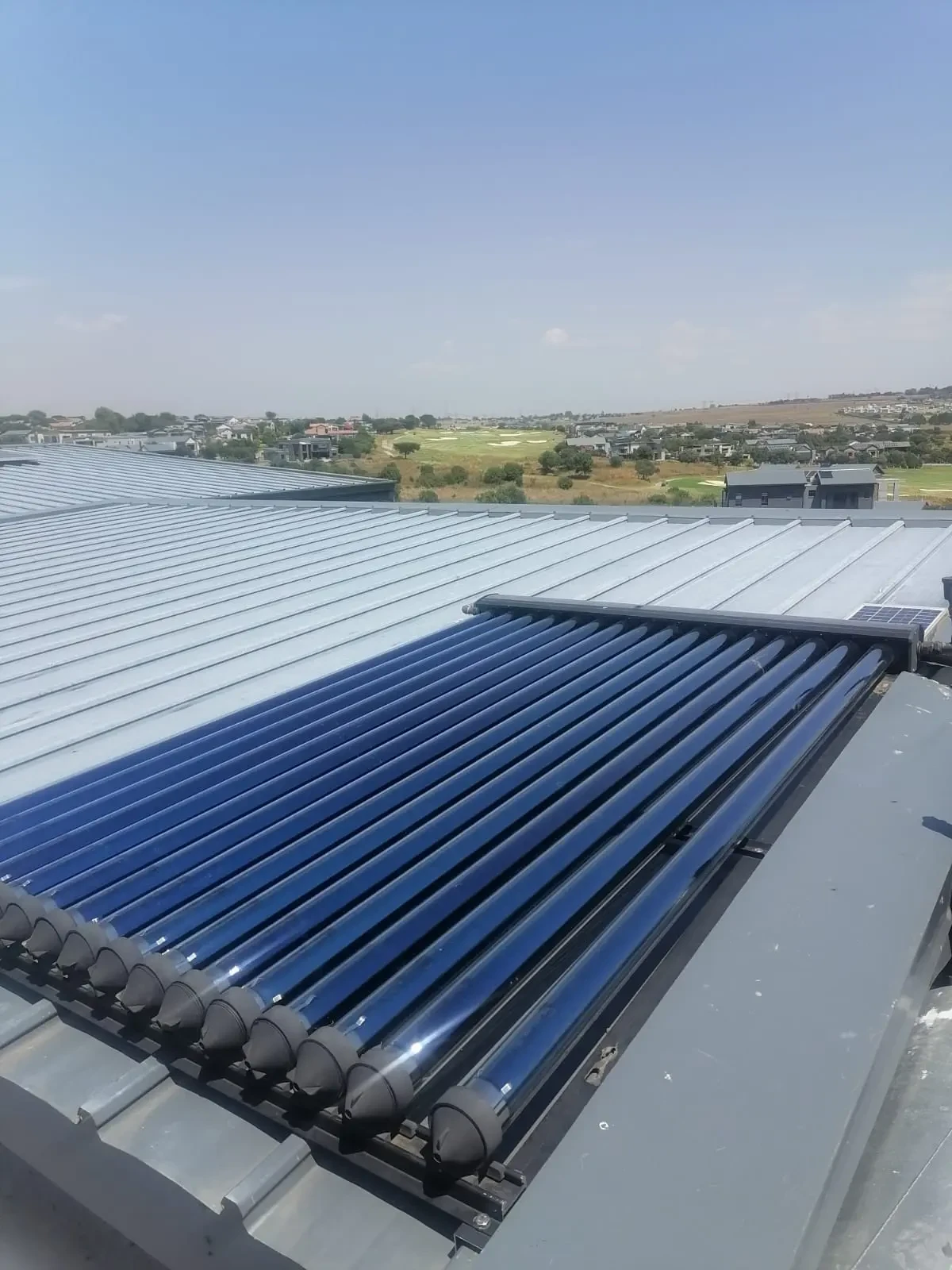
Considering a solar upgrade while arranging geyser work? We can assess the existing cylinder, roof space and hot-water needs before quoting a suitable conversion.