Need plumbing help? Speak directly to our team 24/7.
Plumbing Knowledge Centre

Geyser Lifespan

Geyser lifespan is influenced by water quality, pressure, installation, usage, corrosion protection and maintenance. Age alone does not determine condition, but an older cylinder with repeated leaks or component failures deserves closer assessment.

11 min readPublished Reviewed for practical accuracy

Request plumbing assistance

Tell us what you need and how to reach you.

We’ll use your details to respond to your plumbing enquiry.

Common questions

Can a geyser that has stopped heating be repaired?

Often. The power supply, thermostat and element can be checked separately from the cylinder. The assessment determines which part is faulty and whether the cylinder can stay in use.

Where can a geyser appear to leak from?

Water can come from a valve, pipe joint, discharge line or the cylinder itself. Tell us where you see the water and whether it runs continuously.

Does a dripping discharge pipe mean I need a new geyser?

Not on its own. A plumber needs to check the valve, installation and discharge pattern. Leave the outlet clear and report whether the dripping is occasional or continuous.

What information helps when booking geyser work?

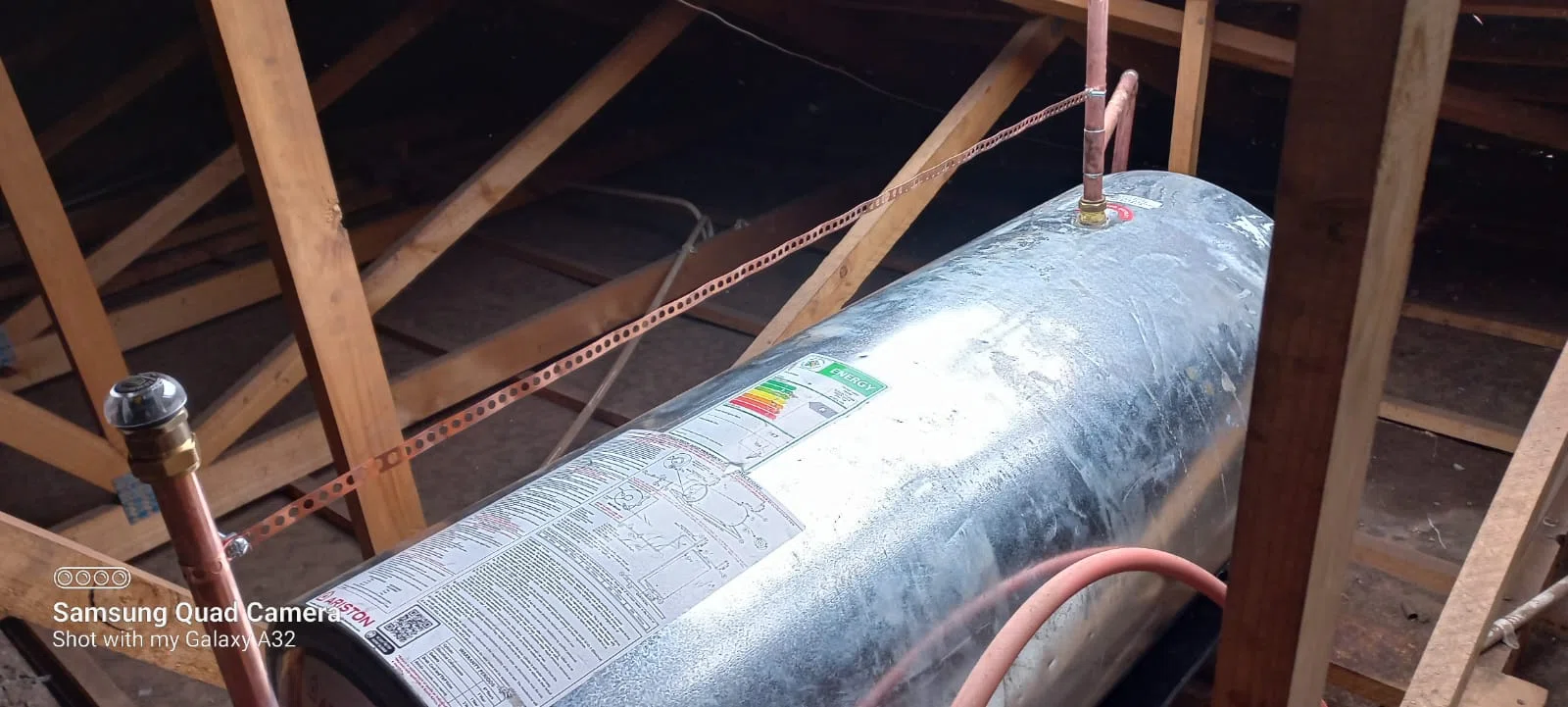
Say where the geyser is, whether the water is cold or the unit is leaking, and whether the breaker has tripped. If a label is safely visible, a photo can help identify the model.

What should be included in a geyser replacement quotation?

Ask about the cylinder, valves, pipe connections and whether electrical work, removal of the old unit or access work is included. The scope depends on the installation.

How can I estimate my geyser’s age if I don’t know when it was installed?

Look for an installation invoice or other installation record first. If those records are missing, ask the manufacturer whether the serial plate can be used to confirm the manufacture date. On the Kwikot Superline 600 Dual, the serial plate can establish when the cylinder was made. Use that date as an estimate and ask a plumber to assess the cylinder’s condition before deciding whether to replace it.

What does a sacrificial anode do, and when should a plumber check it?

A sacrificial anode wears away to help protect the inside of the cylinder from corrosion. If your geyser has one, ask a plumber to follow the inspection schedule for your model and replace the anode if it is worn. For example, Kwikot specifies an annual check for its Prisma Classique 10-litre over-basin model.

If my geyser stops heating, could the cylinder still be under warranty even if the element is out of warranty?

Yes. The cylinder and electrical parts can have different warranty periods. For example, Kwikot lists five years for the inner cylinder of its 150-litre Superline 600 Dual and one year for the element and thermostat, subject to its terms. Once the faulty part has been identified, check the warranty for that part on your specific model.

Geyser lifespan is influenced by water quality, pressure, installation, usage, corrosion protection and maintenance. Age alone does not determine condition, but an older cylinder with repeated leaks or component failures deserves closer assessment.

Start here

A ten-year-old geyser is not automatically unsafe, and a newer unit is not automatically trouble-free. Condition, repair history and installation quality matter more than a single age number.

How to recognise the problem

  • Repeated valve or element failures.
  • Visible corrosion around the cylinder or fittings.
  • Rust-coloured hot water.
  • Increasing heating time or reduced capacity.
  • Water appearing in the tray.
  • Rising repair frequency and cost.

Common causes

  • Internal corrosion.
  • High pressure.
  • Aggressive or mineral-rich water.
  • Poor installation and unsupported pipework.
  • Repeated overheating.
  • Lack of maintenance.

What you can safely check yourself

  • Record installation and repair dates.
  • Inspect visible areas for corrosion and leaks.
  • Monitor heating performance and electricity use.
  • Plan replacement before a high-risk unit fails.

What you should never do

  • Do not ignore corrosion on the cylinder.
  • Do not keep repairing a leaking tank shell.
  • Do not assume insurance will cover gradual deterioration.
  • Do not delay action when water reaches the tray.

When to call a plumber

Ask for professional assessment when the geyser is ageing, repairs are becoming frequent, the cylinder shows corrosion, or water damage risk is high. Replacement may be more economical than repeated component repairs.

How we can help

The plumber evaluates cylinder condition, pressure, installation compliance, repair history and current performance. Recommendations should distinguish replaceable components from structural cylinder failure and include safe removal and compliant installation if replacement is needed.

Reducing the chance of another problem

  • Maintain correct pressure control.
  • Repair leaks quickly.
  • Inspect valves and tray drainage.
  • Avoid repeated overheating.
  • Budget for planned replacement as the unit ages.

Frequently asked questions

There is no exact figure for every installation. Water quality, pressure, maintenance and product quality create significant variation.

Minor component repairs may still be worthwhile, but cylinder corrosion and repeated failures often make replacement the better option.

Yes, especially by controlling pressure, repairing leaks and identifying failing components early, although it cannot reverse cylinder corrosion.

Practical plumbing support

Questions about geyser lifespan?

Share what you are seeing related to geyser lifespan and we will suggest sensible next steps.