COMPLETE PLUMBING SUPPORT FOR HOMES AND BUSINESSES
Professional Plumbing Services
For a plumbing visit in the property, from leaking taps and toilets to appliance connections, bathroom work and planned maintenance, we diagnose the cause, explain the repair, and test before leaving. Related professional help is available through Professional Geyser Repair for Reliable Hot Water.
Tell us what is leaking, blocked or being installed. We check the job, explain the work and price it before you commit. Where the job needs building, tiling or electrical work as well as plumbing, we can coordinate the agreed trades.
Can you repair a mixer without replacing the whole tap?
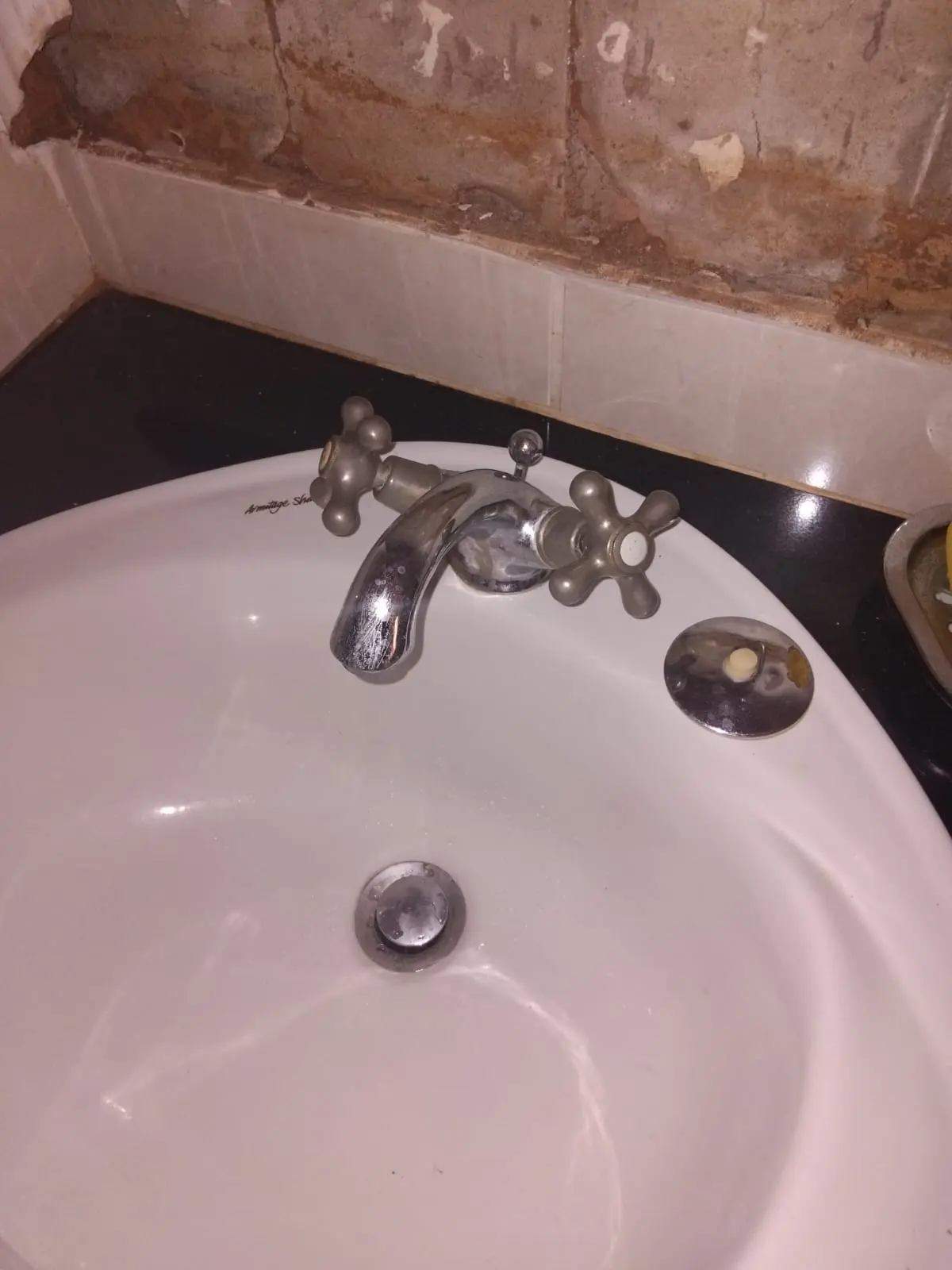
Yes, if the body is sound and the right replacement part is available. We check whether the drip comes from the cartridge, a connection or the spout before quoting.
Why does a tap drip only when I move the handle or spout?
That pattern can help locate the leak around a moving seal or connection. Tell the plumber whether it also drips when the tap is completely off.
Can I get help if I don’t know where the water is coming from?
Yes. Tell us where the water first appeared and when you notice it. We check nearby supply pipes, waste connections and fixtures before deciding what needs opening.
Will you tell me what the job costs before you start?
Yes. We explain the repair and quote for it before starting. If the assessment reveals a different fault or more work, ask for the revised scope and price before approving it.
Can you repair a leaking tap without changing the whole mixer?
Often, yes. If the tap body and connections are sound, a worn seal or cartridge may be replaceable. We check the leak point and whether the correct part is available.
◴
Fast ResponseHelp when it matters most.
24
Available 24/7Day or night, we’re ready.
◇
Trusted ApproachClear, honest and professional.
GENERAL PLUMBING SUPPORT
the property: Repairs, installations and maintenance
From a dripping tap to a burst pipe or a bathroom renovation, we’re here to help. Tell us what needs attention and we’ll explain the work and the price. There’s no call-out fee.
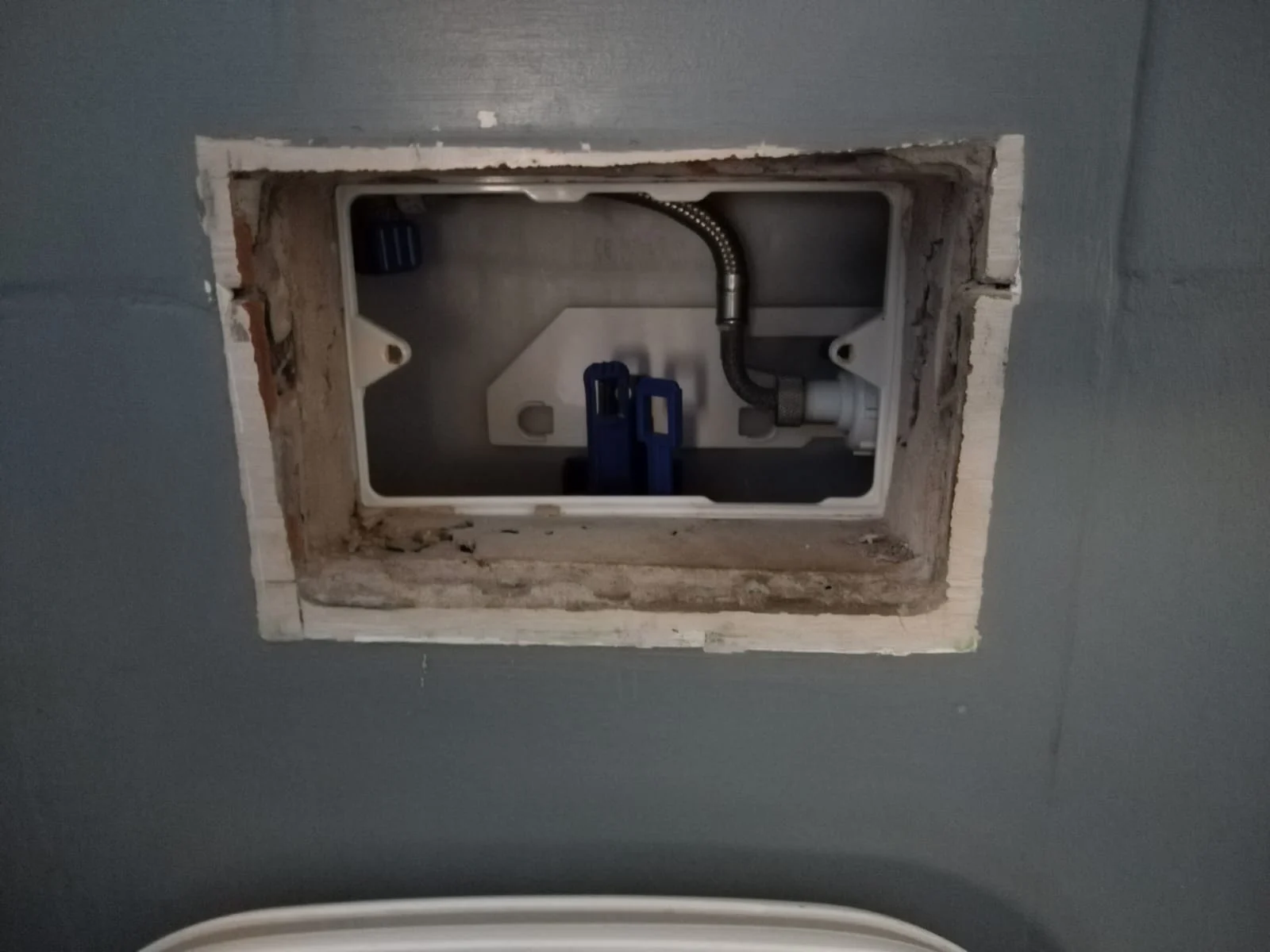
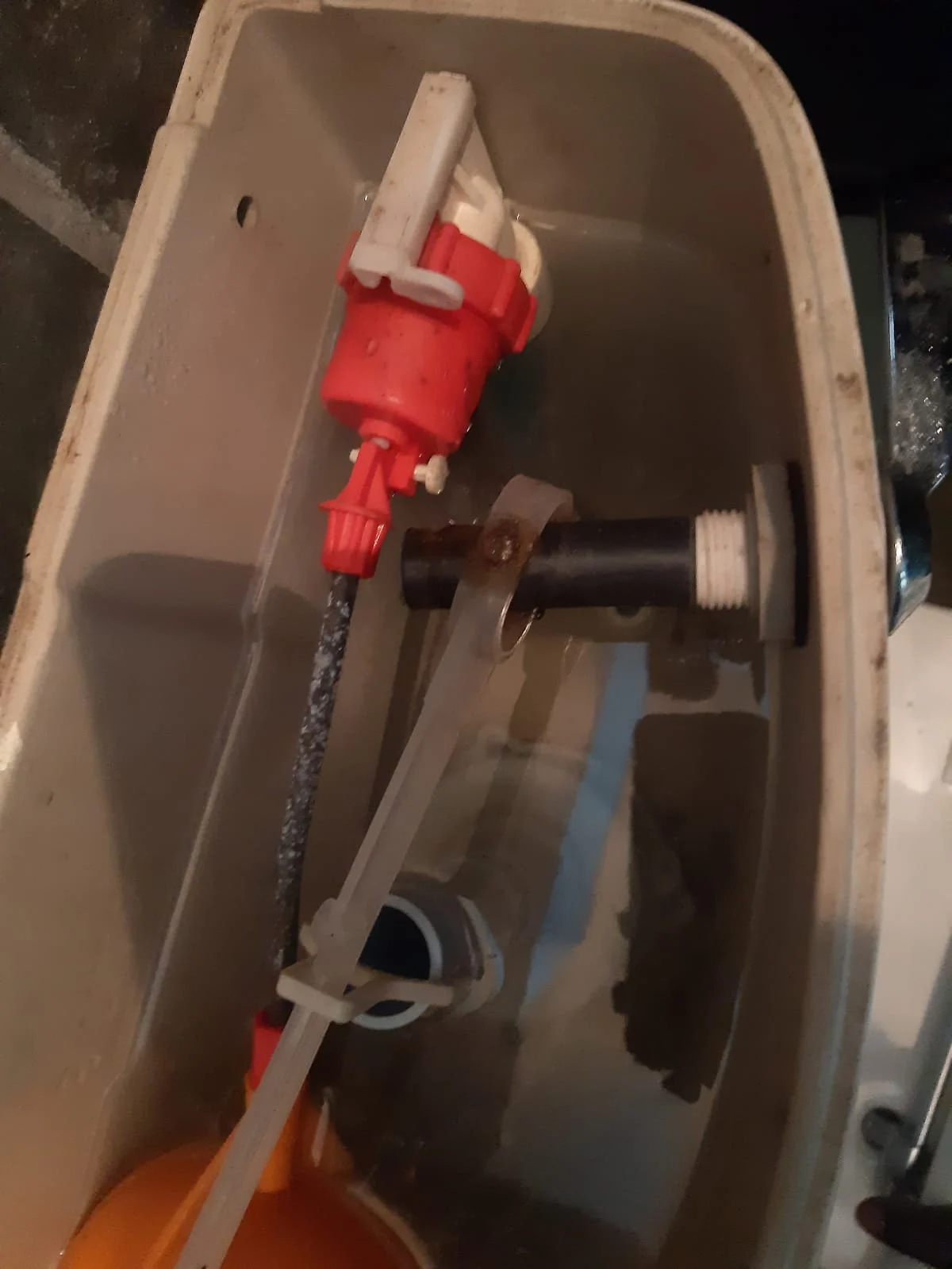
Concealed toilet cistern exposed through its service opening
A cistern contains separate inlet and flushing components. Continuous running, slow refilling and a weak flush can have different causes, so the mechanism and accessible connections should be checked before parts are selected.
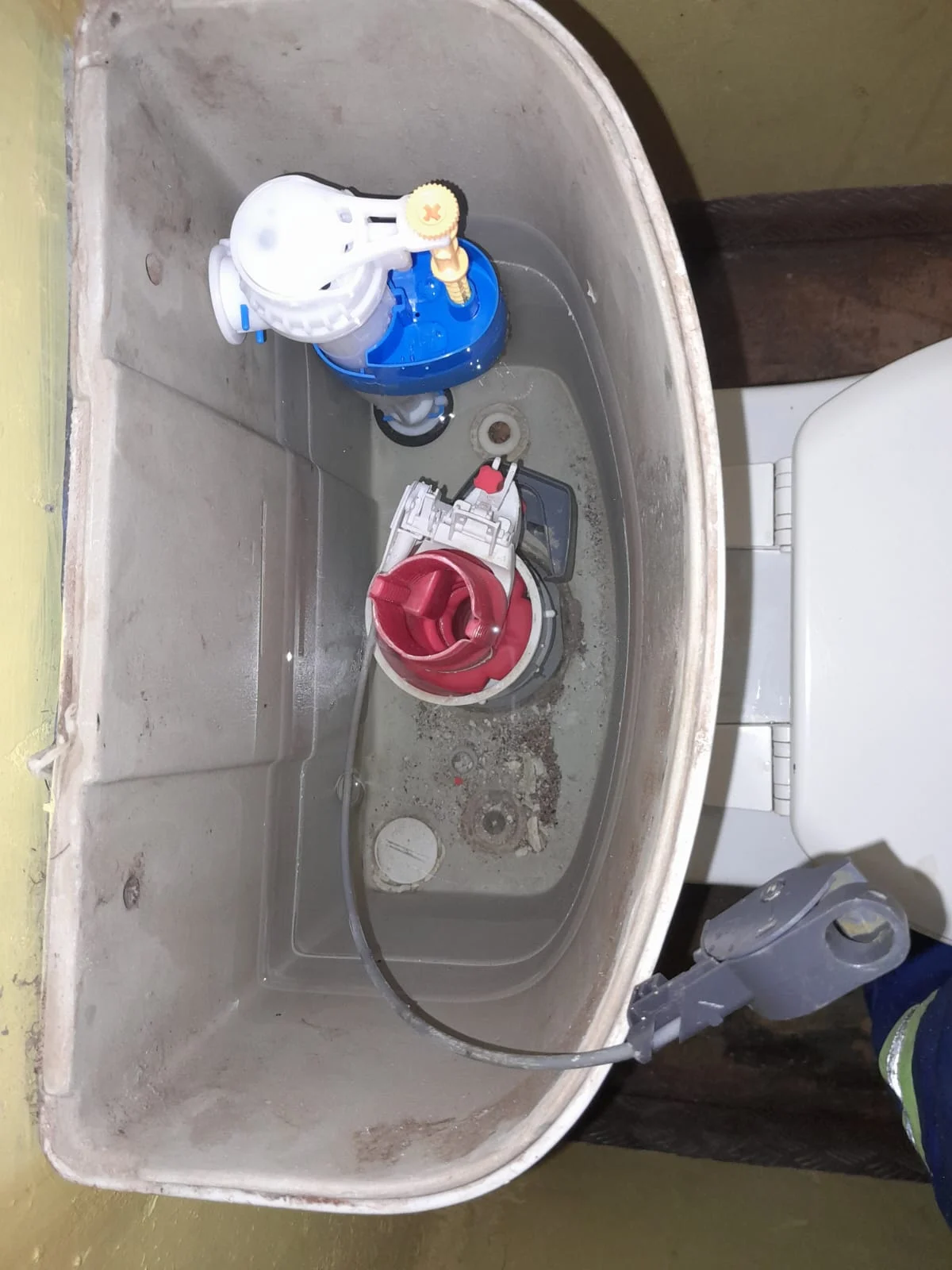
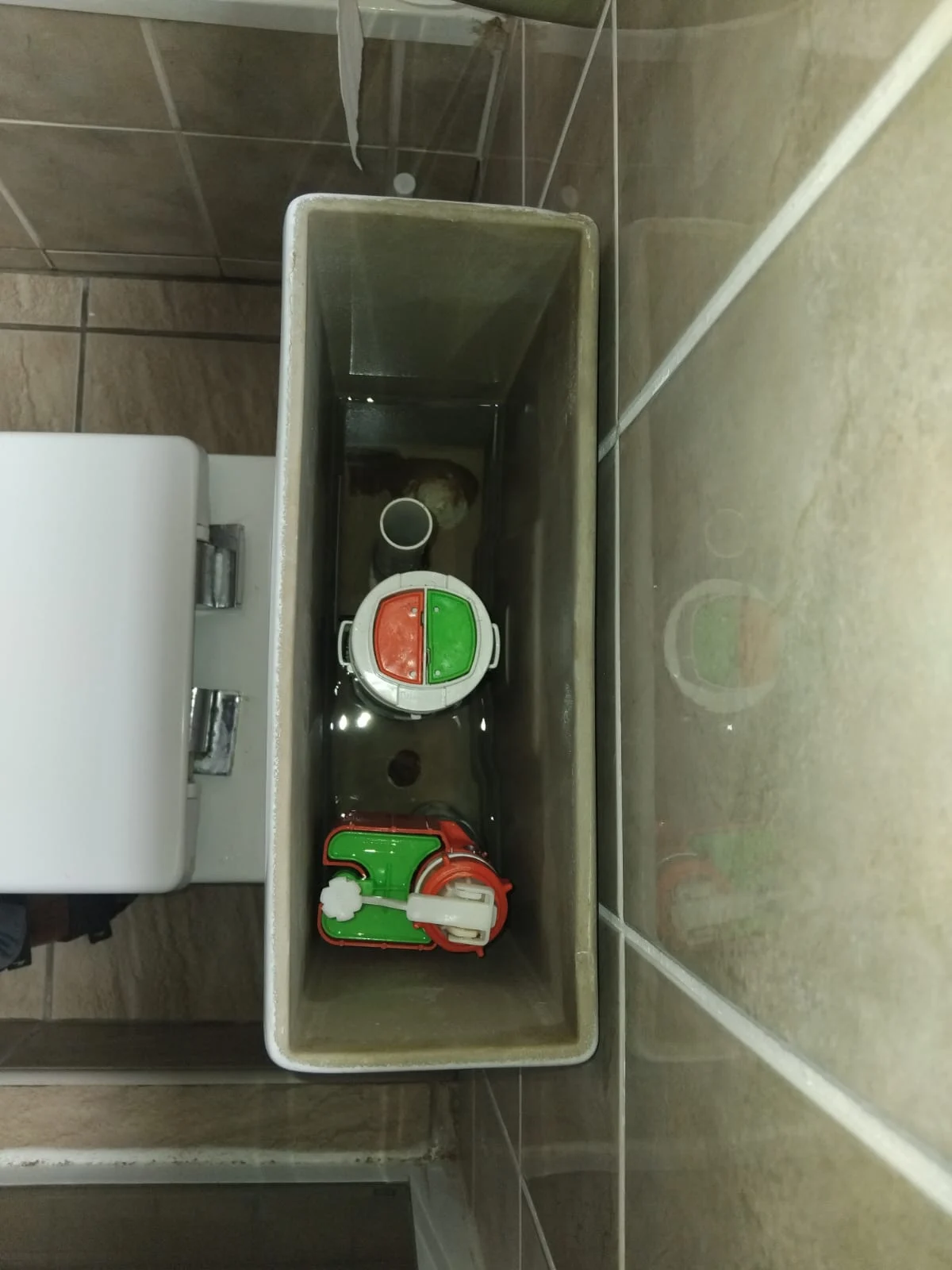
Toilet cistern with push button flush components exposed
The arrangement inside the cistern helps identify compatible maintenance parts. Describe whether the problem occurs during refilling, at rest or when flushing so the assessment starts with the reported symptom.
URGENT SUPPORT
Emergency plumbing
In the property, active leaks, burst pipes, blocked drains, overflowing toilets and failed geysers need fast isolation and a workable remedial work plan. Related professional help is available through Professional Plumbing Services for Homes and Businesses.
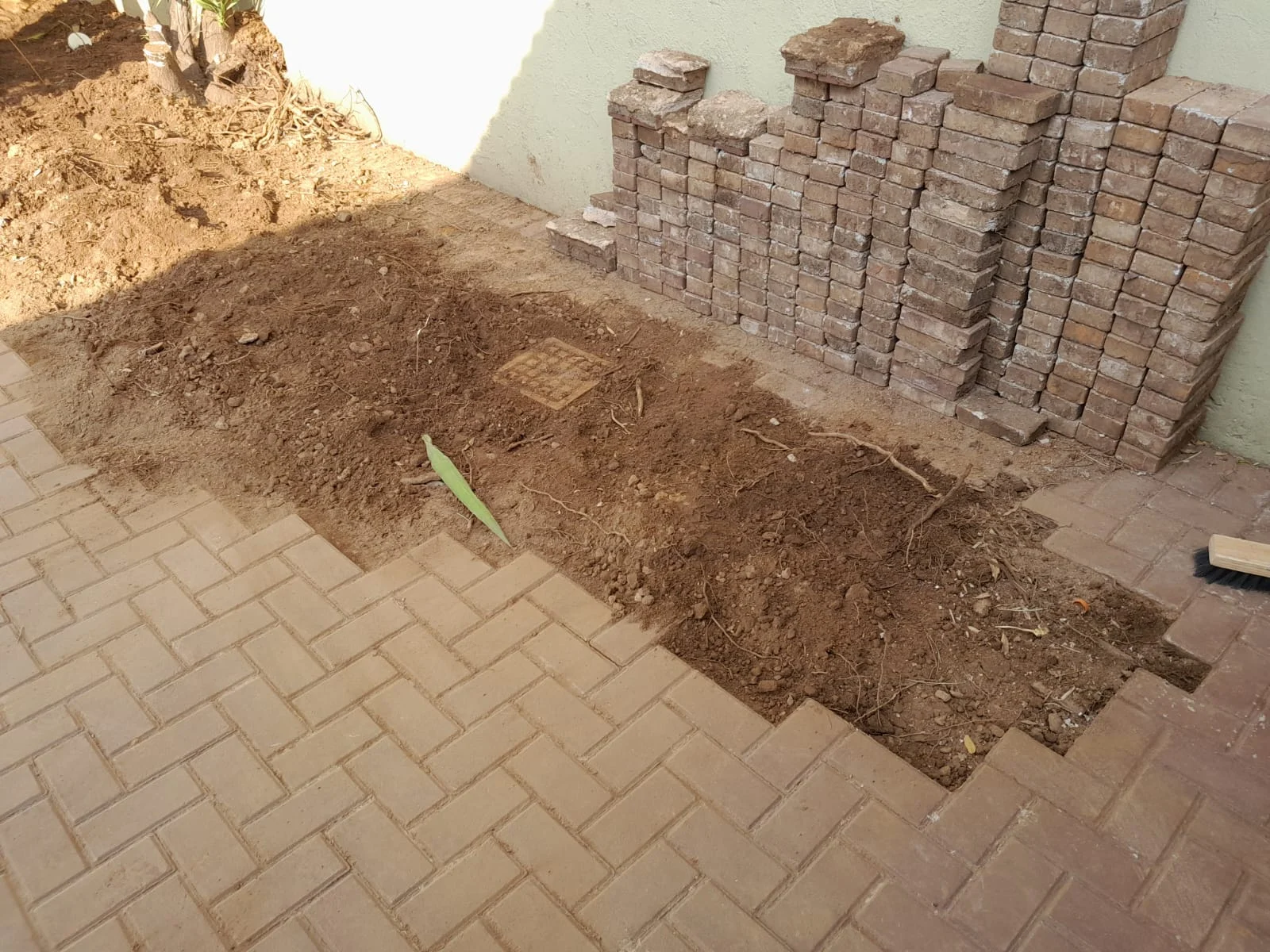
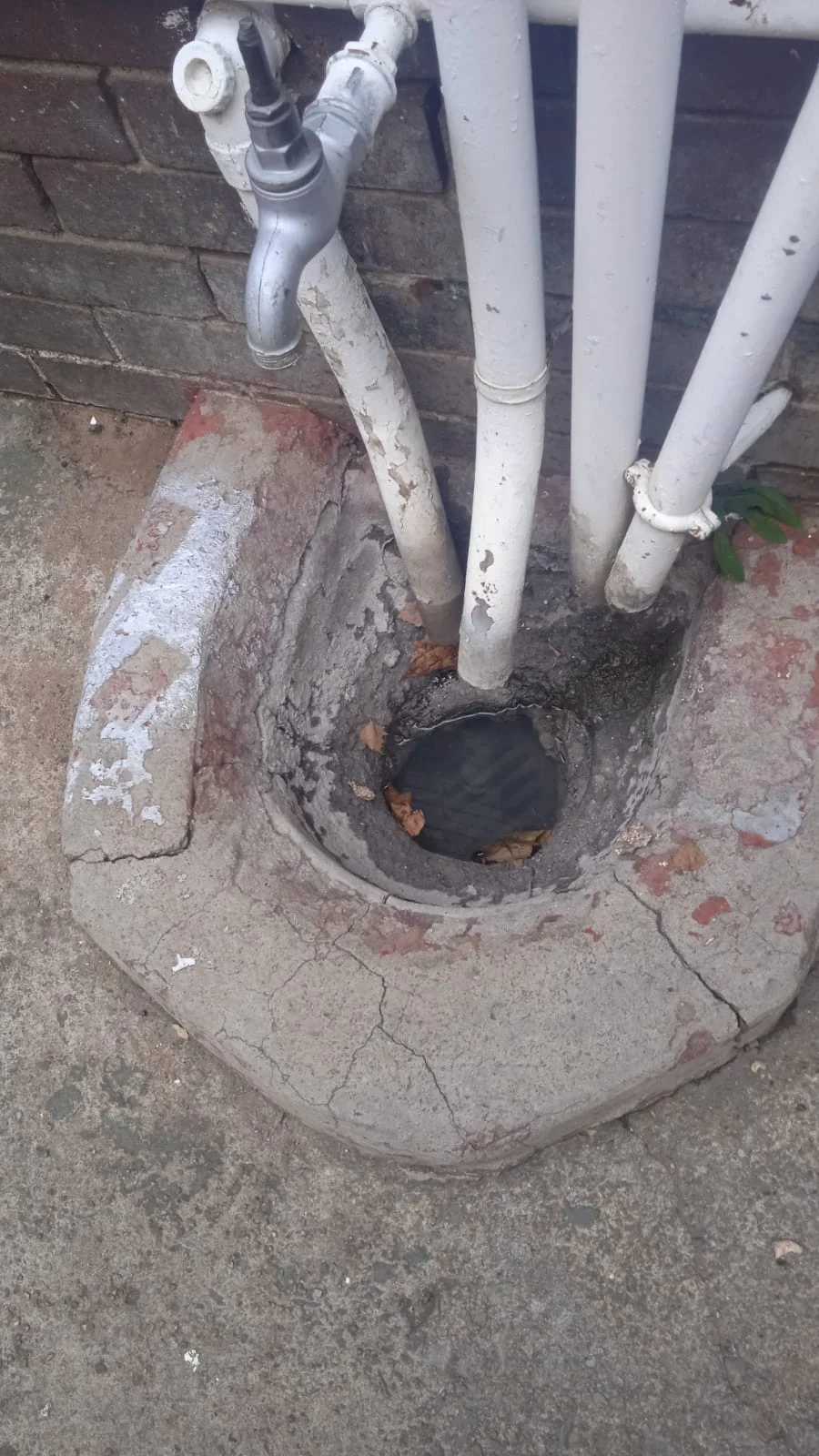
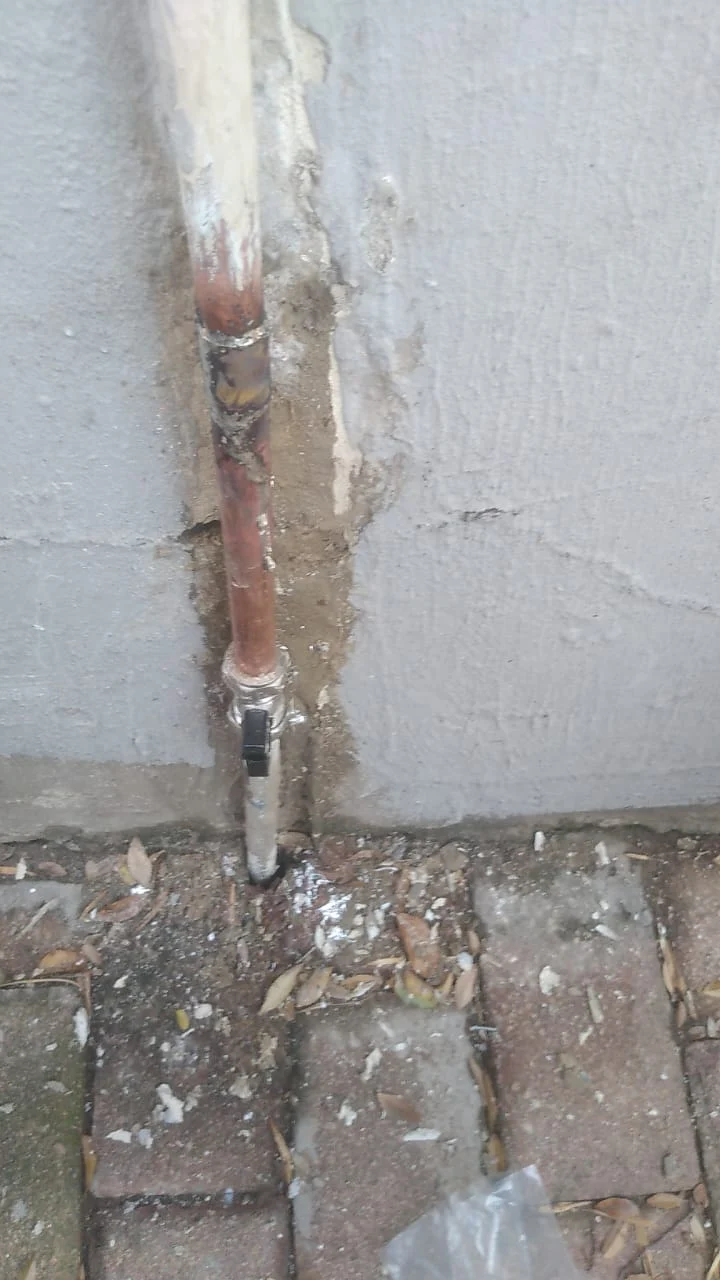
Exposed drainage pipework helps show the route and access available for investigation. The condition of the pipe and its connections determines whether clearing, a local repair or further inspection is appropriate.
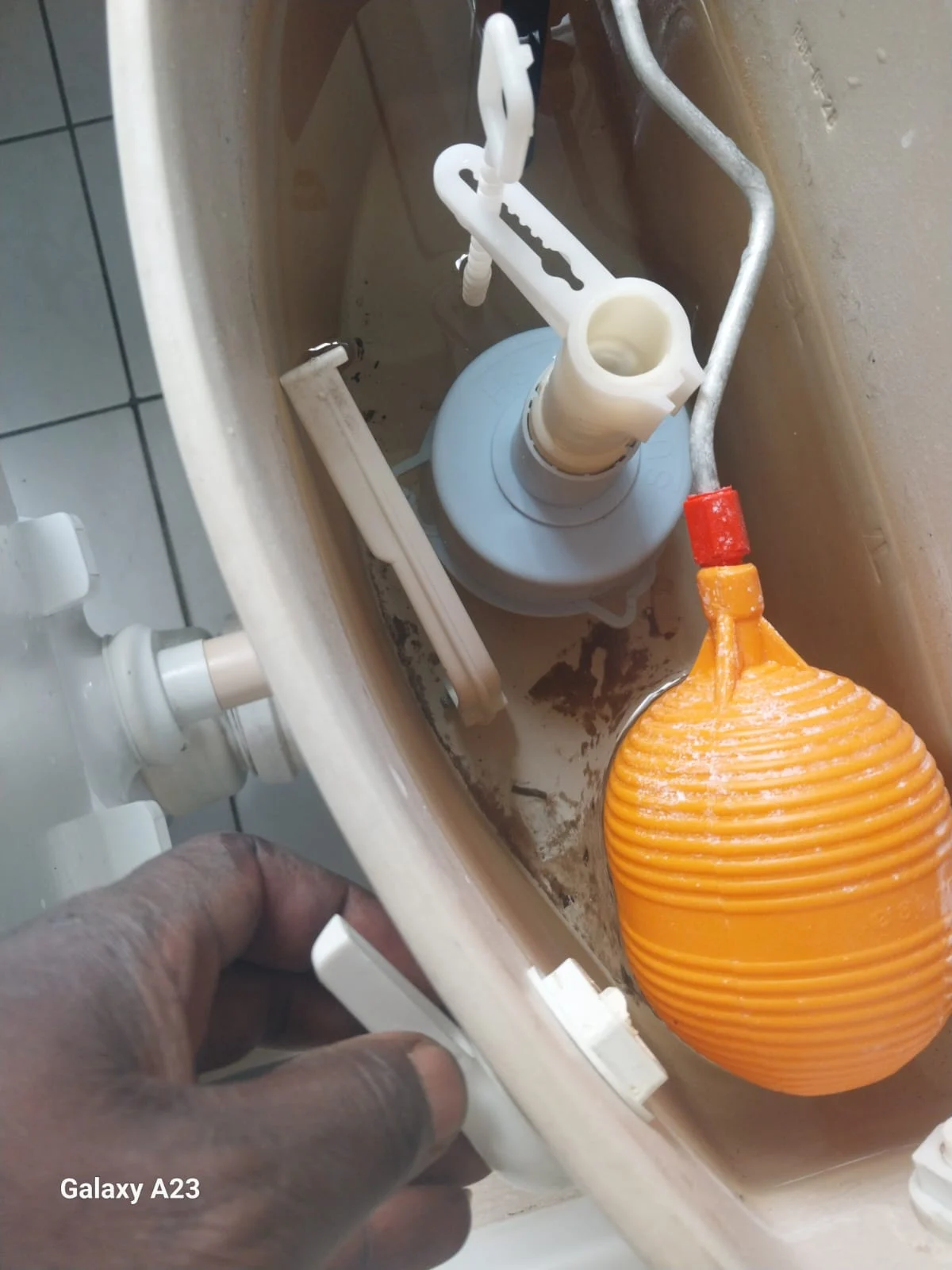
Toilet cistern flush valve and inlet components
The arrangement inside the cistern helps identify compatible maintenance parts. Describe whether the problem occurs during refilling, at rest or when flushing so the assessment starts with the reported symptom.
01
Tell usDescribe what you can see, hear or smell.
02
No call-out feeNo charge simply for coming to assess the problem.
03
We quote for freeYou receive a clear price before any work begins.
04
We actRepair, test and explain the result.
💧
Fault-first diagnosisWe look for the cause, not only the symptom.
◷
Practical responseUrgent risks are isolated before repair.
✓
Clear approvalYou understand the work before it starts.
🧰
Repair verificationWater flow, drainage and sealing are tested.
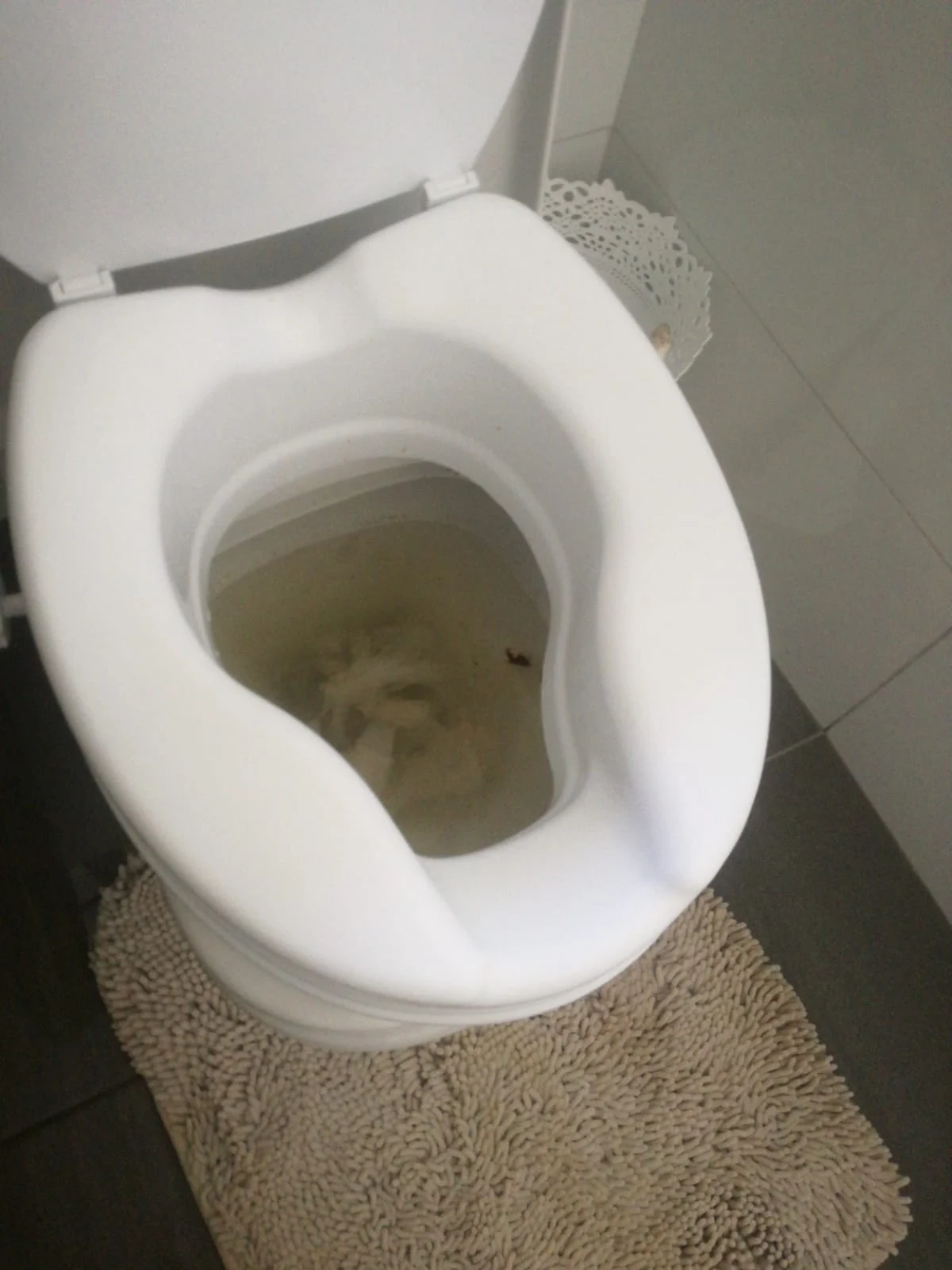
How we handle blocked drains and toilets in the property
At properties throughout the property, we determine whether the restriction is in the fixture, branch drain, gully or main sewer run, then clear and flow-test the line. Repeat blockages may justify camera inspection for roots, collapse or poor fall. You can also review our local coverage for Trusted Plumber in The Village — 24/7 Emergency Call-Outs.
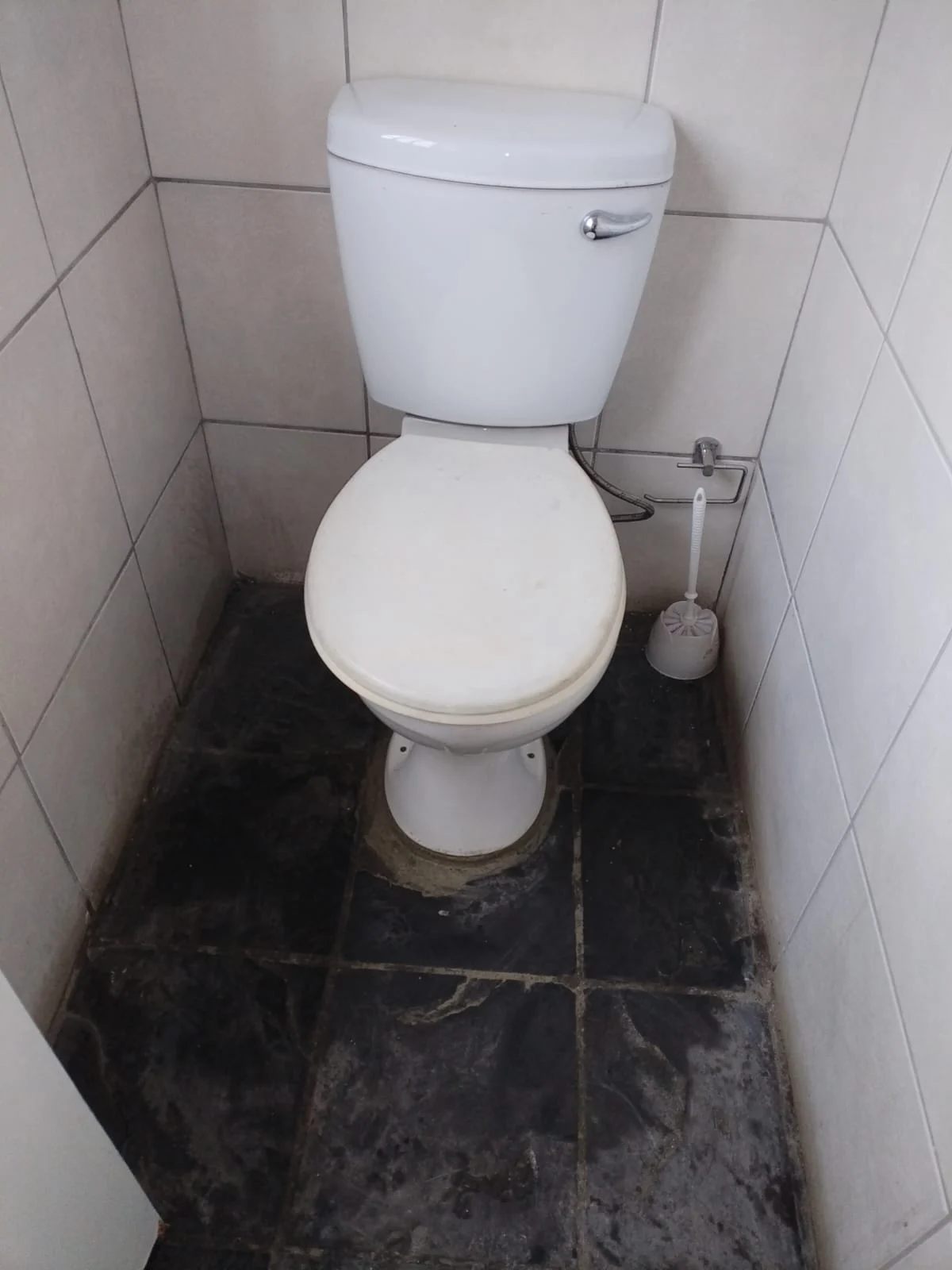
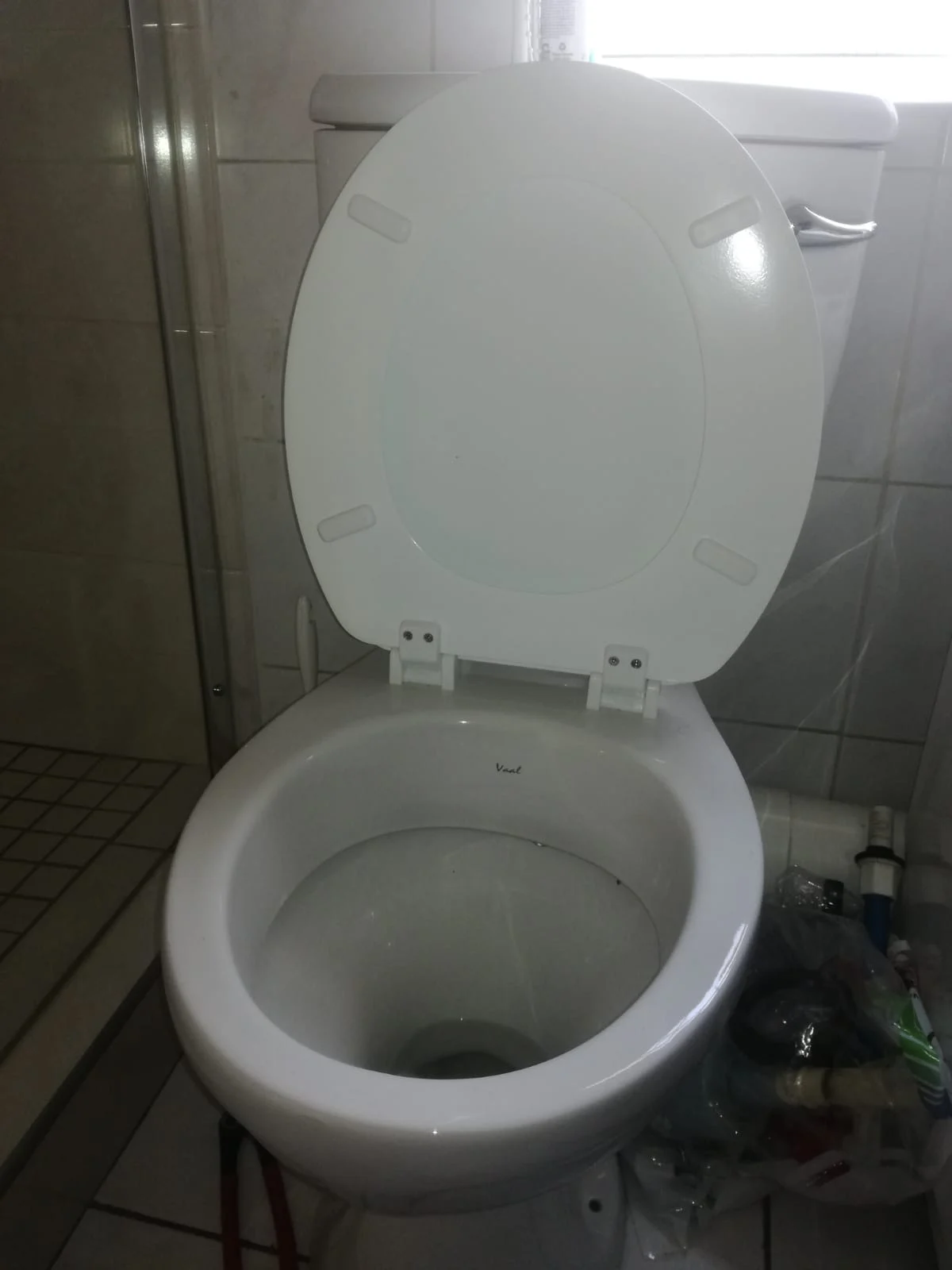
The toilet pan, cistern and accessible water and waste connections form one working fixture. An assessment distinguishes a flushing fault from a connection leak or drainage problem before recommending work.
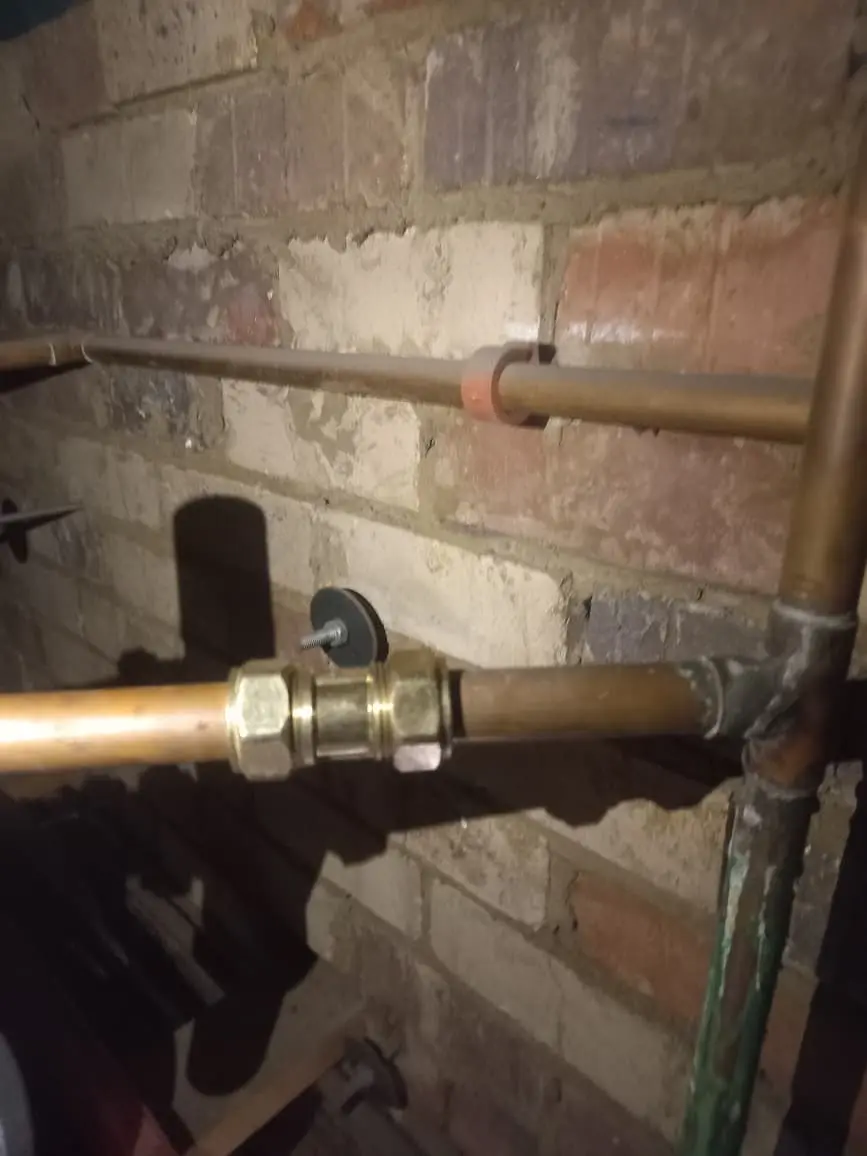
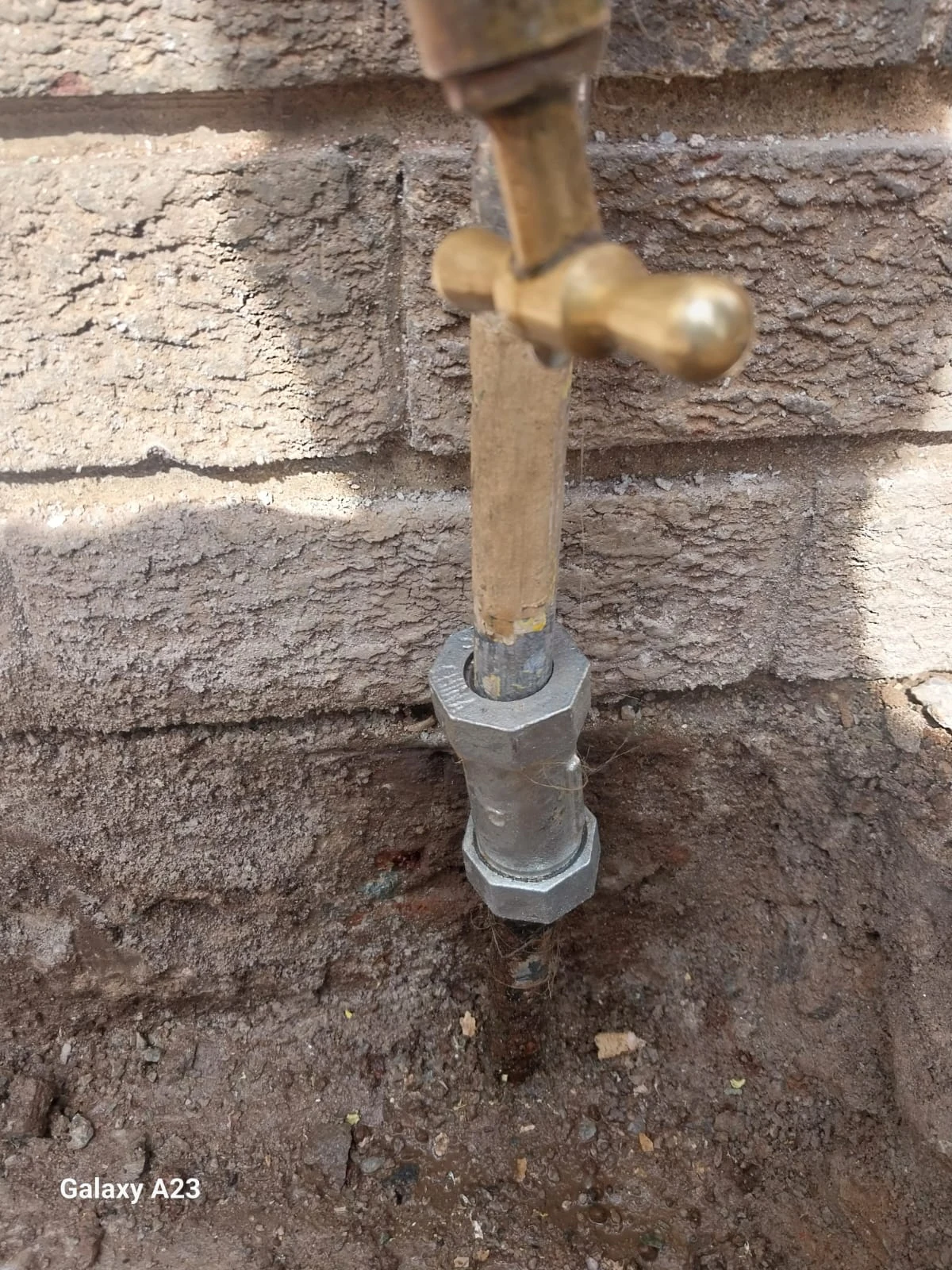
Exposed pipework and surrounding repair access Opening a wall or excavating a pipe route changes the access available for investigation. The proposed work should identify the affected section and explain any additional access or making good that may be required.
LOCAL ROUTE AWARENESS
Coverage planned around Gauteng’s main roads and working corridors
Local response is not only about a suburb name. Access, peak traffic, security estates, industrial gates and roadworks affect arrival planning. When you contact us, include the nearest main road, gate, complex name or landmark so the team can identify the correct approach. You can also review our local coverage for Plumber in Maraisburg for urgent and planned plumbing work — with professional workmanship..
Repairs and installations across homes, complexes and commercial properties
These examples show the variety of access, fittings and testing involved in everyday plumbing—not generic stock illustrations.
installation
Tap workCompleted
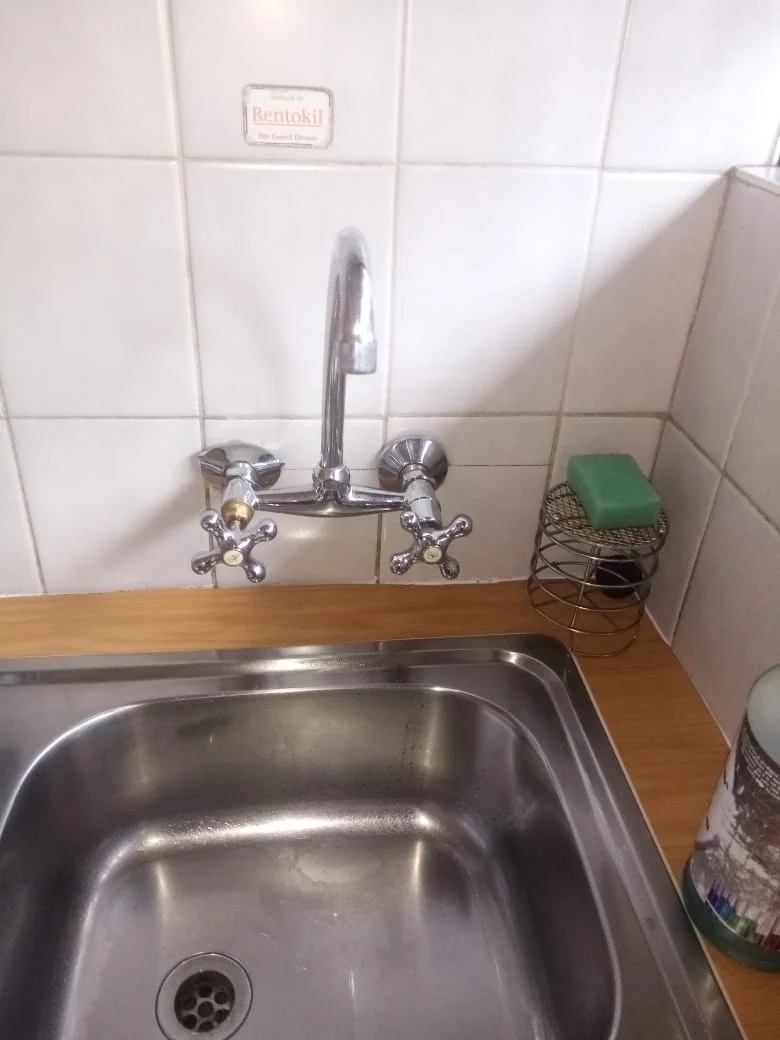
Kitchen mixer installation
Across the property, supply isolation, secure mounting, flexible connection inspection and leak testing under working pressure.
01Recent projectinstallation
the property
Toilet workCompleted
Toilet installation and repair in the property
Across the property, pan stability, inlet control, cistern adjustment, sealing and repeated flush testing before we leave.
02Recent projectthe property
work
Geyser workCompleted
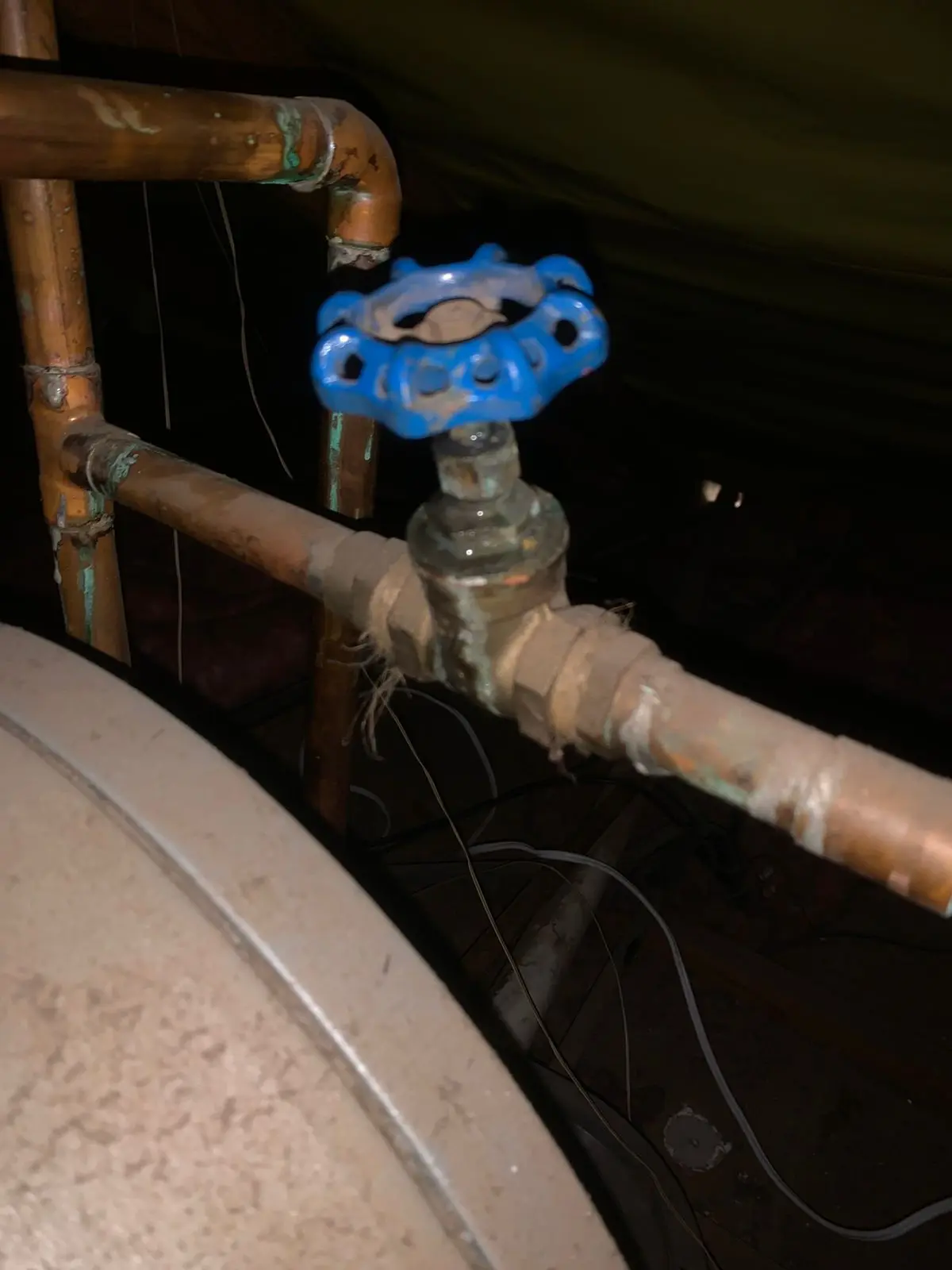
Roof-space geyser work
For a plumbing visit in the property, safe access, valve and discharge inspection, pipe support, insulation and functional hot-water testing.
03Recent projectwork
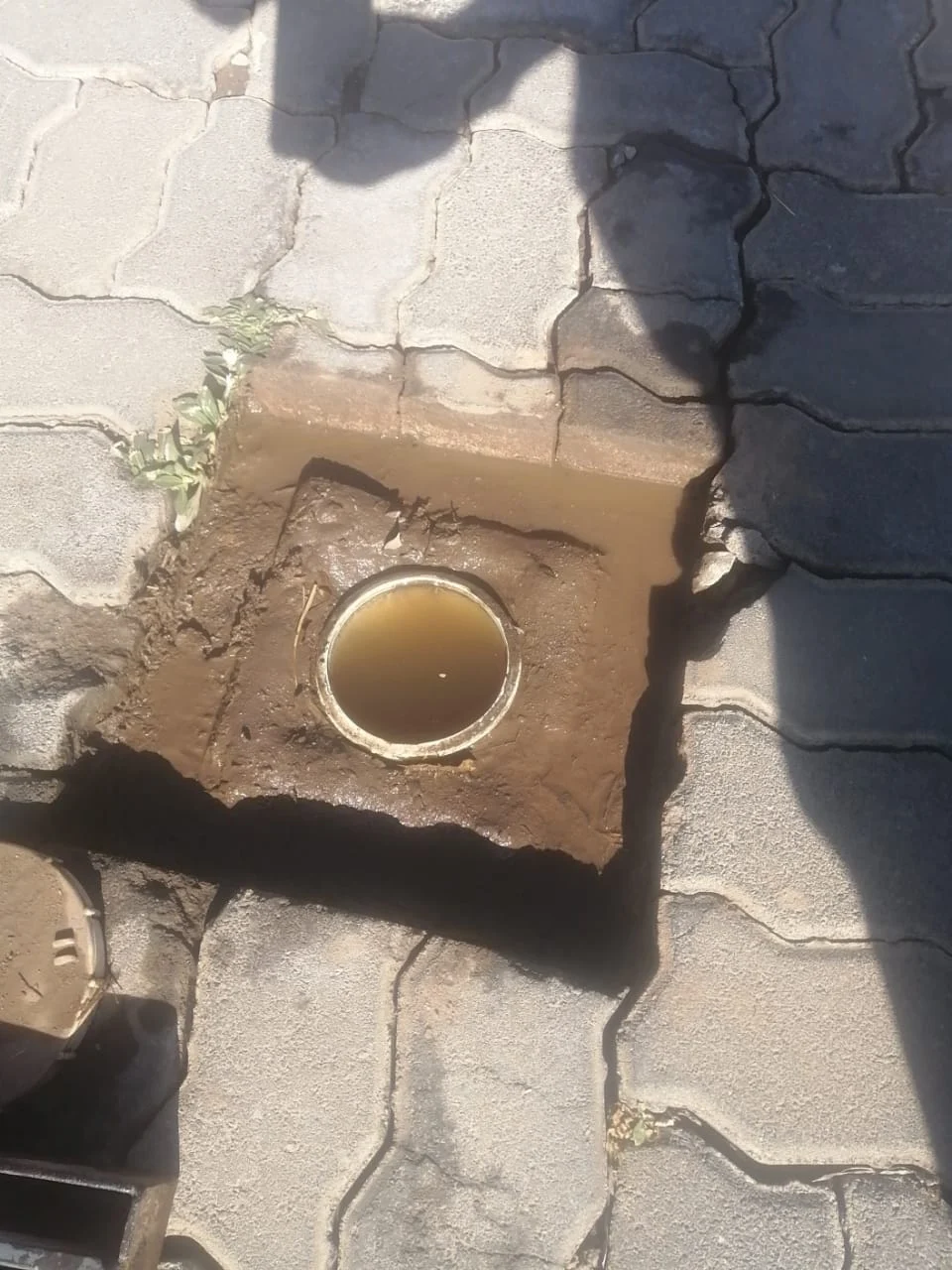
Drain access opening and pipe connection detail
Accessible drain openings and connected pipework provide useful starting points for a drainage assessment. Report which fixtures are affected, whether water backs up and whether the problem has returned after earlier clearing.
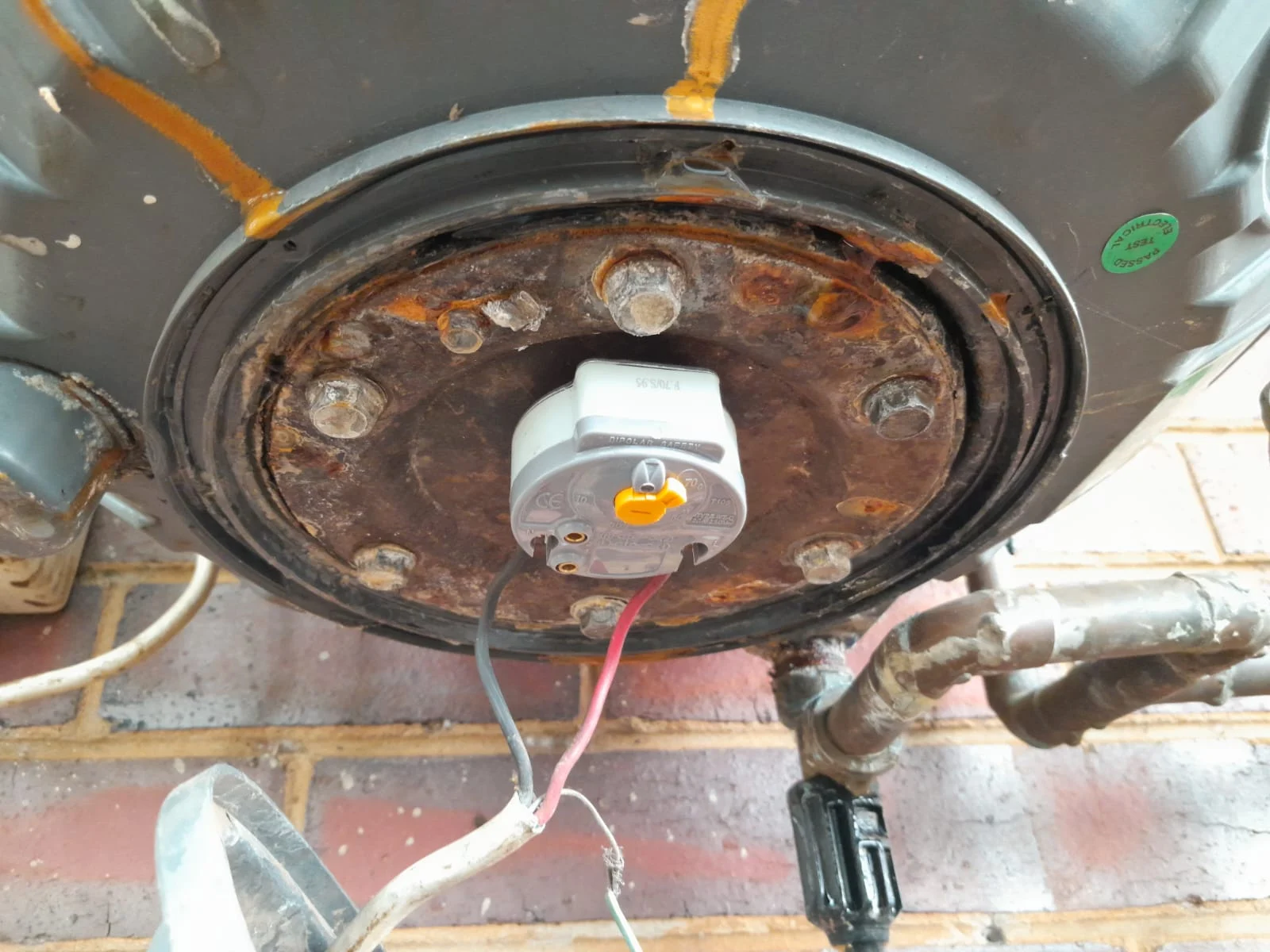
Geyser element flange and connected insulated wiring
An exposed heating service area helps identify the component involved in an enquiry. Work on electrical components requires suitable isolation and qualified attention, followed by checks appropriate to the agreed repair.
BEFORE WE ARRIVE
Small actions can limit damage without making the repair harder across the property
Active pipe leakClose the nearest isolation valve or main stopcock if it is safe and accessible. Move valuables away from the wet area.Get practical help ›
Blocked drainStop using connected sinks, toilets or appliances. Do not keep flushing when water is rising or backing up.Get practical help ›
Geyser leakSwitch off the geyser electrical supply at the distribution board and close the cold-water feed where safely possible.Get practical help ›
Low water pressureCheck whether neighbours are affected and whether every fixture or only one outlet has reduced flow.Get practical help ›
DETAILED SERVICE GUIDANCE
A clearer way to approach reliable plumbing
Reliable Plumbing in Gauteng should begin with the condition that is actually present, not a standard answer applied before the system has been inspected. We look at what the customer is experiencing, how long it has been happening, what has already been attempted and which connected fixtures or services are affected.
Start with the symptom, then confirm the cause
The visible concern may be anything from a small recurring leak to an urgent pipe failure or a planned plumbing improvement. Similar symptoms can come from more than one component, so the first task is to separate the immediate symptom from the underlying cause. This reduces guesswork and helps avoid replacing serviceable parts.
We ask practical questions about when the problem started, whether it is constant or intermittent, and whether any recent work or pressure change occurred. Those details guide the inspection and make the repair discussion easier to understand.
Protect the property before repair work begins
The main concern is not only inconvenience. Left unresolved, the problem can contribute to hidden damage, higher water accounts, hygiene problems and avoidable disruption when temporary fixes are repeated. Where water is active, the nearest safe isolation point is identified first so damage is limited while the repair is planned.
Customers are told what can safely remain in use and what should be avoided. This is especially important when a fault affects shared pipework, cupboards, ceilings, electrical areas or finishes that can absorb water without showing immediate damage.
Agree on a repair scope that matches the finding
The repair may involve hot and cold-water lines, drainage systems, sanitary fittings, isolation valves, geysers and appliance points. The correct choice depends on condition, compatibility, access and whether the surrounding installation is still reliable enough to support a local repair.
Before non-emergency work proceeds, the finding and proposed work are explained in plain language. Where more than one practical option exists, the difference between a short repair and a longer-term solution is made clear so the customer can approve the work with confidence.
INSPECTION AND DIAGNOSIS
What we examine before recommending work
A useful plumbing assessment follows the path of the water and considers the condition of the complete local installation. The aim is to find enough evidence to support the repair without opening more of the property than necessary.
Water behaviourWe check whether the symptom changes with pressure, temperature, flow or the use of another fixture.
Access and isolationWe confirm which valves control the affected section and whether safe access is available for repair.
Connected plumbingNearby supply and waste connections are considered so a related fault is not mistaken for an isolated one.
Why repeat problems need a deeper check
A fault that returns after repeated repairs usually indicates that the local symptom has been treated while the operating condition remains unchanged. Pressure, movement, poor alignment, age, incompatible parts or a concealed leak may continue stressing the same area.
Rather than repeating the same repair automatically, we review what failed, how quickly it returned and whether another section is contributing. That approach can prevent a cycle of call-outs that never produces a dependable result.
When repair is sensible and when replacement is better
Repair remains appropriate when the failed component is identifiable, suitable parts are available and the surrounding installation is structurally sound. Replacement becomes more practical when wear is widespread, parts are obsolete, access has already caused repeated damage or the same assembly has failed several times.
The recommendation should reflect the likely life of the result, not only the lowest immediate cost. We explain the trade-off so the customer can decide between restoring the existing installation and investing in a more durable replacement.
Access is part of the repair plan
Plumbing often runs behind cupboards, tiles, walls, ceilings or outdoor finishes. Before opening any area, we consider the most direct access point and the likely reinstatement work. A controlled opening is preferable to broad demolition based on an assumption.
Where practical, photos, visible pipe routes and fixture positions are used to narrow the work area. The customer is told where access may be needed and which finishes could be affected before the repair proceeds.
OUR WORKING PROCESS
How the service moves from first contact to completion
The process is designed to keep the customer informed while the technical work remains controlled. Clear communication is particularly important when the final work can only be confirmed after inspection.
01
Describe the issueShare the suburb, symptoms and any photos or video.
02
Assess the conditionWe inspect the affected and connected plumbing.
03
Approve the scopeThe finding, work and expected result are explained.
04
Repair and testThe work is completed and verified before handover.
Information that helps us prepare
A useful request includes the property type, suburb, nearest road or landmark, when the problem began, whether water can be isolated and which fixtures are affected. Clear photos of the immediate area can help us understand access and likely materials.
For urgent water loss, explain whether the flow is controlled or still active. For planned work, include any preferred fixture, layout or timing requirements. Accurate information improves preparation but does not replace the on-site assessment.
What happens if the finding changes the scope
Some defects only become visible after a fitting is removed or a controlled access point is opened. When the condition differs from what could reasonably be seen at first, work pauses and the new finding is explained before the work is extended.
This protects the customer from unexplained additions and protects the installation from a rushed decision. The next step should be based on the actual condition uncovered, with approval obtained before further non-emergency work continues.
Testing is part of the repair, not an optional extra
After the work, the repaired or installed system is run through realistic use conditions and checked for leaks, drainage and correct operation. A repair is not considered complete simply because the visible leak has stopped or the fixture appears to operate once.
The area is checked again after normal use so small seepage, movement or drainage delays can be identified. The customer is shown the result and advised about any related condition that should be monitored or addressed separately.
PRACTICAL CUSTOMER DECISIONS
How to choose a solution that will remain dependable
Good plumbing decisions balance urgency, cost, access, compatibility and expected service life. A low initial price is not helpful when the same weakness is left in place and the property must be opened again soon afterwards.
Consider the condition around the failed point
A new component connected to badly corroded, distorted or poorly supported plumbing may not deliver a lasting result. The surrounding pipework, fittings and mounting points should be capable of carrying the repair without transferring stress to the next joint.
Where the local condition is poor, a slightly wider repair can be more economical than replacing one small part and returning shortly afterwards. The reason for any broader recommendation should be visible and understandable to the customer.
Use compatible materials and serviceable components
Plumbing parts must suit the operating pressure, temperature, pipe material and fixture design. Improvised combinations can be difficult to seal, difficult to maintain and more vulnerable to movement or chemical interaction over time.
We favour components that can be serviced and replaced without unnecessary damage to surrounding finishes. Where branded or model-specific parts are required, identification should happen before the fitting is forced or modified.
Plan for future isolation and maintenance
A dependable installation should allow a future plumber to isolate and service the affected area without shutting down more of the property than necessary. Accessible valves, sensible connection points and clear pipe routes make later maintenance faster and less disruptive.
During planned work, this is an opportunity to correct inaccessible valves or unsupported pipework where the benefit justifies the added work. These details are often invisible when the job is finished, but they strongly influence future reliability.
MAINTENANCE AND PREVENTION
Small checks that can prevent a larger plumbing problem
Customers do not need to dismantle fittings to care for their plumbing. Simple observation and early reporting are usually more valuable than attempting a temporary repair that hides the evidence.
Watch for gradual changeNew noises, slower drainage, movement, staining or pressure variation often appear before complete failure.
Keep isolation points accessibleDo not bury valves behind fixed storage or finishes where they cannot be reached in an emergency.
Avoid forcing controlsHandles, valves and connectors that become stiff should be inspected before they crack or strip.
Report recurring moistureDampness that returns after drying may indicate a continuing plumbing or waterproofing problem.
Why temporary sealing can make diagnosis harder
Tape, sealant and surface patching may slow a leak briefly, but they can also redirect water into cupboards, walls or floors and obscure the actual failure point. This creates a false sense of security while hidden damage continues.
Where water must be controlled before assistance arrives, isolation is usually safer than building up layers of temporary material. Tell the plumber what was applied and where so the area can be assessed accurately.
Know when the issue has become urgent
Urgent assistance is appropriate when water cannot be isolated, a ceiling is bulging, electrical equipment is threatened, sewage is backing up, a geyser is releasing uncontrolled water or the property is losing essential water service.
When safe, switch off affected electrical circuits, close the relevant water supply and keep people away from unstable ceilings or contaminated water. Do not enter a dangerous area simply to take a photograph.
Keep a record of repeated work
Photos, invoices and notes about previous faults can reveal a pattern that is not obvious during a single visit. Record which section was repaired, what material was used and how long the result lasted.
This history helps distinguish an isolated failure from a system condition such as pressure, age, movement or poor original installation. It also supports better decisions when repair and replacement costs are being compared.
Need help with reliable plumbing?
Send the suburb, nearest landmark and a short description of what is happening. For uncontrolled water or immediate property risk, call the emergency number now.
Start with the symptom: leaking water, a blocked outlet, weak flow or unreliable hot water. Note whether one fitting or several parts of the property are affected.
What should I be careful of?
Leave wet electrical fittings, hot components and stiff valves alone. Don’t keep using outlets that are backing up or dismantle plumbing to identify the part.
Can I do anything useful now?
Limit further water use where there is a leak or backup. Keep the affected area accessible and take a safe photo if it helps show the problem.
What details should I send you?
Send your address, the symptom, when it began and any earlier repair. For installation work, include the fitting or appliance details and what you want to change.
What happens next?
We explain the proposed work and quotation before starting. The call-out and quote are free, and repair work and parts are priced separately.
Helpful plumbing guides
Learn more about Professional Plumbing Services
Before you book professional plumbing services, explore trusted advice on symptoms, prevention, and when DIY stops being safe. Our guides explain what matters so you can call with confidence.
When it comes to plumbing repairs in your home, peace of mind matters just as much as the repair itself. One of the most common questions homeowners ask…
When it comes to maintaining your home's plumbing system, one of the most critical decisions you can make is to hire professional plumbers for repairs and…