Home/100 Litre Evacuated Tube Solar Geyser Conversion
100 LITRE SOLAR GEYSER CONVERSION SYSTEMS
100 Litre Evacuated Tube Solar Geyser Conversion
Trusted 100 Litre Evacuated Tube Solar Geyser Conversion from a team that earns confidence through evidence, not promises. We diagnose carefully, confirm pricing with you first, and verify flow, pressure, or heating before we consider the job complete. Call 067 657 6109 for urgent help or request a free call-out online.
We consider your hot-water use, existing geyser, collector space and backup heating together. You get a quotation for a compatible conversion, installation or repair, with the plumbing, controls and agreed electrical work clearly set out.
Will a solar conversion work with my existing geyser?
That depends on the cylinder, available roof space and connection layout. A site assessment can establish whether the existing equipment can be retained.
Will I still have hot water on cloudy days?
It depends on the system and its backup heating. Ask how the proposed controls and backup would work for your household’s normal demand.
How do I choose a solar hot-water cylinder size?
Consider how many people use hot water, when they use it and what backup heating is available. Capacity alone doesn’t show whether the whole system suits the property.
Can a faulty solar geyser be repaired without replacing the panels?
Sometimes. Check whether the fault lies in the collector, cylinder, control, circulation or backup heater. The repair should address the affected part of the system.
What should a solar hot-water quote cover?
Ask about the collector, cylinder, mounting, pipework, controls and backup heating. Confirm which items will be reused and what access or electrical work is included.
Will my pumped solar geyser keep heating water during load shedding?
If the circulation pump relies on mains power and has no backup supply, it stops moving heat from the roof collector to the geyser during an outage. You can still use hot water already stored in the cylinder. Ask the installer how the proposed pump and controller are powered.
What keeps the water at my taps from getting too hot after a sunny day?
A tempering valve blends cold water with hot water leaving the geyser to limit the temperature delivered to the taps. Ask the installer to confirm that the conversion includes a suitable tempering valve or that the existing one is suitable to keep.
Should I ask for a plumbing Certificate of Compliance if the conversion keeps my existing geyser?
Yes. The Plumbing Industry Registration Board lists solar water-heating installation among the jobs for which its licensed plumbers must issue a plumbing Certificate of Compliance. Ask who will issue it for the conversion and when you’ll receive it.
◴
Fast ResponseHelp when it matters most.
24
Available 24/7Day or night, we’re ready.
◇
Trusted ApproachClear, honest and professional.
Capacity and household fit
Why Choose a 100 Litre Evacuated Tube Solar Geyser Conversion?
A 100 litre evacuated tube solar geyser conversion gives homeowners a practical way to reduce the electricity used for water heating without automatically discarding a serviceable geyser. The existing cylinder can often remain part of the system while a correctly sized evacuated tube collector uses available sunlight to provide much of the heat needed during the day. For smaller homes, flats, cottages and compact households, this can be a sensible upgrade when the system is selected according to actual hot-water demand rather than capacity alone.
What this means for system capacity
Our plumbers begin with an honest assessment because trust starts with recommending what the property genuinely needs. We inspect the existing geyser, roof position, pipe routes, water pressure and condition of the safety components before proposing a conversion. If repairs or upgrades are required first, we explain them clearly. If the existing installation is unsuitable for conversion, we say so rather than forcing an option that may not perform reliably.
Why the capacity assessment matters
A professionally planned conversion can lower electrical demand, improve the way stored hot water is produced and give the household greater control over running costs. The quality of the result depends on far more than the collector itself. Secure mounting, correct circulation, properly insulated pipework, sound valves and careful commissioning all influence how efficiently the installation works. Our team treats those details as essential, not optional, so customers receive a system designed for dependable everyday use.
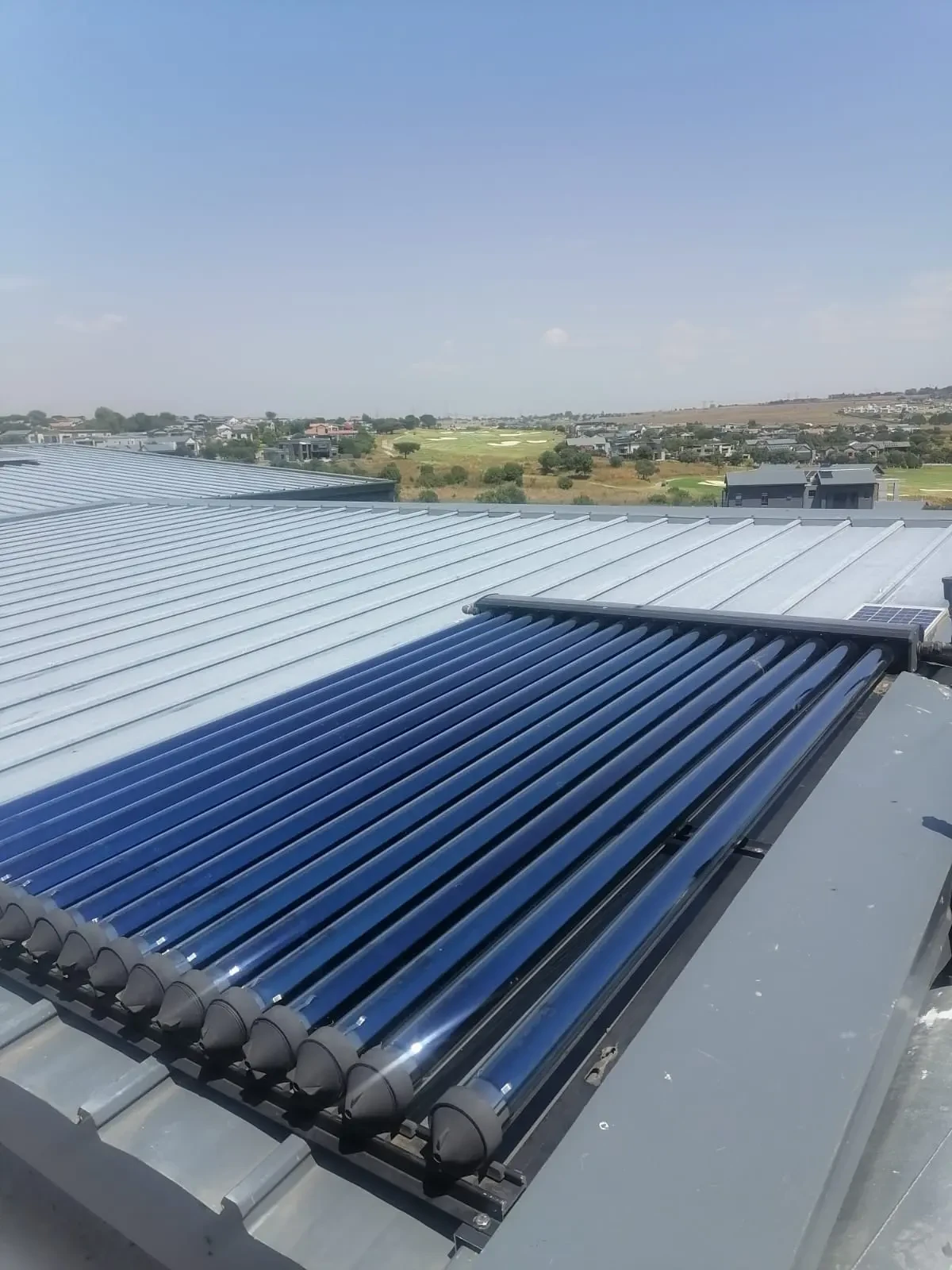
Roof-mounted evacuated-tube collector
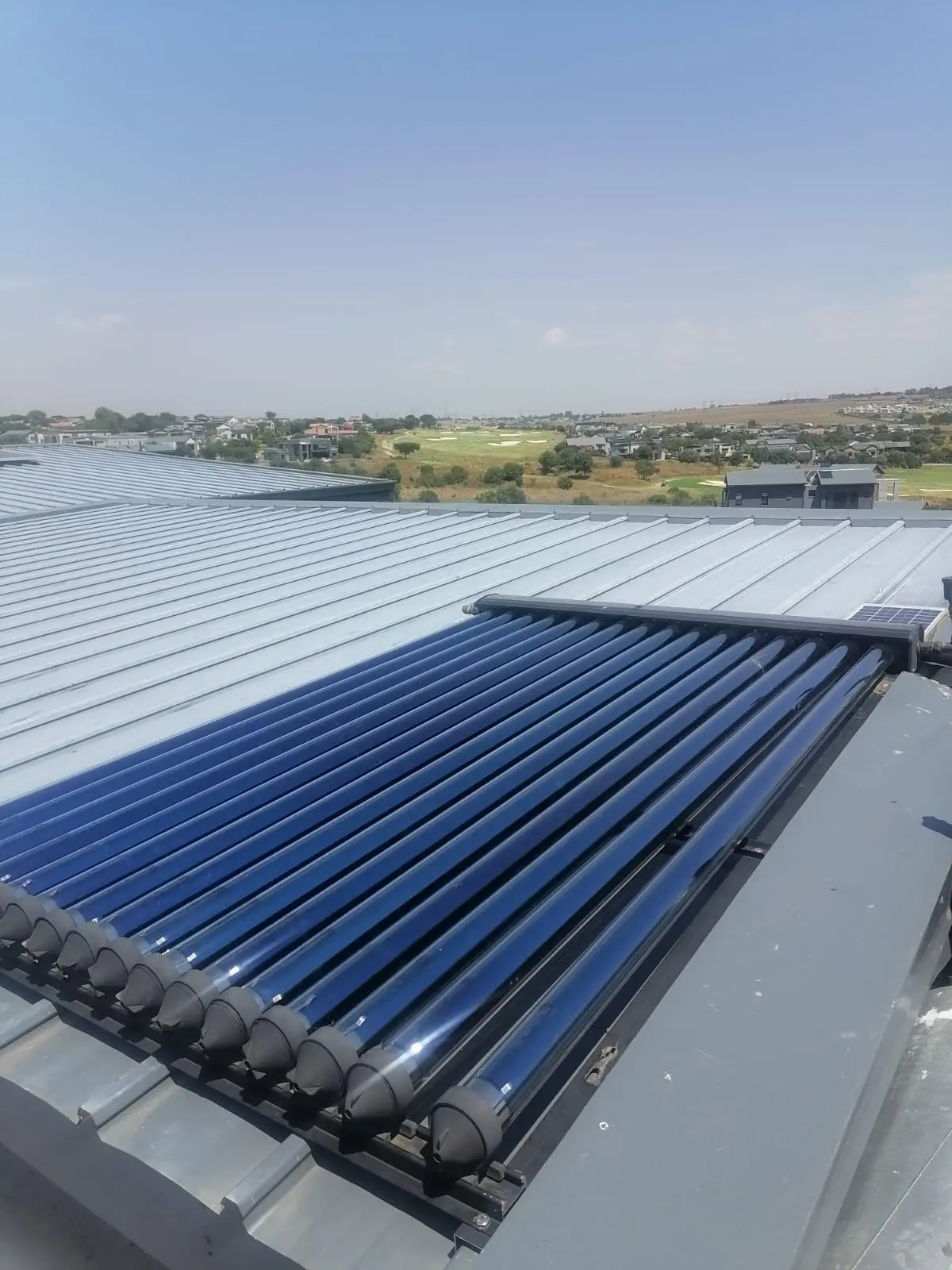
The blue tubes sit in a frame on the metal roof. For a 100 litre solar geyser conversion, we assess where the collector will get good sun and how its pipework can reach the existing geyser. That helps us determine whether the roof and geyser are suitable for the conversion.
How conversion works
Is a 100 Litre Solar Geyser the Right Size for Your Household?
A 100 litre system is often considered for one or two people with moderate hot-water use, but the correct choice depends on how and when hot water is used. Two households with the same number of occupants can have very different requirements. Long showers, simultaneous bathroom use, frequent laundry and visitors can increase demand, while careful water use may make the same capacity comfortable for a larger household. Related professional help is available through 300 Litre Evacuated Tube Solar Geyser Conversion.
What this means for household size
We do not base a recommendation on household size alone. Our plumbers discuss daily routines, existing geyser recovery, available roof space and whether electrical backup will remain in use. This prevents undersizing, which can leave a family short of hot water, and oversizing, which can increase the initial cost without providing meaningful benefit. Related professional help is available through 200 Litre Evacuated Tube Solar Geyser Conversion.
Why the household assessment matters
The aim is to match the conversion to your lifestyle so that savings do not come at the expense of comfort. A clear assessment also helps us explain what performance you can realistically expect in summer, winter and periods of unusually high demand. Related professional help is available through 150 Litre Evacuated Tube Solar Geyser Conversion.
Hot-Water Demand Matters More Than a Simple Headcount
Bathing habits, shower flow rates and the timing of hot-water use are often more important than the number of people in the home. We ask practical questions so the final recommendation reflects real demand rather than a generic capacity chart. Related professional help is available through Convert Your Existing Geyser to Solar.
Planning for Seasonal Changes and Backup Heating
Solar contribution varies with weather, roof orientation and daily consumption. We explain how the electrical element or controller may support the system when solar input is lower, helping you understand both expected savings and normal backup operation. Related professional help is available through Solar geyser systems and plumbing products.
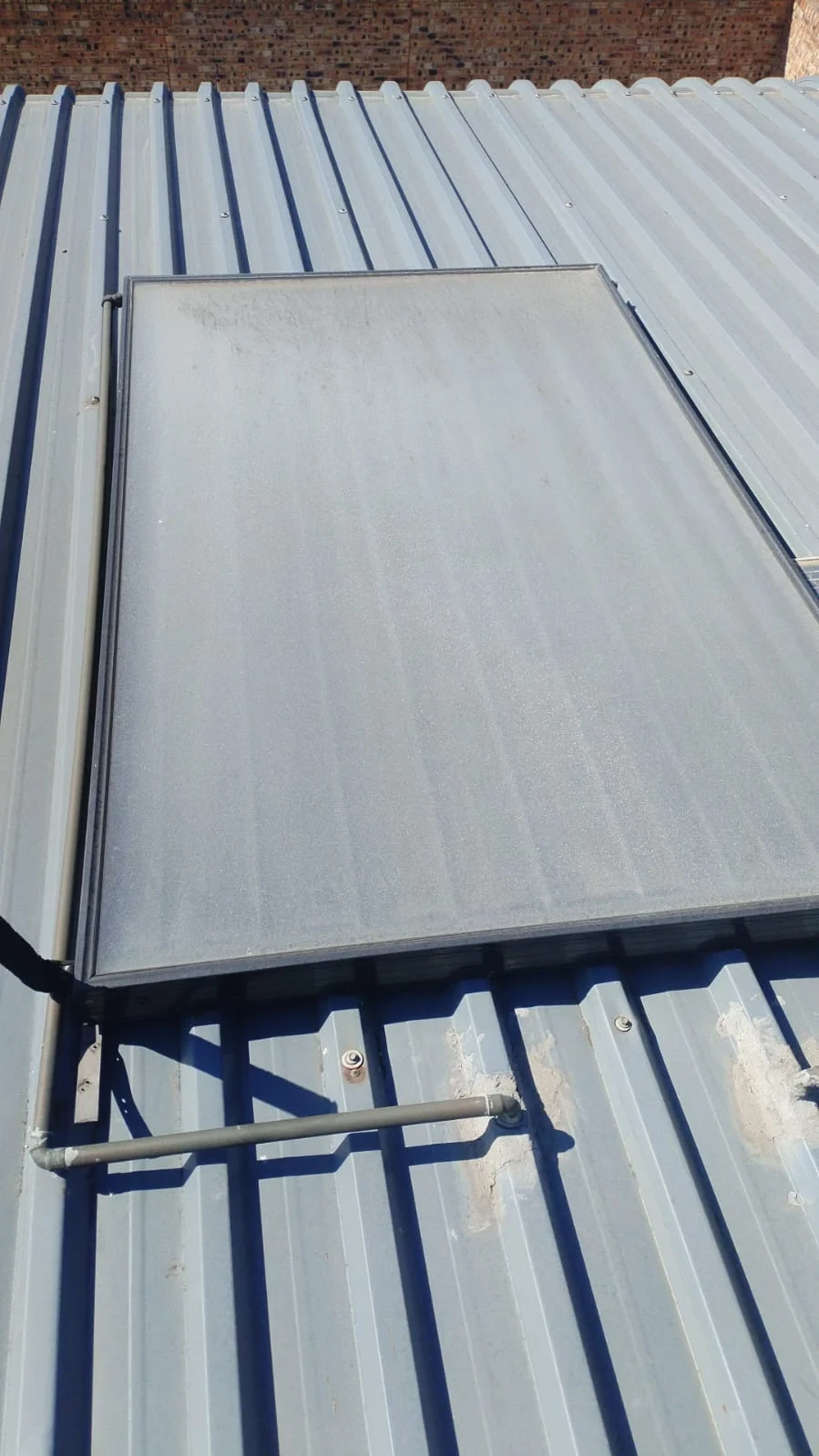
Flat-plate collector for solar water heating
This flat-plate collector shows another option for solar water heating, with a connecting pipe visible below the panel. If you’re comparing it with a 100 litre evacuated-tube conversion, we assess your daily hot-water use, available roof space and existing geyser to recommend a suitable collector and storage capacity.
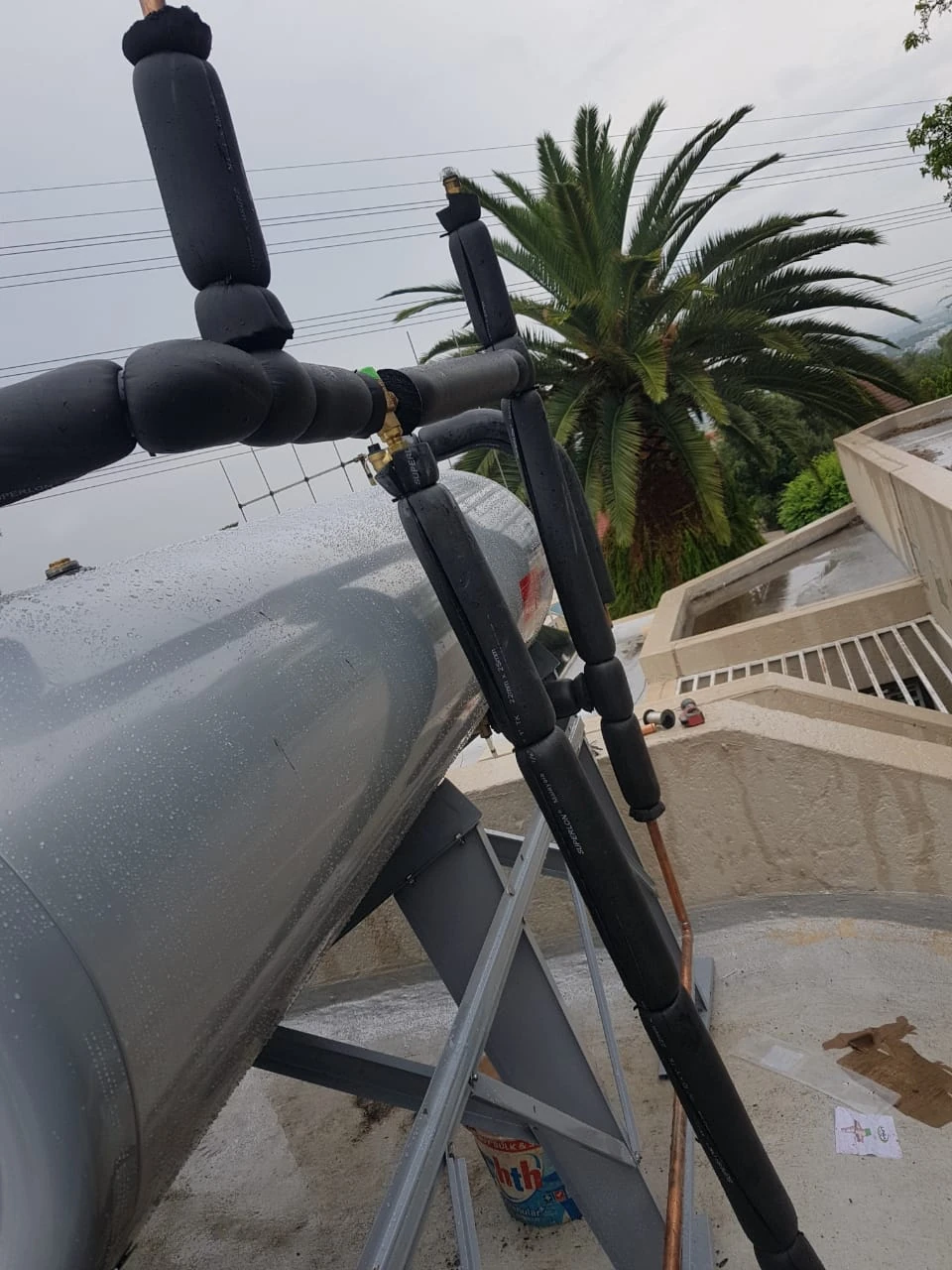
This outdoor cylinder sits on a metal frame beside pipe runs with black insulation and visible copper sections. When assessing a 100 litre solar geyser conversion, we check whether the existing cylinder is suitable and where pipework needs to be routed and insulated to limit heat loss.
Practical system knowledge
How Evacuated Tube Solar Heating Works
Evacuated tubes are designed to collect solar heat while limiting heat loss to the surrounding air. Each tube contains an insulated vacuum layer that helps retain absorbed energy, allowing the collector to produce useful heat even when ambient temperatures are cooler. The captured energy is transferred through the solar circuit and used to heat the water stored in the geyser. Related professional help is available through Solar Geyser Repairs in Gauteng.
What this means for evacuated tube performance
The effectiveness of the system depends on correct orientation, collector angle, circulation and insulation. Poorly routed or uninsulated pipework can waste heat before it reaches the cylinder. Incorrect mounting can reduce sun exposure or create unnecessary strain on the roof. Our plumbers plan the installation as a complete system so that the collector, existing geyser and plumbing components work together safely. Related professional help is available through Solar Geyser Repair.
Why the tube inspection matters
Customers do not need to understand every technical component before making a decision. We explain the system in straightforward language, show which parts are being installed and answer questions before work begins. That transparency helps homeowners feel confident about the equipment on their roof and the value of the conversion. Related professional help is available through Geyser Conversion Systems for Sale.
Why the Vacuum Inside Each Tube Is Important
The vacuum reduces heat transfer from the hot absorber to the outside air. This insulation is one of the reasons evacuated tube collectors can remain effective in cooler conditions and can provide strong solar input during much of the year.
Why Professional Pipe Insulation Cannot Be Ignored
Solar-heated water or heat-transfer fluid must travel between the collector and cylinder. Correct insulation protects that heat, improves efficiency and reduces weather damage to exposed pipework. We inspect the full route rather than focusing only on the collector.
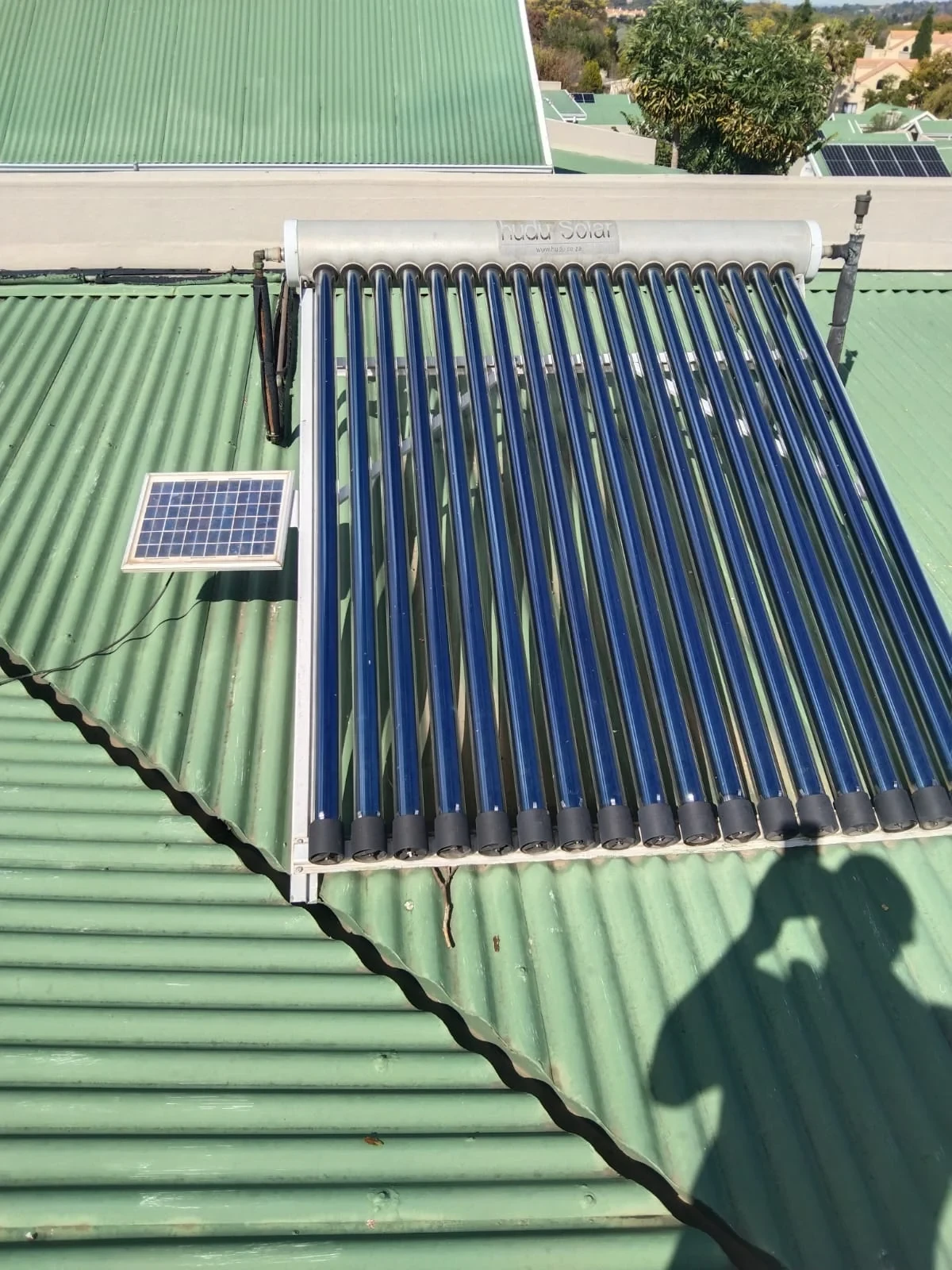
Evacuated-tube collector with a separate photovoltaic panel
The blue tubes collect heat from sunlight, which the solar circuit transfers to the water stored in the geyser. The small photovoltaic panel beside the collector generates electricity. On a conversion, we check the collector position and circulation so the heat gathered on the roof can reach the geyser.
Replacing insulation that lets collected heat escape
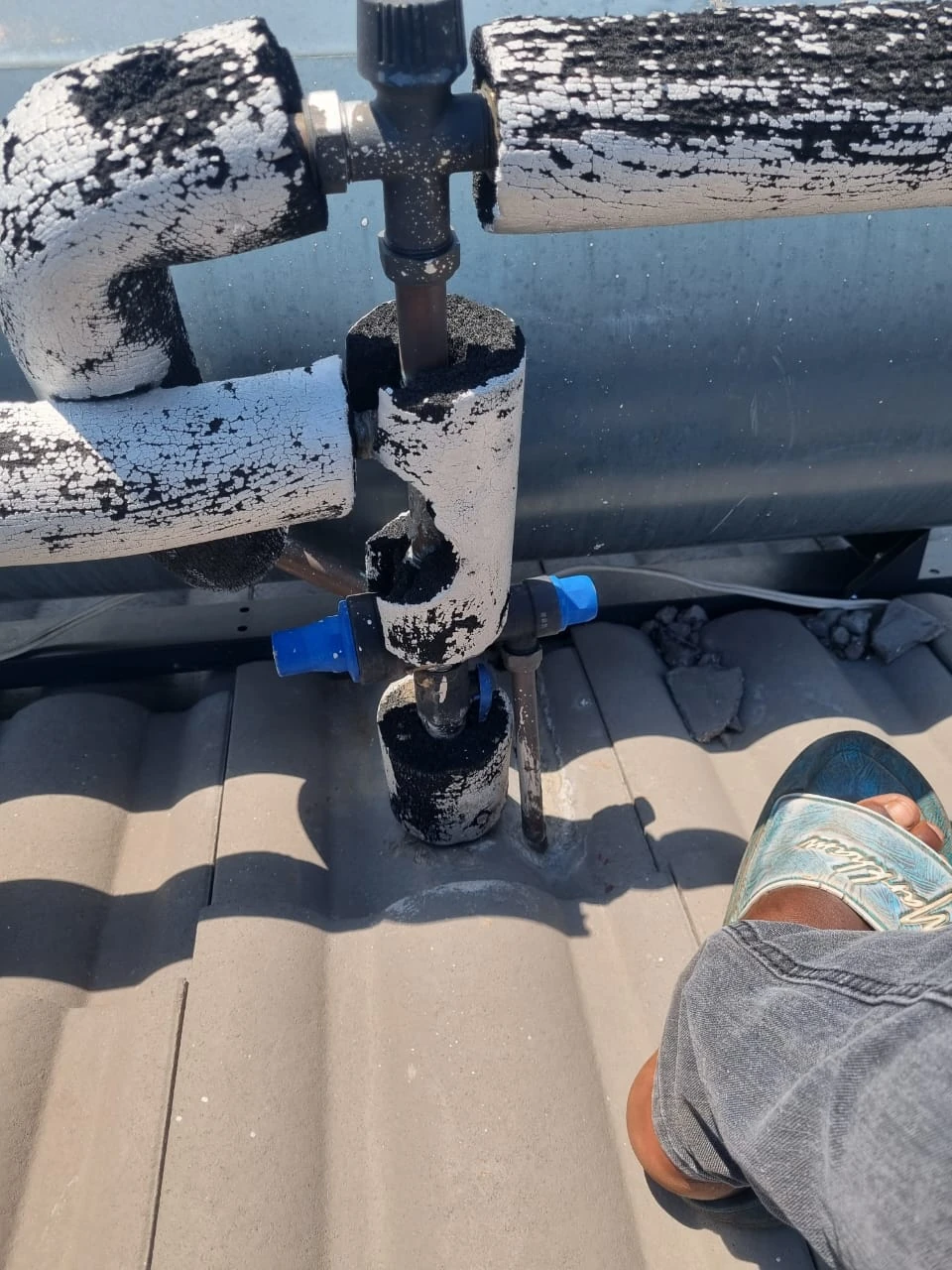
This solar installation shows pipe insulation worn away around the exposed connections. We repair the pipework and replace damaged insulation as part of solar hot-water servicing. Insulating the exposed route helps retain the heat the collector has produced and protects the finish of the completed work.
Choices that affect performance
Our Professional Solar Geyser Conversion Process
A reliable conversion begins long before the first evacuated tube is fitted. We inspect the existing geyser and its safety components, assess the roof structure, review access and identify the best available position for the collector. We also consider how the new pipework can be installed neatly and protected from heat loss and weather exposure.
What this means for installation planning
Before work starts, we explain the recommended work and provide a clear quotation. Customers should understand what is included, which existing components can remain and which items need replacement. This approval-first approach avoids surprises and allows the homeowner to make an informed decision.
Why the installation assessment matters
During installation, the collector is mounted securely, pipework is connected and insulated, and the system is filled and checked according to its design. We test for leaks, confirm circulation and verify that backup heating and controls operate as intended. The work area is left orderly, and we explain the completed system before leaving.
Inspection and Honest Recommendation
We check whether the existing geyser is in suitable condition, whether roof access is safe and whether the proposed system is likely to meet the household’s needs. Where a different approach would be more dependable, we explain why.
Neat Installation and Careful Commissioning
Secure brackets, protected pipe routes and correct connections support long-term reliability. Commissioning is not a quick visual check; it is the stage where we verify that the complete system operates correctly before we leave.
Clear Handover and Practical Guidance
We show customers how normal operation should look, discuss backup settings and identify basic warning signs that may justify a service visit. Good communication is part of professional workmanship.
Roof-space wiring and geyser backup checks
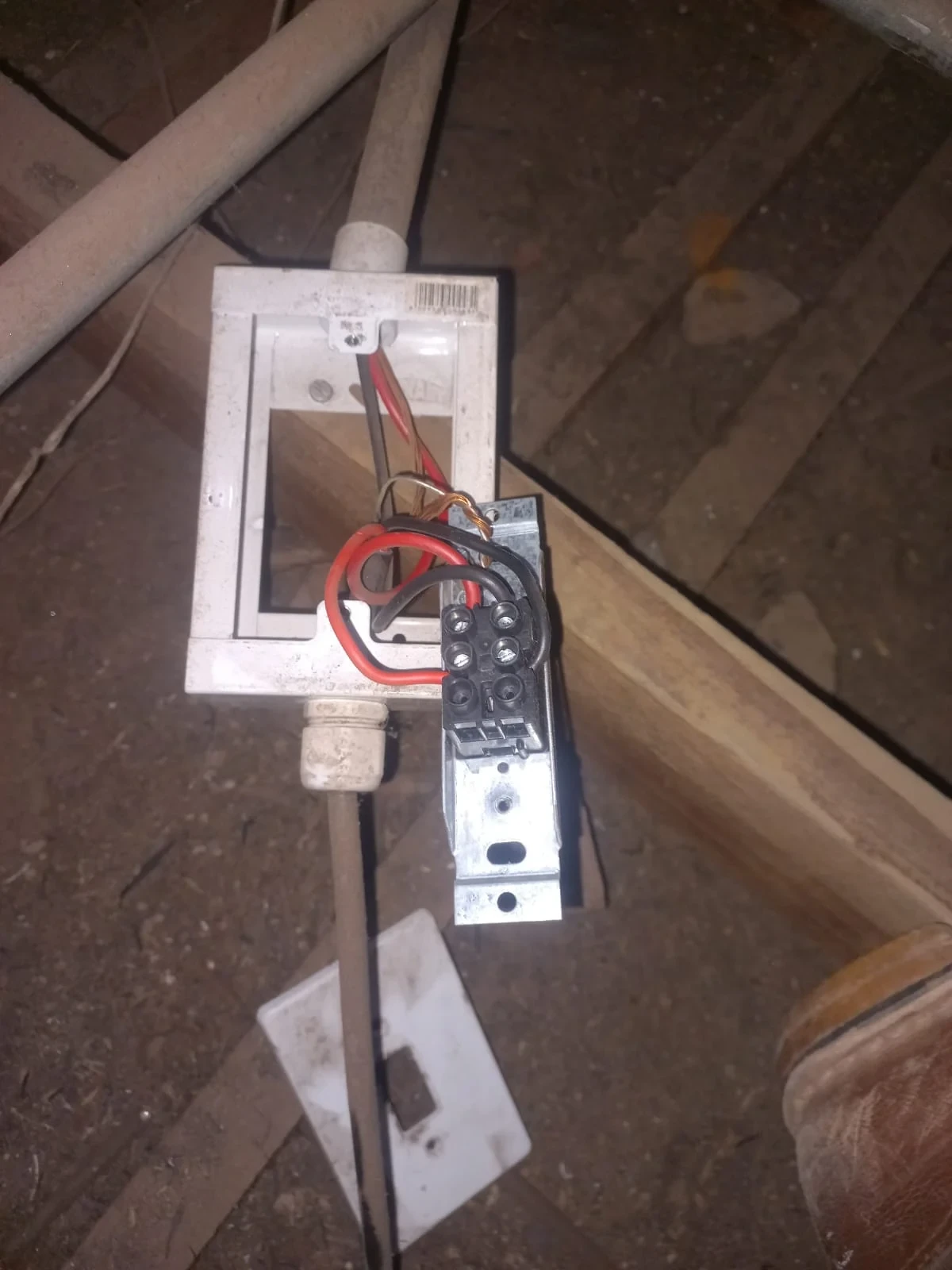
This open electrical box shows the kind of wiring and terminals our electricians may inspect when planning electrical backup for a solar geyser. If the conversion retains backup heating, we check the existing supply, isolation and controls so you can use the backup when solar heat falls short.
Circulation-pump installation for a pumped conversion
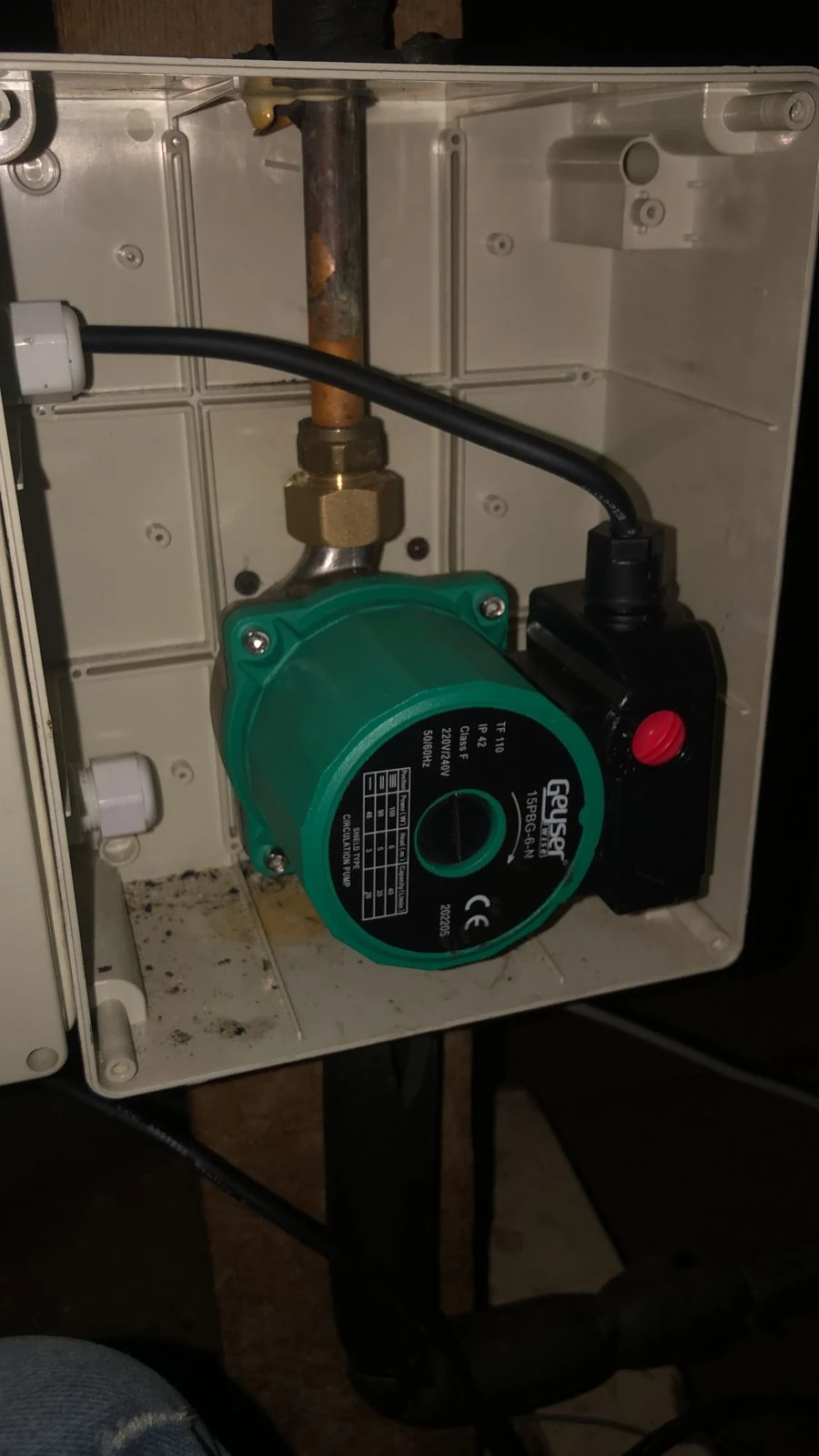
Where the layout calls for a pumped solar conversion, we install the circulation pump and its connections as part of the system. The pump moves water through the intended heating circuit; its operation must work with the controller and sensors. We include that coordination when planning the conversion and its maintenance access.
Protecting the installation
Benefits of a Correctly Installed Solar Geyser Conversion
The most immediate attraction is the opportunity to reduce the electricity used for water heating, which is often one of the larger energy demands in a home. Actual savings vary according to weather, consumption, system settings and installation quality, so we avoid unrealistic promises. Instead, we focus on creating the conditions for efficient, reliable performance.
What this means for long-term benefits
A conversion can also extend the usefulness of an existing geyser when the cylinder and related components remain in good condition. This may reduce unnecessary replacement costs while allowing the homeowner to benefit from solar energy. The system still needs proper safety controls and maintenance, and our assessment identifies whether the existing equipment is suitable to retain.
Why the benefits assessment matters
Long-term value comes from dependable operation, not from the lowest installation price. Quality components, careful workmanship and accessible after-sales support help protect the investment. Our customers know who completed the work and who to contact when they need advice, maintenance or repairs.
Lower Dependence on Electrical Water Heating
Solar energy can provide a meaningful share of the heat required during suitable conditions. Sensible timer or controller settings can further reduce unnecessary electrical heating while maintaining household comfort.
A Practical Upgrade Without Unnecessary Replacement
Where the existing cylinder is sound, conversion may offer a more economical route to solar-assisted hot water. We confirm suitability instead of assuming every old installation should be retained.
Workmanship That Supports Long-Term Reliability
Efficiency and lifespan depend on mounting, valves, pipe insulation and commissioning. We take responsibility for the complete installation rather than treating the collector as an isolated product.
GeyserWise control for solar hot water
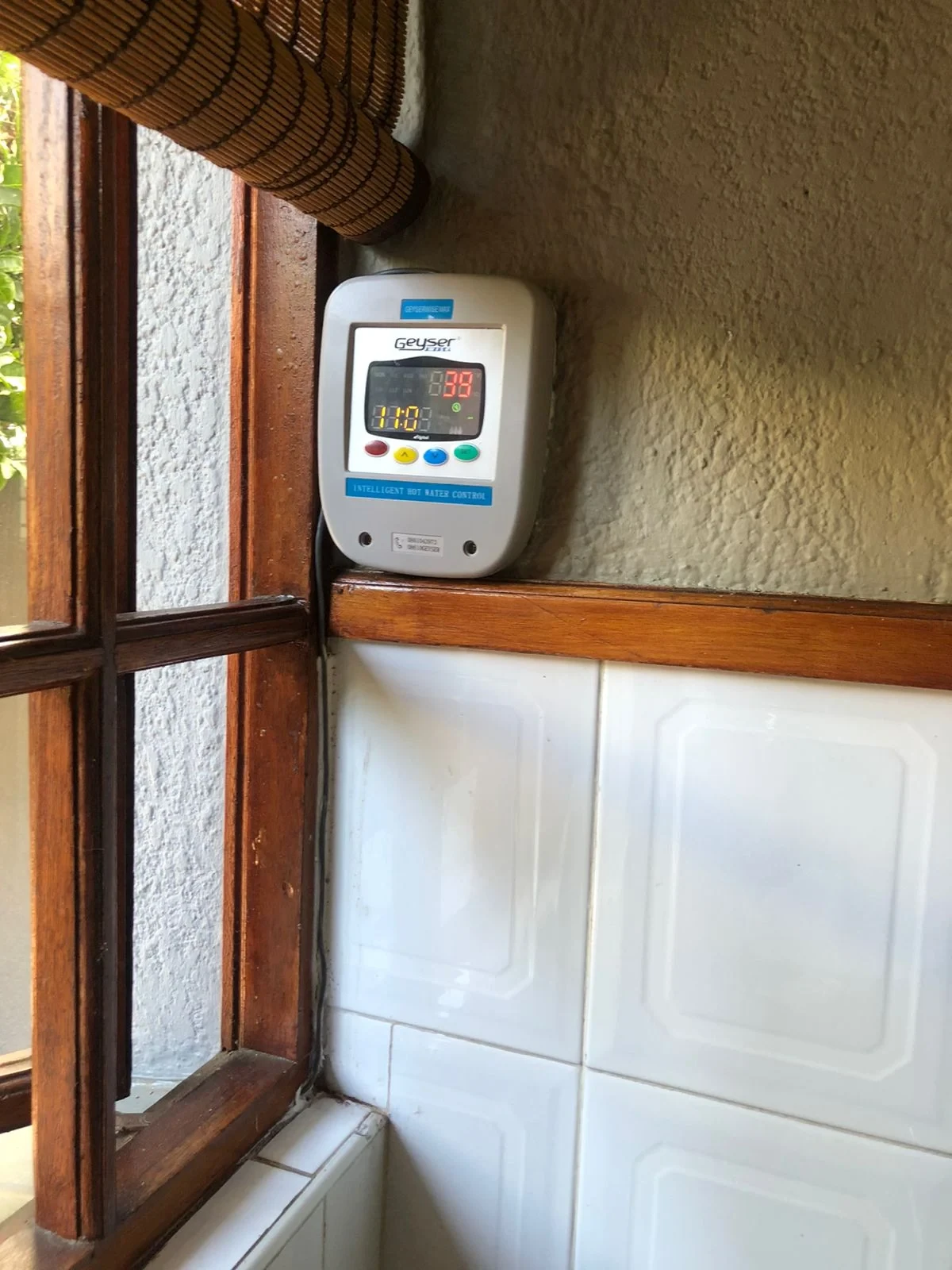
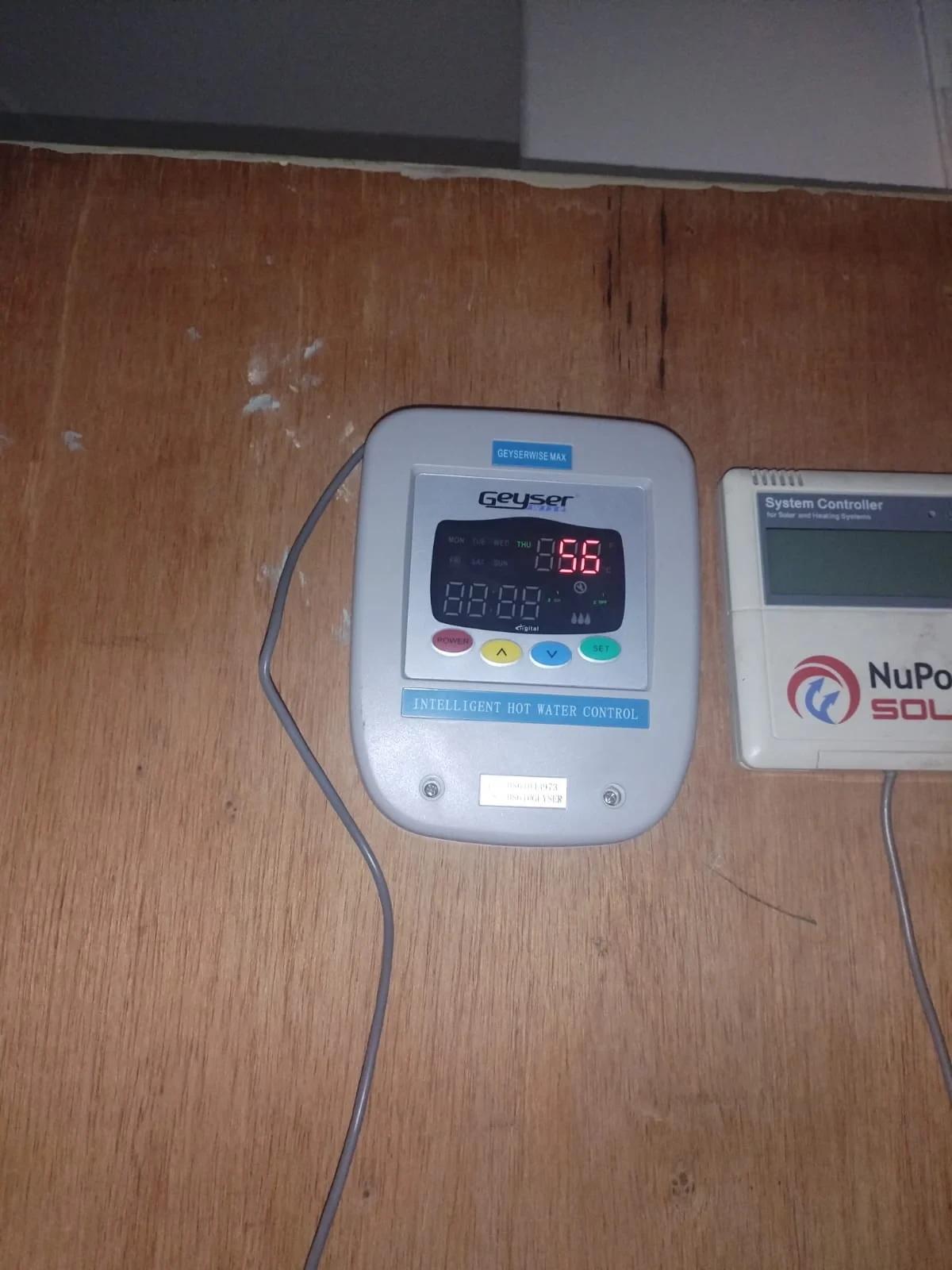
We fit and configure GeyserWise controls where they suit the hot-water system. A useful installation gives you an accessible temperature display and a clear way to manage backup heating. We check the controller, its sensors and the connected equipment together, rather than treating a lit display as the whole job.
The GeyserWise Max controller shown here has a digital display and four control buttons. When we fit this type of controller as part of a solar geyser conversion, we show you how to read the water temperature and check when electric backup heating is scheduled.
Long-term value
Solar Geyser Faults, Maintenance and Repairs
Evacuated tube systems are dependable when installed correctly, but no hot-water system is maintenance-free. Broken tubes, damaged insulation, leaking fittings, failed valves, circulation problems and control faults can reduce performance. Early attention often prevents a small defect from becoming a larger repair or causing water damage.
What this means for repairs and maintenance
Our plumbers assess the symptom before replacing parts. A lack of hot water may be caused by reduced solar collection, an electrical backup fault, a valve problem or unusually high demand. By checking the complete system, we can recommend a repair based on evidence rather than guesswork.
Why the repair assessment matters
Customers value clear explanations, especially when a system is unfamiliar. We show what has failed, explain the proposed repair and confirm the cost before proceeding. That transparent approach builds trust and helps homeowners make confident maintenance decisions.
Broken or Underperforming Evacuated Tubes
A visibly damaged tube should be assessed, but poor performance can also occur without obvious breakage. We inspect the collector and related components to determine whether tube replacement is appropriate.
Leaks, Valves and Insulation Deterioration
Weather exposure can affect external insulation and fittings over time. Regular inspection helps identify heat loss, corrosion or leakage before it affects the roof, ceiling or water supply.
When to Book a Professional System Check
Unexpectedly high electricity use, inconsistent hot water, visible leakage, unusual discharge or damaged tubes are good reasons to request an inspection. Prompt diagnosis protects both performance and property.
Clear answers
Why Homeowners Trust Our Solar Geyser Plumbers
Trust is earned through consistent actions: arriving as arranged, explaining the work clearly, respecting the property and completing the installation carefully. We understand that customers are inviting a tradesperson into their home and relying on that person to make decisions that affect safety, comfort and household expenses.
What this means for choosing a trusted installer
Our plumbers focus on honest recommendations rather than pressure. We do not claim that every property needs the same system, and we do not promise identical savings for every household. We assess the installation, explain the available options and allow the customer to approve the work with a clear understanding of the work.
Why the trust assessment matters
Quality workmanship is supported by communication. We keep customers informed, test the completed system and remain available when advice or follow-up support is needed. That combination of technical care and dependable service is why homeowners contact us for solar geyser conversions, repairs and ongoing plumbing work.
Clear Quotations Before Work Begins
A customer should know what is being installed and what the quoted price covers. We discuss necessary repairs or upgrades before proceeding so decisions are informed and documented.
Respect for Your Home and Roof
We plan access, protect the work area and aim for neat, secure installations. Roof work and plumbing alterations are handled carefully because preventing damage is part of the job.
Reliable Support When You Need Assistance
A professional relationship should not end when we finish. Customers can contact us for maintenance, fault diagnosis and practical guidance as the system continues operating.
The next sensible step
Frequently Asked Questions About 100 Litre Solar Geyser Conversions
These are common questions homeowners ask before approving a conversion. We answer them in plain language and confirm property-specific details during the assessment.
How many people can a 100 litre solar geyser serve?
It is often considered for one or two people with moderate hot-water use, but shower duration, flow rates and peak demand can change the recommendation. We assess actual usage before confirming the size.
Will the system still provide hot water in winter?
Evacuated tubes can collect useful heat in cooler conditions, but solar contribution varies with sunlight and demand. Electrical backup may still be used when solar input is insufficient.
Can my existing electric geyser be converted?
Many existing geysers can form part of a conversion if the cylinder and safety components are suitable. We inspect the installation first and explain any necessary upgrades.
How long does a professional conversion take?
Time depends on roof access, pipe routing and the condition of the existing system. We provide a realistic estimate after inspection rather than promising the same duration for every property.
What maintenance does an evacuated tube system need?
Periodic checks of tubes, insulation, valves, fittings and system performance help maintain efficiency. Any visible damage, leakage or sudden performance change should be inspected promptly.
Request a 100 Litre Solar Geyser Conversion Assessment
Speak to our plumbers about your household’s hot-water use, existing geyser and roof layout. We will assess the installation, explain the suitable options and provide a clear quotation before work begins.
What details should I send when booking a 100 litre solar geyser conversion assessment?
Share your geyser’s current capacity if you know it, how backup heating is set up, and when you tend to run out of hot water. If you’re booking a repair, include any GeyserWise message and describe when the problem occurs. Photos taken safely from ground level can help show the available collector space.
What should a quote for a 100 litre evacuated tube conversion include?
The quote should identify the collector, pipework, insulation and controls, along with any agreed electrical work. It should also explain which existing components will be kept and which repairs or upgrades are needed before the conversion goes ahead.
Can I fit an evacuated tube collector if part of my roof is shaded?
A conversion may still be possible if another roof position gets good sun and offers a suitable pipe route to the geyser. The assessment checks sun exposure, mounting and pipe routing before recommending a collector position.
Does every 100 litre evacuated tube conversion need a circulation pump?
A circulation pump is fitted when the layout calls for a pumped system. It moves water through the heating circuit, and the installer checks that it works with the controller and sensors.
Why is my solar geyser still using more electricity than expected on sunny days?
The electric element may be running on its backup schedule, or less solar heat may be reaching the geyser because of poor circulation or damaged pipe insulation. If you have a GeyserWise controller, note when backup heating is scheduled and whether the displayed water temperature rises during the day. Share those observations when booking a check.
Helpful plumbing guides
Learn more about 100 Litre Evacuated Tube Solar Geyser Conversion
Helpful reading on 100 litre evacuated tube solar geyser conversion: warning signs, first-response steps, and what to expect from a professional visit. Save time, reduce damage, and know when to call 067 657 6109.
The main photo shows evacuated tubes beneath a rooftop storage cylinder. Another view shows a roof-mounted tube collector. In an evacuated-tube solar geyser conversion, the collector uses sunlight to heat water and can reduce reliance on the electrical element. The savings depend on sunlight, household hot-water use and backup heating settings.
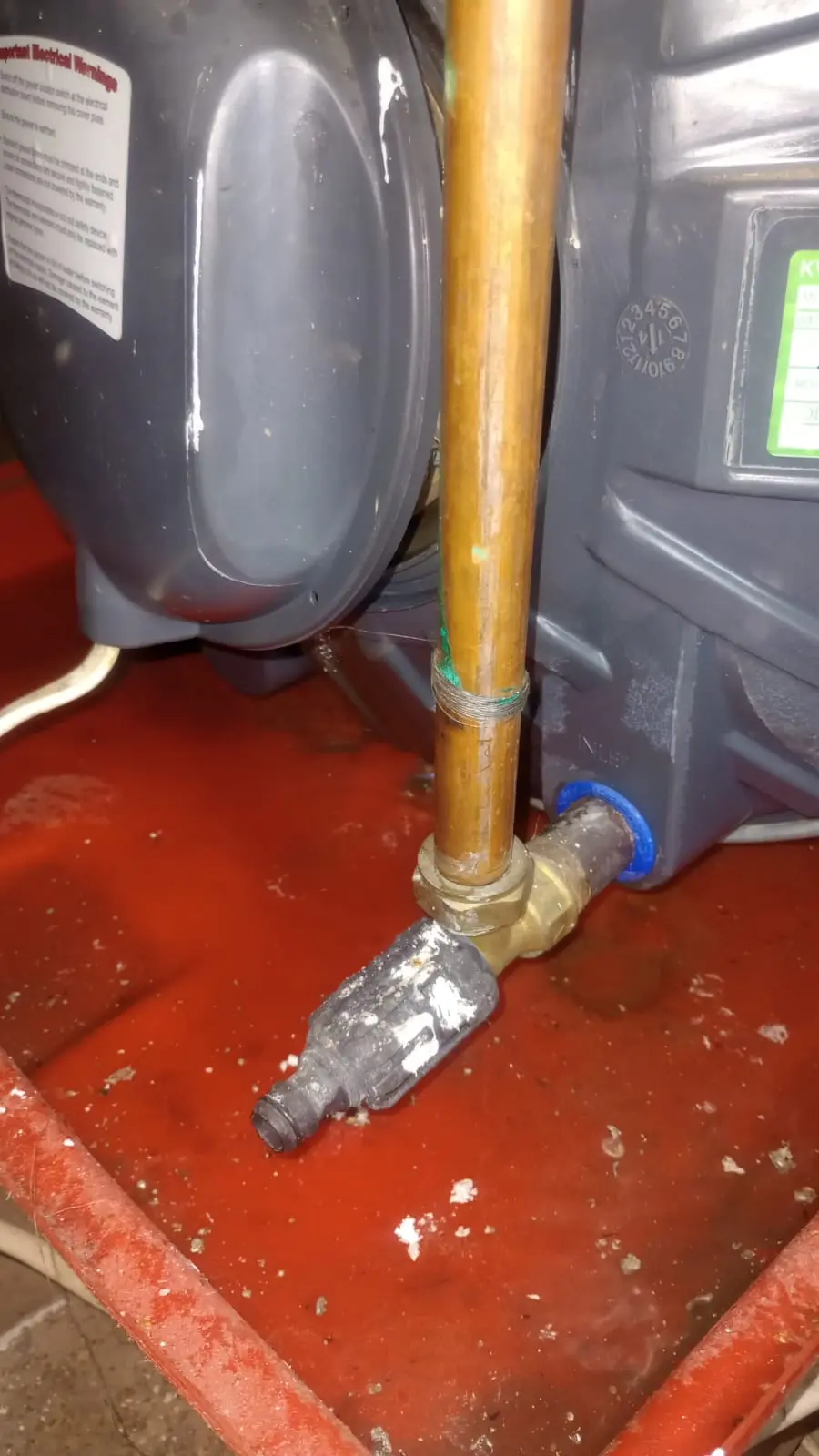
The photo shows a copper pipe and brass fitting at a geyser connection above a red drip tray. If you spot water around a connection, in the tray or near electrical components, tell us where you see it so we can assess how urgently the geyser needs attention.
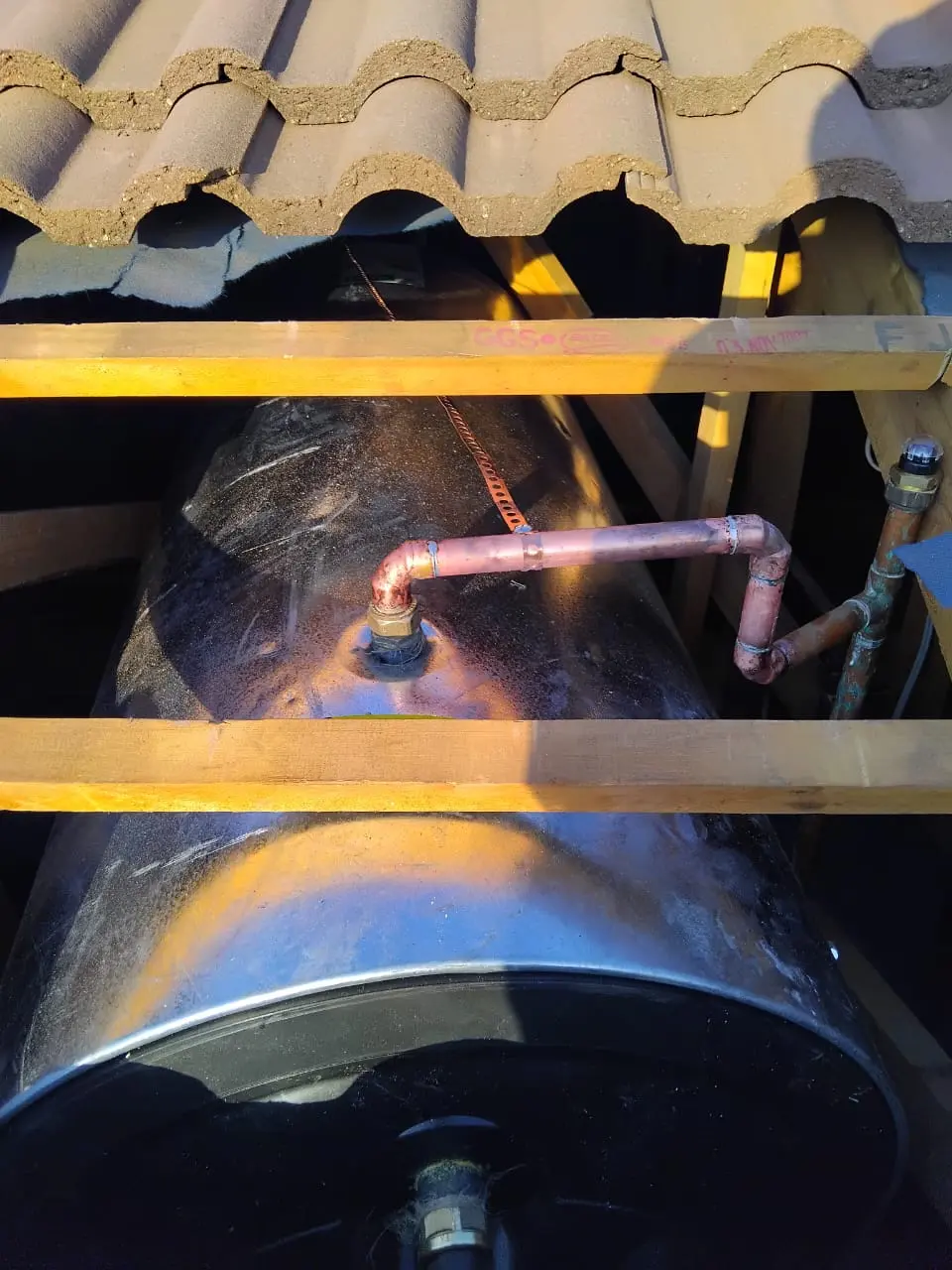
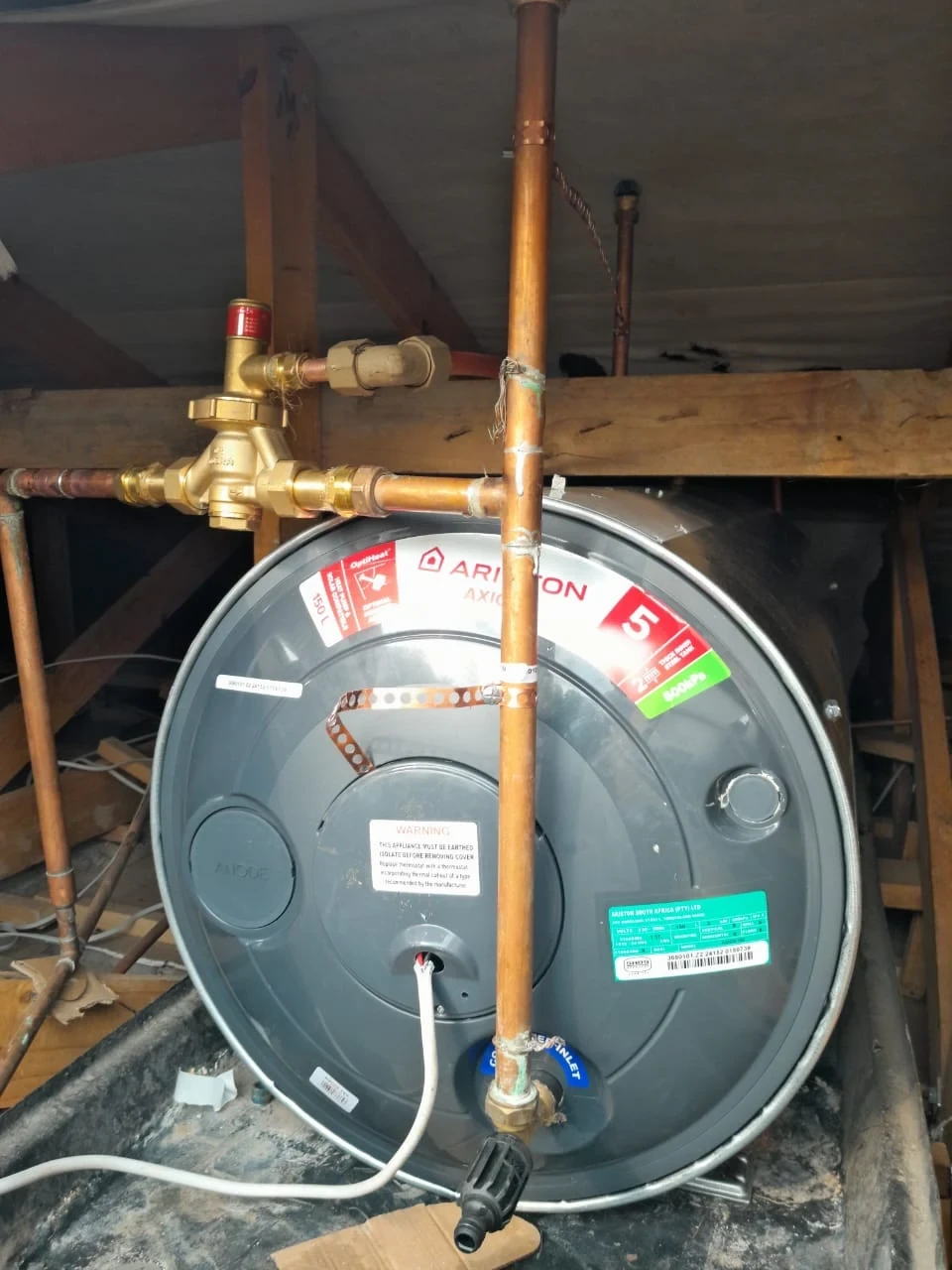
This view beneath the roof tiles shows a horizontal geyser cylinder and its copper pipework. When we quote for replacing a geyser in a roof space like this, we account for access and the connections that need to be redone so you can see what the price covers.
This roof-space installation shows a horizontal geyser, copper pipework, a brass valve assembly and a drip tray. When planning a geyser installation or solar conversion, we check that the valves can be reached for servicing and that the tray can drain safely to help protect the ceiling below.