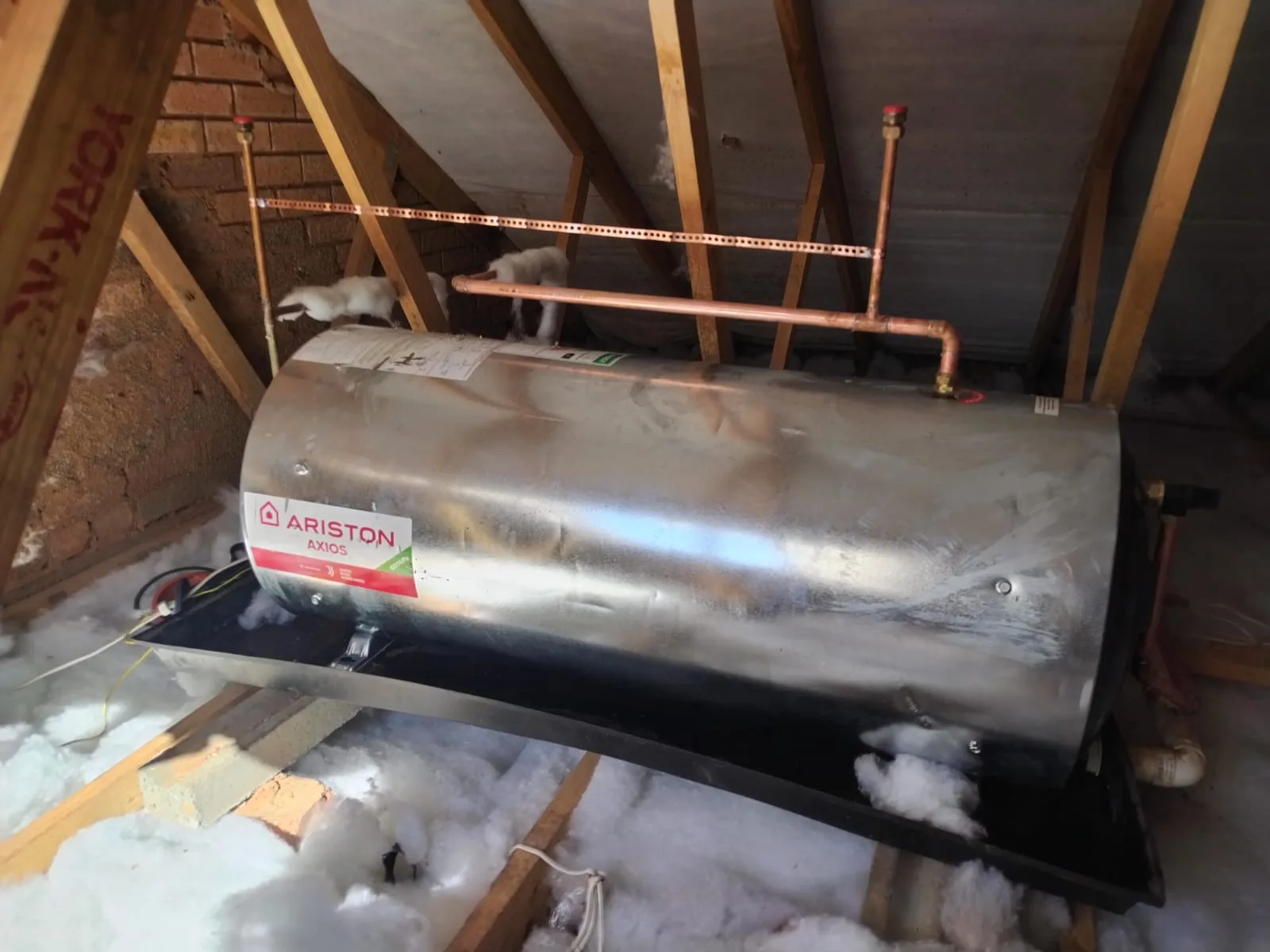
A geyser installation must manage pressure, temperature, water containment and electrical safety. Correct components, pipe routing, support and drainage are essential because a fault can release hot water or a large volume of stored water.
Start here
Regulatory requirements can change and may differ by installation type. Homeowners should use qualified professionals and request the applicable compliance documentation rather than relying on an informal visual check.
How to recognise the problem
- Missing or incorrectly routed discharge pipes.
- No visible drip tray where one is required.
- Unsupported or strained pipework.
- Incorrect or mixed pressure-control components.
- Electrical isolators or wiring that appear unsafe.
- Leaks after a recent installation.
Common causes
- Unqualified installation work.
- Incorrect valve selection.
- Poor tray or drain routing.
- Inadequate structural support.
- Non-compliant electrical connections.
- Alterations made after the original installation.
What you can safely check yourself
- Keep installation invoices and certificates.
- Photograph the installation after completion.
- Check that discharge outlets remain visible and open.
- Report leaks or unusual pressure immediately.
What you should never do
- Do not accept blocked safety discharges.
- Do not conceal valves that require access.
- Do not modify electrical connections yourself.
- Do not assume a replacement is compliant because it fits in the same space.
When to call a plumber
Call a qualified plumber when replacing a geyser, changing pressure zones, relocating the unit, correcting an old installation or investigating missing compliance documentation. Electrical work must be handled by an appropriately qualified person.
How we can help
The installer assesses structural support, pressure, valve requirements, tray and drainage, pipework, insulation and electrical coordination. The installation is pressure-tested, heated, inspected and documented according to applicable requirements.
Reducing the chance of another problem
- Use qualified installers.
- Specify approved components.
- Retain compliance records.
- Inspect alterations before ceilings are closed.
- Avoid unauthorised modifications.
Your questions answered
Does every geyser replacement need compliance documentation?
Requirements depend on the work and applicable standards, but professional installation and proper documentation are essential for safety and insurance.
Why are discharge pipes necessary?
They provide controlled routes for water released by safety and pressure-control devices so hot or overflowing water does not discharge into the ceiling or living space.
Can a geyser be installed anywhere?
No. Access, structural support, drainage, clearances and serviceability must all be considered before placement.
What is a drip tray for?
A tray under the geyser contains leaks or discharge so water can be routed safely rather than soaking ceilings and walls.
Who should do the electrical connection?
Electrical isolators and wiring must be handled by an appropriately qualified person. Do not modify electrical connections yourself.
What signs suggest a non-compliant installation?
Missing discharge routes, no tray where required, unsupported pipework, mixed pressure components, unsafe isolators, or leaks after recent work.
Should safety discharges ever be blocked?
Never. Blocked safety outlets create pressure and scald risk. Keep outlets visible and open.
Do I need a qualified plumber for relocation?
Yes. Relocating a geyser changes support, pipework, drainage and often electrical routing. Use qualified installers and retain records.
What should I keep after installation?
Invoices, certificates, photographs of the completed installation, and notes of valve and discharge locations.
When should I call Plumb A Nator?
For replacement, pressure-zone changes, relocation, correcting an old installation, or investigating missing compliance documentation.
Need a plumber for geyser installation regulations?
Tell us how geyser installation regulations affects your property and we will help plan the right response.