
Water hammer is a pressure wave created when moving water stops or changes direction suddenly. The resulting bang or vibration can loosen fittings, stress valves and disturb pipe supports.
Start here
A single tick from thermal expansion is different from a sharp bang when a tap, toilet valve or appliance closes. Identifying the trigger is an important first step.
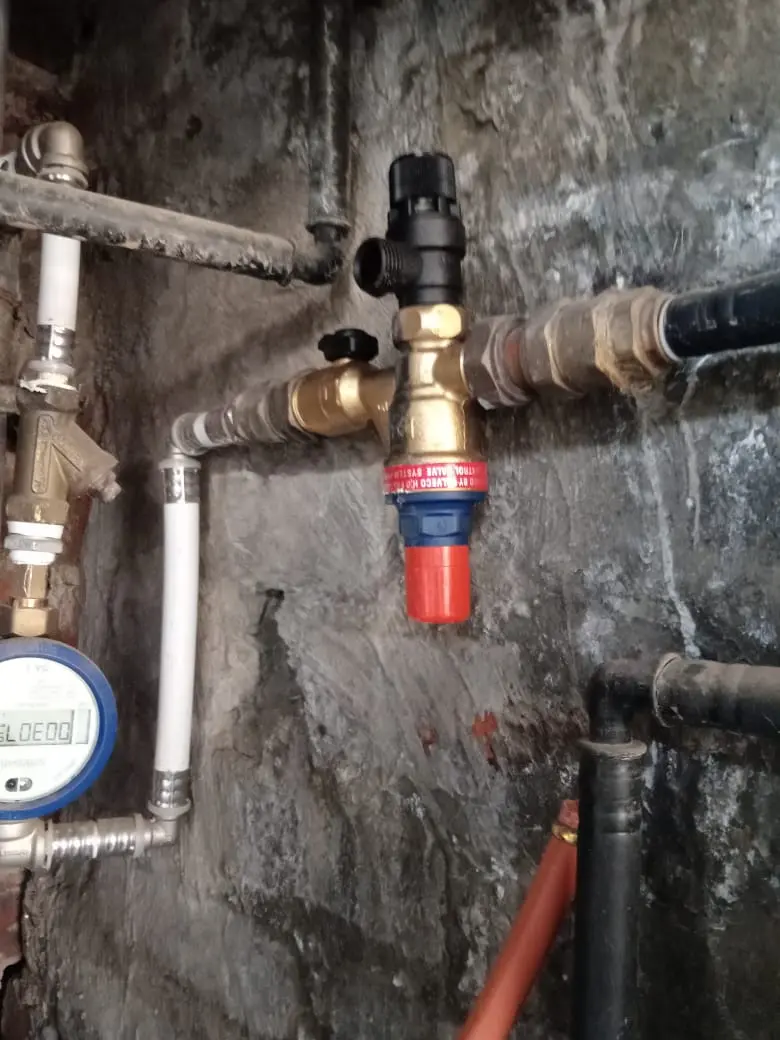
How to recognise the problem
- Sharp banging when taps close.
- Pipes shake when washing machines or dishwashers stop filling.
- Noise occurs when toilet cistern valves shut.
- Repeated vibration near pressure valves.
- Leaks develop at joints after ongoing hammer.
Common causes
- Excessive water pressure.
- Fast-closing solenoid or toilet valves.
- Loose or poorly supported pipes.
- Missing or failed arrestors.
- Air chambers that no longer function.
- Pump start-stop behaviour.
What you can safely check yourself
- Identify which fixture triggers the noise.
- Note whether it occurs on hot, cold or both systems.
- Check for visible loose pipe clips where safely accessible.
- Arrange pressure measurement.
What you should never do
- Do not wedge pipes tightly against structural surfaces.
- Do not keep increasing pressure.
- Do not ignore new leaks after severe banging.
- Do not install random arrestors without locating the pressure wave source.
When to call a plumber
Call a plumber when hammer is strong, frequent, associated with high pressure or causing movement and leaks.
How we can help
The plumber measures pressure, observes the triggering valve, checks pipe support and system layout, and may regulate pressure, replace fast-closing valves, secure pipework or install correctly positioned arrestors.
Reducing the chance of another problem
- Keep system pressure controlled.
- Secure pipework properly during installations.
- Maintain appliance and toilet inlet valves.
- Use suitable arrestors where required.
- Investigate pump cycling and sudden valve closure.
Your questions answered
What is water hammer?
A pressure wave created when flowing water stops or changes direction suddenly, often heard as a bang or felt as vibration.
Is water hammer dangerous?
Repeated strong hammer can stress joints, valves and supports and may contribute to leaks over time.
Why does it happen when a tap closes?
Fast closure stops the water column abruptly; high pressure and poorly supported pipes amplify the effect.
Can new appliances cause it?
Yes. Solenoid valves on washing machines and dishwashers close quickly and can reveal existing pressure or support issues.
What can I safely check?
Note which fixture triggers the noise, whether hot/cold, and whether pipe clips are loose where accessible.
Does lowering pressure help?
Often, if pressure is excessive. Support, valve behaviour and correctly placed arrestors may still be needed.
Should I install arrestors myself?
Not randomly. Correct diagnosis of the wave source and placement matters more than adding parts blindly.
When should a plumber be called?
When hammer is strong, frequent, linked to high pressure, or associated with movement and new leaks.
How do professionals fix it?
Measure pressure, identify the triggering valve, secure pipework, regulate pressure and fit arrestors where appropriate.
Can Plumb A Nator diagnose water hammer?
Yes. Contact the team for pressure checks and practical corrections on Gauteng properties.
Need hands-on plumbing support?
If water hammer explained is causing damage or uncertainty, share photos and symptoms for tailored guidance.