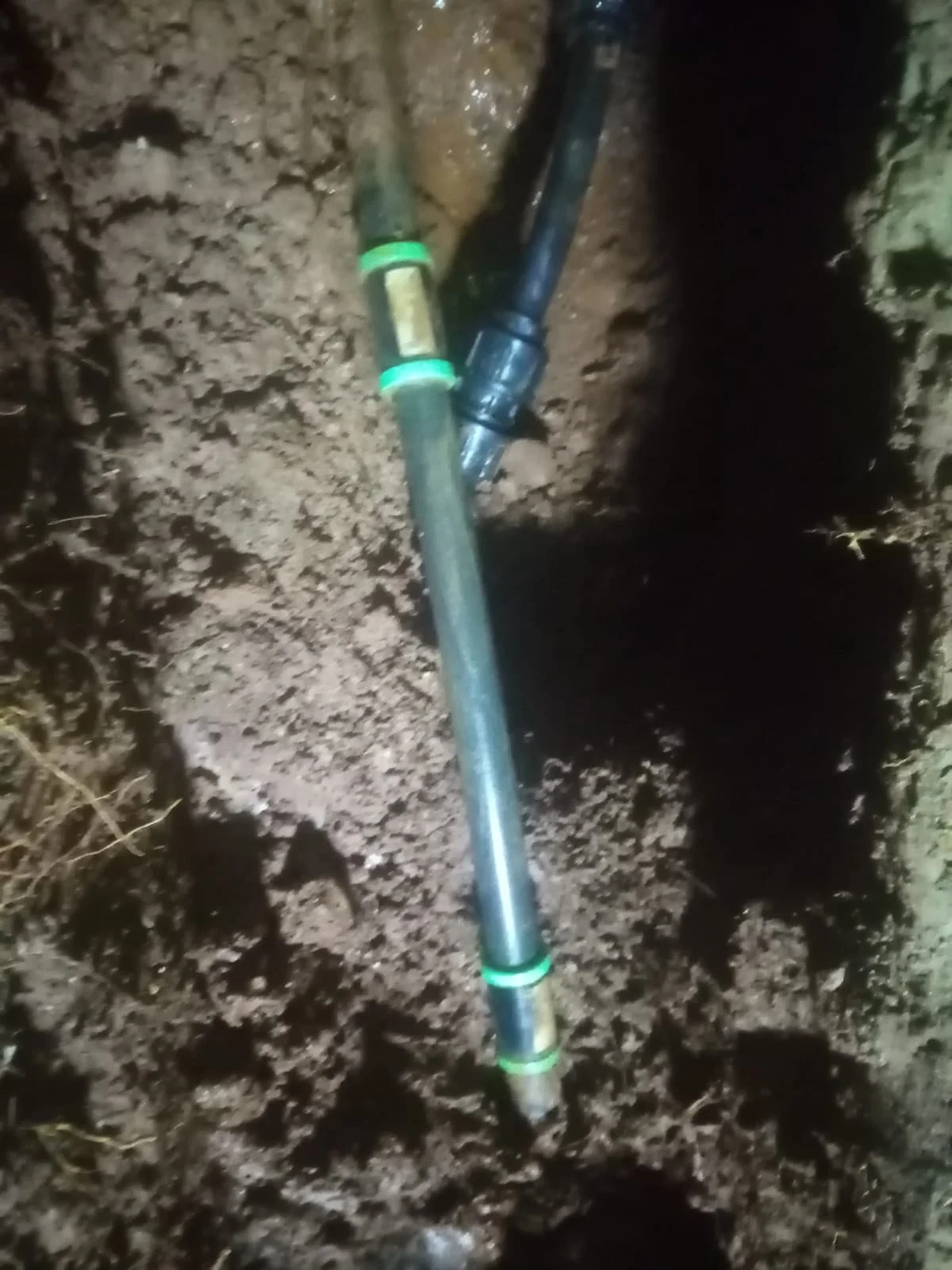
Underground leaks can occur on the supply pipe between the meter and building, on irrigation lines or on buried internal services. Because the pipe is hidden by soil, paving or concrete, the leak may first appear as unexplained consumption or changes in the ground.
Water use when the property is quiet
A meter that continues moving after all internal fixtures, irrigation and appliances are off is a strong sign of a supply-side leak.
Wet or unusually green areas
Persistent damp soil, pooling water or isolated lush growth may indicate buried water. Rainfall, drainage and irrigation faults must also be considered.
Soft ground and paving movement
Escaping water can wash fine material away, creating hollow areas, subsidence or loose paving. Keep people away from unstable ground until it is assessed.
Reduced pressure inside the building
A substantial underground leak can reduce flow at fixtures, particularly when multiple outlets are used. Municipal pressure changes and faulty valves can produce similar symptoms.
Locating the buried pipe route
Plans, valve positions, meter alignment and visible entry points help estimate the route. Electronic pipe tracers may assist where metallic conductors or tracer wires are present.
Detection methods
Acoustic listening, pressure isolation, correlators, tracer gas and targeted test holes may be used. The best method depends on pipe material, depth, soil and leak rate.
Why random excavation is risky
Blind digging can damage other services and create unnecessary reinstatement costs. Detection should narrow the area and underground utilities should be considered before excavation.
Repair options
A local repair may be suitable for isolated damage. Old brittle lines, repeated failures or badly routed pipes may justify replacement or rerouting.
Preventing future failures
Manage excessive pressure, protect pipes from vehicle loading and roots, document pipe routes and replace vulnerable materials before repeated leaks become costly.
Frequently asked questions
Can an underground leak be heard?
Often, but signal strength depends on pipe material, pressure, soil and depth.
Who is responsible for a leak near the meter?
Responsibility depends on whether the leak is on the municipal or private side of the meter and on local rules.
Will the ground always be wet?
No. Water can drain downward, enter stormwater systems or travel through porous fill without appearing at the surface.
Questions about underground water leaks?
Send details about underground water leaks and our team will recommend the most appropriate service.