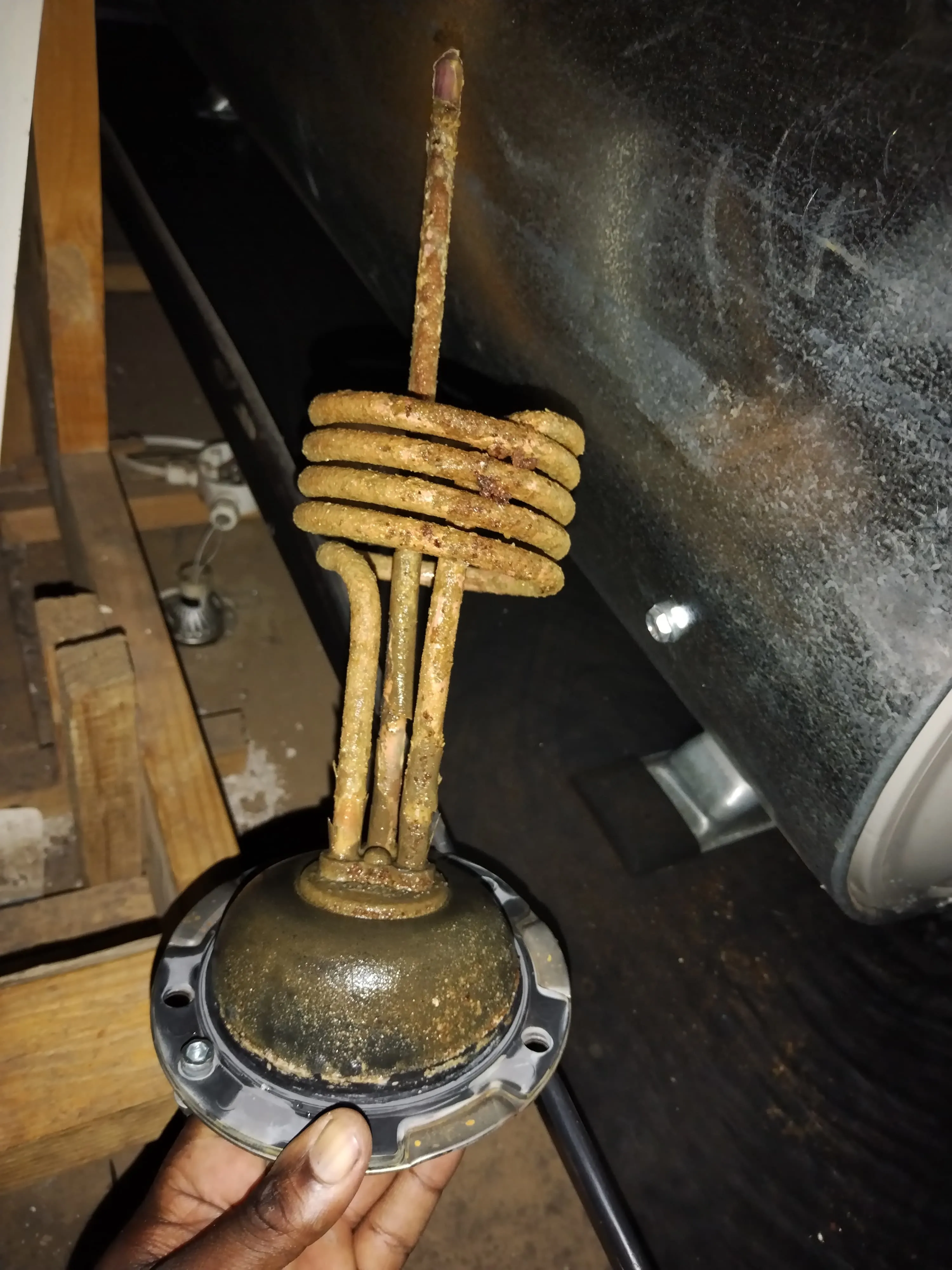
The heating element converts electrical energy into heat inside the geyser. When it fails, water may remain cold, heat slowly, trip the circuit or behave intermittently. Correct diagnosis is essential because thermostat faults and wiring problems can create similar symptoms.
Start here
No hot water does not automatically prove the element has failed. Check whether the geyser circuit is on, whether other electrical circuits are working and whether the problem affects all hot taps. Do not remove electrical covers.
How to recognise the problem
- Water remains cold despite adequate heating time.
- The geyser trips the circuit breaker.
- Hot water is available only intermittently.
- Heating takes much longer than usual.
- There are unusual electrical smells or sounds.
Common causes
- Normal element wear.
- Scale coating the element.
- Dry firing after the geyser was emptied.
- Electrical faults or loose connections.
- Incorrect element rating.
- Thermostat failure causing overheating.
What you can safely check yourself
- Confirm the geyser isolator and breaker positions visually.
- Check whether hot water is absent at every outlet.
- Record when the fault started and whether the breaker trips.
- Switch the circuit off if it repeatedly trips.
What you should never do
- Do not test a live element yourself.
- Do not bypass the thermostat.
- Do not drain or open the geyser without proper isolation.
- Do not install an element with the wrong rating.
When to call a plumber
Call a plumber or qualified electrical professional when the geyser does not heat, trips electricity or shows signs of overheating. Repeated breaker resets can be unsafe and may damage components.
How we can help
The system is electrically isolated and tested. The element, thermostat, wiring and insulation resistance are checked. If the element is faulty, the geyser is drained safely, the correct replacement is fitted with a new seal, and the unit is refilled and leak-tested before power is restored.
Reducing the chance of another problem
- Control scale where water quality is poor.
- Never switch on an empty geyser.
- Repair thermostat faults promptly.
- Use correctly rated components.
- Arrange inspection when heating time changes significantly.
Frequently asked questions
How long does element replacement take?
Time varies with access, draining and condition, but a straightforward replacement is often completed in one visit.
Can a bad element trip the electricity?
Yes. Insulation failure or a short circuit can trip the breaker or earth leakage.
Should the thermostat be replaced at the same time?
It should be tested. Replacement depends on its condition and compatibility.
Want practical advice on geyser element replacement?
Send details about geyser element replacement and our team will recommend the most appropriate service.