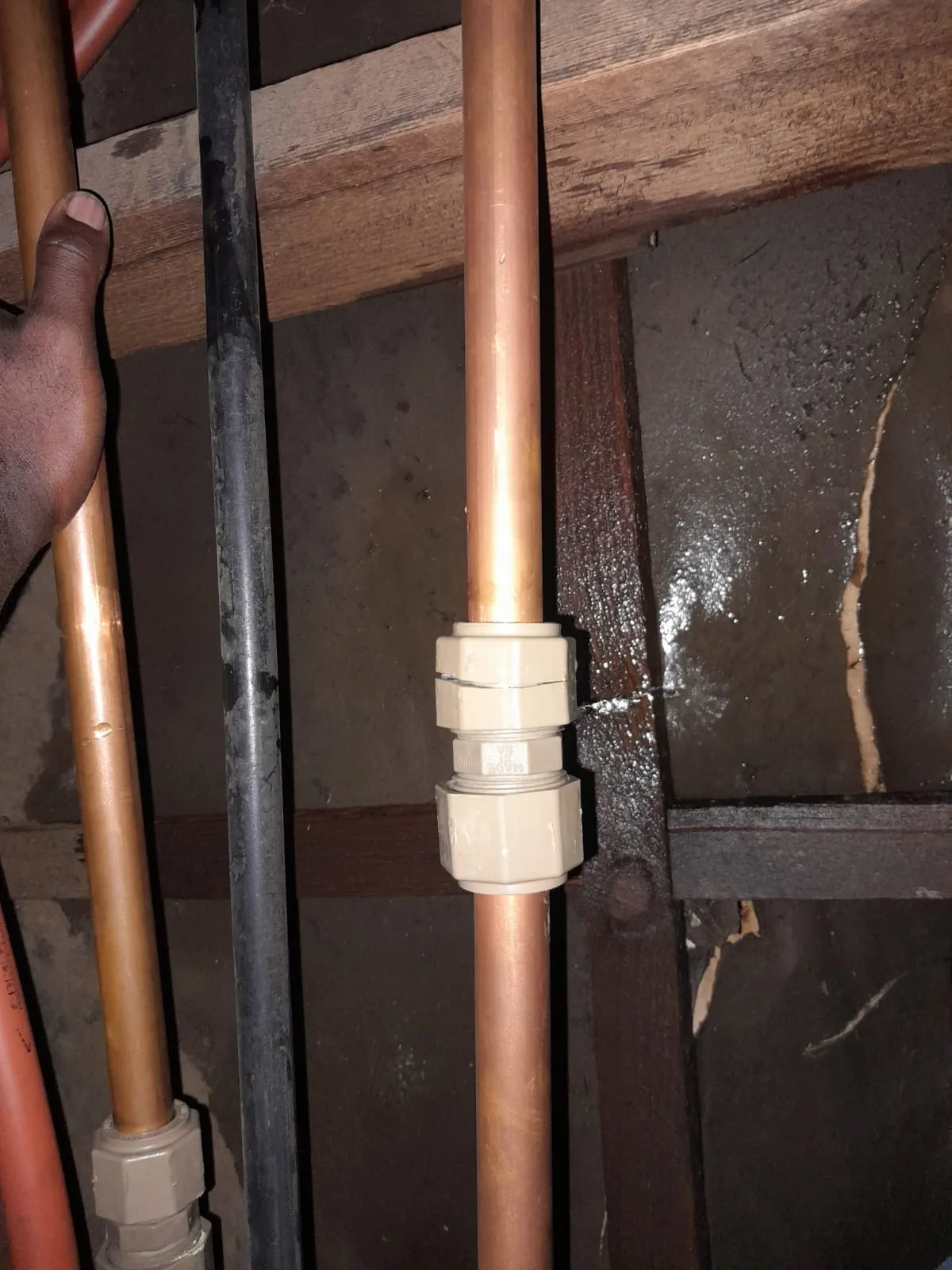
Copper and plastic pipe systems can both provide reliable service when correctly selected and installed. Their failure patterns differ, however. Copper is vulnerable to corrosion and thinning, while PVC and other plastics are more often affected by unsuitable temperature, poor joints, impact, ultraviolet exposure or incompatible fittings.
How copper pipes commonly fail
Copper may develop pinhole leaks, split at weakened sections or fail near soldered and compression joints.
- Internal pitting and water-chemistry corrosion.
- External corrosion from damp materials.
- Stress near bends and rigid supports.
- Poor soldering or incompatible metal contact.
How PVC and plastic pipes commonly fail
Plastic pipes may crack, pull out of fittings, deform under heat or fail where solvent welds and mechanical joints were poorly prepared.
- Incorrect pipe type for hot water or pressure.
- Brittleness from age or ultraviolet exposure.
- Insufficient insertion into fittings.
- Impact or stress at unsupported sections.
Temperature and hot-water suitability
Standard PVC is generally not appropriate for hot-water supply. Other plastic systems may be designed for higher temperatures, but only when installed with compatible fittings and manufacturer-approved methods.
Pressure and water hammer
Both copper and plastic systems can fail under excessive pressure. Plastic may absorb some vibration differently, but joints, valves and connectors remain vulnerable to surges.
Warning signs in copper systems
Look for green-blue deposits, repeated pinholes, staining around joints and sections that feel thin or pitted after removal.
Warning signs in plastic systems
Look for cracked fittings, movement at joints, distorted pipe, discolouration, loose supports and leaks after temperature or pressure changes.
Repair differences
Copper repairs may involve cutting and joining with approved fittings. Plastic repairs require correct identification of the material because PVC, CPVC, HDPE, PEX and multilayer systems use different joining methods.
When mixed materials create problems
Joining copper to other metals or plastics requires suitable transition fittings and attention to movement, support and galvanic corrosion.
Which material lasts longer
Service life depends less on a simple material ranking and more on water chemistry, pressure, temperature, workmanship and environment.
Your questions answered
Is copper always better than PVC?
No. Each material has the right applications. Service life depends on water chemistry, pressure, temperature, support and workmanship more than a simple ranking.
How do copper pipes commonly fail?
Pinholes from internal pitting, external corrosion in damp materials, stress near bends, and weak soldered or compression joints.
How do PVC and other plastic pipes commonly fail?
Cracked fittings, pulled joints, heat deformation, UV brittleness, impact damage and incorrect material used on hot-water lines.
Can standard PVC be used on a geyser line?
No. Standard PVC is not rated for typical hot-water temperatures. Use a system approved for the temperature and pressure of that run.
What warning signs appear on copper systems?
Green-blue deposits, repeated pinholes, staining at joints and sections that look thin or pitted when opened.
What warning signs appear on plastic systems?
Cracked fittings, movement at joints, distorted pipe, discolouration, loose supports and leaks after temperature or pressure changes.
Should a failed copper section be replaced with plastic?
Only with an approved transition fitting and a clear reason. Random material changes can create future maintenance and movement problems.
Do mixed materials cause problems?
They can. Copper-to-plastic and copper-to-other-metal joints need suitable transitions, support and attention to galvanic corrosion.
Does pressure damage both materials?
Yes. Excess pressure and water hammer stress joints, valves and thin sections on copper and plastic systems alike.
When should I call a plumber about pipe material failure?
Call for repeated pinholes, joint leaks after pressure changes, heat-damaged plastic, or before renovating so the correct material and method can be specified.
Need hands-on plumbing support?
If copper vs pvc pipe failures is causing damage or uncertainty, share photos and symptoms for tailored guidance.