
Compare stated flow or flush ratings and check compatibility with existing connections. Ask about access to replacement cartridges or parts so the fitting can be maintained later. See also Saving water when you have a plumbing emergency.
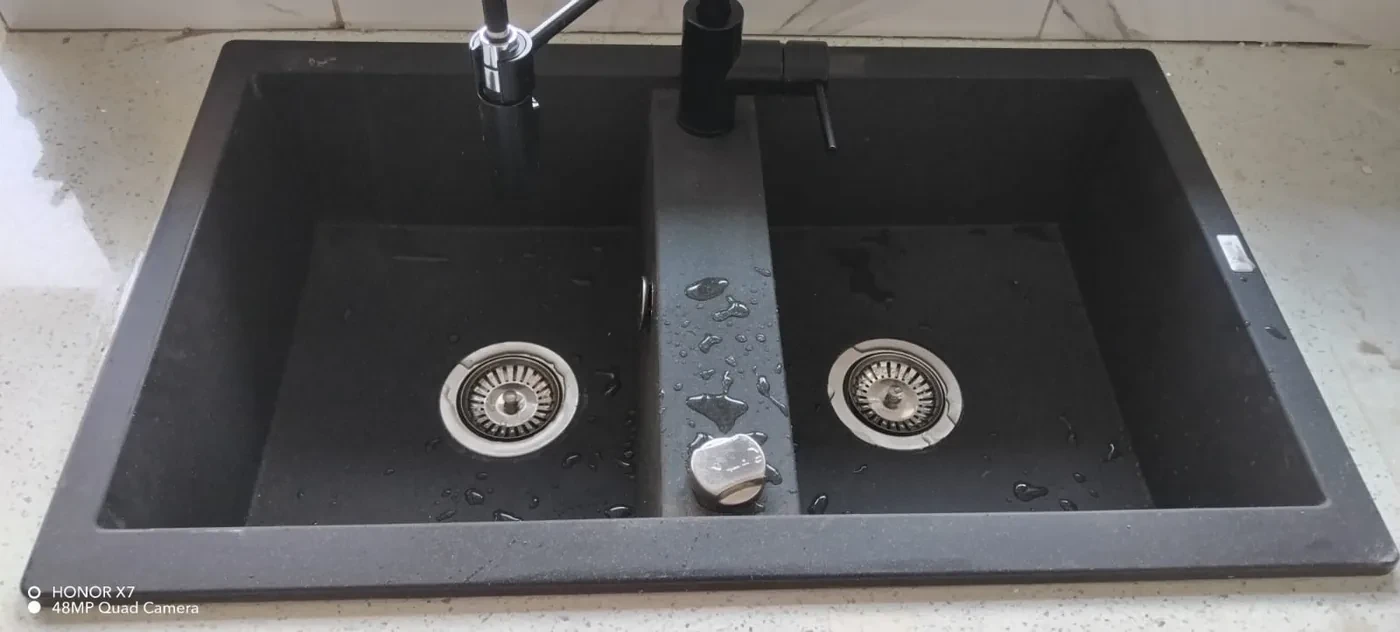
Planning kitchen fitting upgrades around water use
We install kitchen sinks, mixers and the water and waste connections around them. When water efficiency is the goal, we discuss the selected tap specifications, available pressure and how the kitchen is used. The quotation can include the fitting upgrade, repairs to leaking connections and any agreed alterations beneath the sink.
Why Water Saving Plumbing Fixtures Matter in South Africa
Cape Town’s stepped tariff structure shows exactly what’s at stake financially. Households consuming above a base threshold pay progressively higher rates per kilolitre, meaning a high-flow showerhead or a single-flush toilet doesn’t just waste water; it pushes the entire household into a more expensive pricing band. The same dynamic applies in Johannesburg, Tshwane, and eThekwini, where tiered tariffs reward low-consumption properties and penalise high-usage ones.
For commercial properties, office blocks, guesthouses, schools, and retail centres, the maths is even more compelling. High occupancy means high throughput across every tap, shower, and toilet. Water usage reduction fixtures translate directly into lower operating costs, and the payback period on an upgrade shortens the more people use the building. For more background, read Old Copper Pipes or Modern Plastic Plumbing?.
Fixture upgrades are also among the least disruptive water-saving interventions. Unlike rainwater harvesting or solar installations, many water efficient upgrades require no structural work and can be completed in a single visit.
Types of Water Efficient Fixtures: What’s Available in 2026
The South African market now offers a mature range of water-saving options across every fixture category. Choosing the right combination depends on your existing plumbing, water pressure, and consumption profile. For more background, read Burst Pipe Repair Costs in South Africa.
Low-Flow Shower Heads and Aerator Tap Options
A standard showerhead flows at 12–15 litres per minute. A WELS-rated low-flow model delivers a satisfying shower at 6–8 litres per minute, roughly half the water for no noticeable drop in experience, provided household pressure is adequate. When evaluating products, look for models that carry a water efficiency rating and confirm the minimum operating pressure on the packaging; South African municipal pressure varies significantly by area, and a low-flow head designed for high-pressure systems will underperform on low-pressure supply. Water pressure problems in South African homes are common enough that this check should happen before you buy.
Aerator tap installation is arguably the most overlooked water-saving intervention in South Africa. A tap aerator, a small mesh insert that mixes air into the water stream, costs between R30 and R80 at most hardware retailers. It can reduce a standard basin tap’s flow from over 12 litres per minute down to 4–6 litres per minute, with no meaningful change to the user experience. Most standard basin and kitchen taps have threaded spouts that accept a screw-in aerator. It is a genuine DIY task requiring no tools beyond possibly a cloth to protect the chrome finish. Always address any underlying leaks first, though, fixing a leaky tap before fitting an aerator ensures the upgrade actually delivers the savings it promises. For more background, read What are the dangers of standing water from leaks?.
Water Efficient Toilet South Africa: Dual-Flush and Low-Flow Models
Older South African properties frequently have single-flush cisterns that use 9–11 litres per flush. Toilets typically account for 30–40% of household water consumption, so this is a significant source of waste. Replacing a legacy cistern with a dual-flush unit (typically 3 litres for liquid waste, 6 litres for solid) is one of the fastest-payback upgrades available, based on field experience from plumbers working across residential renovation projects.
The distinction between dual-flush and standard low-flow matters. A low-flow toilet uses a fixed, reduced volume per flush, commonly around 6 litres, which is a meaningful improvement over 9–11 litre cisterns but less flexible than dual-flush. Dual-flush gives users control over each flush event, so actual savings depend partly on usage behaviour. For high-occupancy commercial settings where usage patterns vary, dual-flush typically delivers better real-world results.
When sourcing a water efficient toilet in South Africa, check for SANS 1631 compliance, which sets minimum performance standards for flushing performance. A cistern that saves water but requires a second flush defeats the purpose.
Greywater System Plumbing: Capturing and Reusing Household Water
Greywater is wastewater from baths, showers, basins, and laundry, everything except toilet waste, which is classified as blackwater. Greywater system plumbing captures this relatively clean water before it exits the property and redirects it for toilet flushing or garden irrigation, reducing demand on the potable supply for tasks that don’t require treated water.
How Greywater Systems Work in a South African Home
Systems range considerably in complexity. At the simplest end, a diverter kit redirects the outlet from a washing machine or bath drain into a collection tank or directly to garden irrigation. These require no connection to the main drainage stack and are within DIY capability for a competent homeowner.
More comprehensive systems include filtration stages (mesh filters, settling chambers, and sometimes UV treatment) and pump-driven distribution to toilet cisterns or irrigation lines. These involve connecting to existing drain pipework and often require rerouting pipes inside wall cavities. Under South African regulations, any work that connects to or modifies the main drainage stack must be carried out by a licensed plumber. The National Building Regulations and related standards require that greywater systems do not risk cross-contamination with the potable supply, backflow prevention is a non-negotiable element of any compliant installation.
Greywater reuse is legal in South Africa subject to compliance with local authority bylaws, which vary by municipality. Cape Town has published guidelines encouraging greywater reuse for irrigation during restriction periods. Before installing any system beyond a simple diverter, confirm your municipality’s current requirements.
Installation Complexity and Plumbing Upgrade Cost
Understanding installation complexity helps you budget accurately and decide when to call a professional.
DIY vs Professional Installation: What’s Safe to Do Yourself
Aerator tap installation is fully DIY-friendly, it involves unscrewing the existing aerator (or fitting one where none exists) and threading in the new unit. No tools, no pipe work, no risk to the plumbing system.
Low flow shower head installation sits in a similar category for most properties. The showerhead connects to an existing arm fitting via a threaded joint. A thread tape re-seal and hand-tightening is generally sufficient. Where the shower arm itself is corroded or the connection type is non-standard, common in older South African homes, a plumber should assess before you force the fitting.
Toilet cistern replacement and greywater system plumbing both benefit from professional installation. Cistern retrofits involve water supply isolation, float valve adjustment, and ensuring flush volume compliance. Greywater systems that connect to drainage require licensed work. When to call a plumber instead of doing it yourself is a useful framework if you’re unsure where your project falls on that spectrum.
Low Flow Shower Head Installation and Aerator Tap Installation Costs
Product costs in South Africa in 2026 are roughly as follows: aerators run R30–R80 per unit; quality low-flow showerheads range from around R200 for basic models to R800–R1,500 for thermostatic or multi-setting units. Dual-flush toilet suites start around R1,500–R2,000 for entry-level SANS-compliant models and rise to R5,000–R10,000+ for designer or wall-hung configurations.
Professional installation costs are driven by three factors: labour rate (which varies by province and plumber tier), whether any pipe rerouting is required, and the product tier itself. A plumber fitting a pre-purchased showerhead typically charges a single callout and labour fee. A full greywater system installation with pipe rerouting, tank fitting, and pump connection represents a significantly larger work, with cost determined by a site-specific assessment. A bathroom renovation plumbing checklist can help you think through the full work before requesting quotes, so you compare like-for-like.
Pairing water-saving fixtures with improved hot water efficiency compounds the savings, geyser installation and hot water efficiency is worth reviewing if your geyser is ageing or oversized for your actual usage.
Water Usage Reduction Fixtures: Savings on Your Bill
Municipal water bills in South Africa typically include a consumption charge, a sanitation/sewer levy (often calculated as a percentage of consumption), and fixed charges. Water usage reduction fixtures reduce the consumption charge directly, and because sanitation levies track consumption, they reduce that line item too. Upgrading your fixtures can lower two separate line items on the same bill.
The payback period on fixture upgrades depends on how much water you currently use and how high your tariff band is. High-consumption households in Cape Town’s upper tariff steps, or commercial properties with many users, recover installation costs fastest. A guesthouse that replaces ten showerheads and fits aerators on twenty taps will see a materially faster payback than a single-person apartment making the same changes.
As a rough directional frame: replacing a 12 L/min showerhead with a 7 L/min model across a family of four using the shower daily removes a meaningful volume of water from monthly consumption, enough to affect which tariff tier the household sits in, which amplifies the saving beyond the raw litre reduction.
Choosing and Installing the Right Fixtures: Next Steps
Before purchasing any fixtures, assess your existing plumbing. Key questions: What is your current water pressure? Are your taps threaded for aerators? Are your cisterns single-flush? Is there an accessible drain pathway for a greywater diverter? A plumbing inspection before upgrading fixtures can surface compatibility issues before they become installation problems.
Most properties benefit from a layered approach: start with aerators (immediate, low-cost, zero-risk), add a low-flow showerhead, then assess toilet replacement and greywater options based on budget and usage patterns. Commercial facilities managers should prioritise high-traffic fixtures first, the volumes are highest there, so the savings are too.
Getting the fixture combination right for your specific property, pressure profile, pipe configuration, occupancy level, and local tariff structure, is where a qualified plumber adds real value beyond just fitting the hardware.
Contact the plumber-plumbers.co.za team to book a water-saving plumbing audit. We assess your current fixtures, identify the highest-impact upgrades for your property, and provide a clear quote for professional installation, so you know exactly what you’re spending and what you’ll save before any work begins.
Ready for expert plumbing help?
Contact us with context about water saving plumbing fixtures south africa: 2026 guide and we will advise on inspection or repair.