Properties across Gauteng rely on us for Trusted Geyser Plumbers in Gauteng that is explained clearly and finished properly. Free quotation before approved repair work, tidy workmanship, and a guarantee on completed repairs — available 24/7 when the problem cannot wait.
Tell us whether the problem is a visible leak, no hot water, water that runs cold too soon or a circuit that trips. Note where any discharge is coming from.
What should I be careful of?
Never plug a geyser discharge pipe or open electrical covers. Don’t climb into a roof space or repeatedly reset a circuit that keeps tripping.
Can I do anything useful now?
For an active geyser leak, switch off its electrical supply and close the cold-water feed only where both controls are safely accessible. Keep clear of wet ceilings.
What details should I send you?
Send the symptoms, visible leak position and model or capacity if you already have them. Tell us whether the geyser is in a roof space, cupboard or outside.
What happens next?
We check the fault and explain whether a component repair or geyser replacement makes sense. You approve the quotation before work starts, and the system is checked afterwards.
Get reliable hot water again
A geyser fault may involve the water connections, controls or heating components. We identify what has failed and explain the repair or replacement options, including the necessary plumbing and electrical work, before you approve the price.
Can you repair a mixer without replacing the whole tap?
Yes, if the body is sound and the right replacement part is available. We check whether the drip comes from the cartridge, a connection or the spout before quoting.
Why does a tap drip only when I move the handle or spout?
That pattern can help locate the leak around a moving seal or connection. Tell the plumber whether it also drips when the tap is completely off.
Can I get help if I don’t know where the water is coming from?
Yes. Tell us where the water first appeared and when you notice it. We check nearby supply pipes, waste connections and fixtures before deciding what needs opening.
Will you tell me what the job costs before you start?
Yes. We explain the repair and quote for it before starting. If the assessment reveals a different fault or more work, ask for the revised scope and price before approving it.
Can you repair a leaking tap without changing the whole mixer?
Often, yes. If the tap body and connections are sound, a worn seal or cartridge may be replaceable. We check the leak point and whether the correct part is available.
Can I use my own plumber if I’m claiming for a burst geyser?
Check with your buildings insurer before approving a replacement. Ask whether you can choose the plumber and what evidence your insurer needs. OUTsurance, for example, asks for a quote, a damage report and photos of the damaged geyser.
Should I ask for a plumbing Certificate of Compliance when replacing an electric geyser?
Yes. Ask before approving the quote whether the plumber will issue a PIRB Certificate of Compliance. PIRB’s issuing rules cover electric geyser replacements regardless of the cost.
◴
Fast ResponseHelp when it matters most.
24
Available 24/7Day or night, we’re ready.
◇
Trusted ApproachClear, honest and professional.
WHEN TO CALL
When a geyser problem needs professional attention
Some geyser problems begin with a small warning and become expensive when ignored. A local plumber can inspect the installation, trace the source of the symptom and determine whether a focused repair, safety correction or complete replacement is justified. Related professional help is available through Solar Geyser Repairs in Gauteng.
Water leaking from the geyser or ceiling
A drip from a ceiling, overflow pipe or geyser tray should never be treated as normal. The visible water may come from the cylinder, a valve, a connection, the discharge pipe or surrounding plumbing. We isolate the likely source before recommending work so that the repair addresses the actual failure. Related professional help is available through Reliable Geyser Repairs in Gauteng.
Where water has reached electrical fittings or the ceiling is bulging, switch off the geyser at the distribution board only if it is safe to do so, keep people away from the affected area and contact a plumber promptly. Related professional help is available through Professional Geyser Repair for Reliable Hot Water.
No hot water or inconsistent temperature
A geyser that produces no hot water, heats slowly or changes temperature unexpectedly may have an electrical component fault, thermostat issue, element problem, supply interruption or excessive hot-water demand. Proper testing prevents parts from being replaced merely because they are commonly associated with the symptom. For more background, read Why drain cleaning helps you stay healthy.
We explain whether the fault is isolated to the geyser or whether another part of the plumbing system may be affecting performance. Related professional help is available through Solar geyser systems and plumbing products.
Unusual noises, pressure or discharge
Banging, hissing, persistent overflow or unusual pressure changes can point to scale, valve problems, incorrect pressure control or installation defects. These symptoms deserve attention because the safety components around a geyser are designed to manage heat, pressure and expansion in a controlled way. Related professional help is available through Solar Geyser Repair.
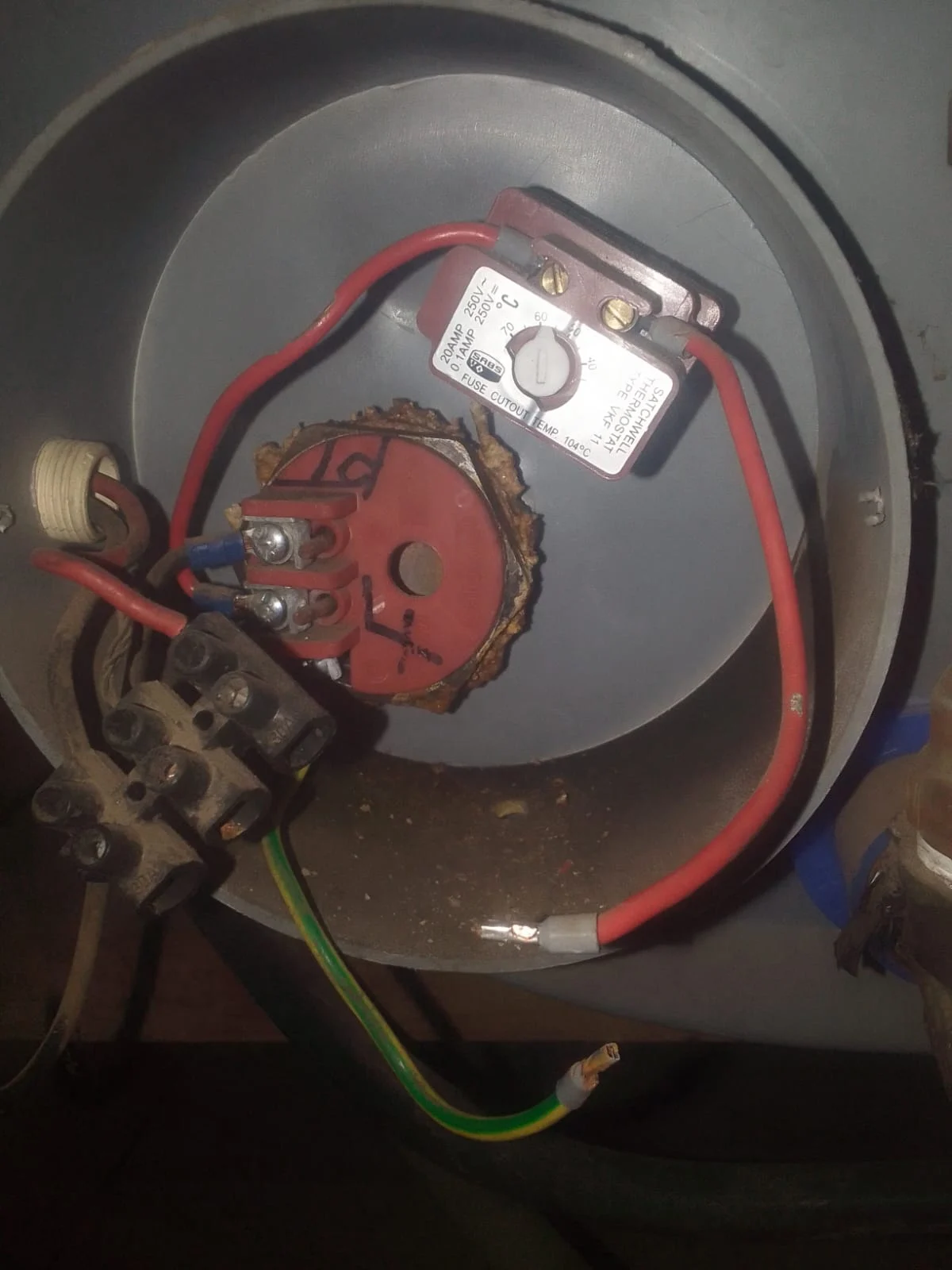
Geyser heating access flange and service components
Heating components, seals and electrical service connections have different functions within a geyser. An assessment identifies the affected part and checks related components before recommending replacement or repair.
Geyser heating access flange and service components
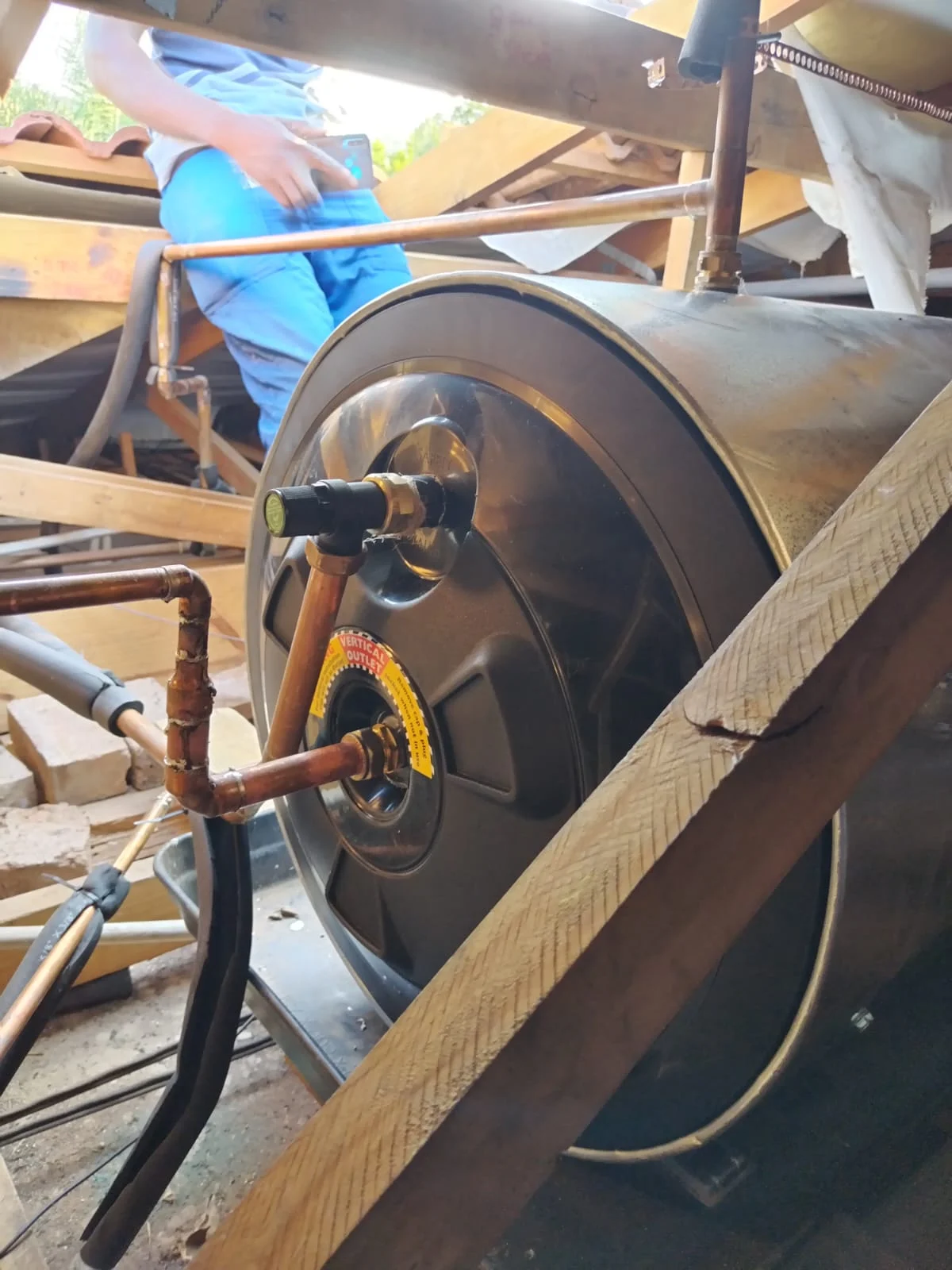
An exposed heating service area helps identify the component involved in an enquiry. Work on electrical components requires suitable isolation and qualified attention, followed by checks appropriate to the agreed repair.
REPAIR OR REPLACEMENT
A clear recommendation based on condition, safety and value
The best solution is not always the largest job. Our approach is to compare the condition of the cylinder, the age of the installation, the location of the leak, the availability of suitable parts and the cost of returning the system to reliable service.
When a targeted repair is sensible
A repair may be appropriate when the cylinder remains sound and the fault is limited to a serviceable component, fitting or connection. Replacing only what has failed can restore hot water efficiently and avoid unnecessary expense.
After the repair, the system should be refilled, checked and observed while operating so that the customer is not left with an untested installation.
When replacement offers better value
Replacement may be the safer long-term option when the cylinder itself has burst, corrosion is advanced, repeated failures are occurring or the installation no longer meets practical safety expectations. In these cases, repeated small repairs may delay an unavoidable replacement while increasing the risk of water damage.
We discuss capacity, location, access and household demand before recommending a new geyser.
Understanding the quotation
A useful quotation should make the work understandable. Customers should know whether the work includes the geyser, valves, fittings, pipe alterations, drip tray requirements, removal of the failed unit and testing.
Clear work helps prevent confusion between a low headline price and the complete cost of a safe, functional installation.
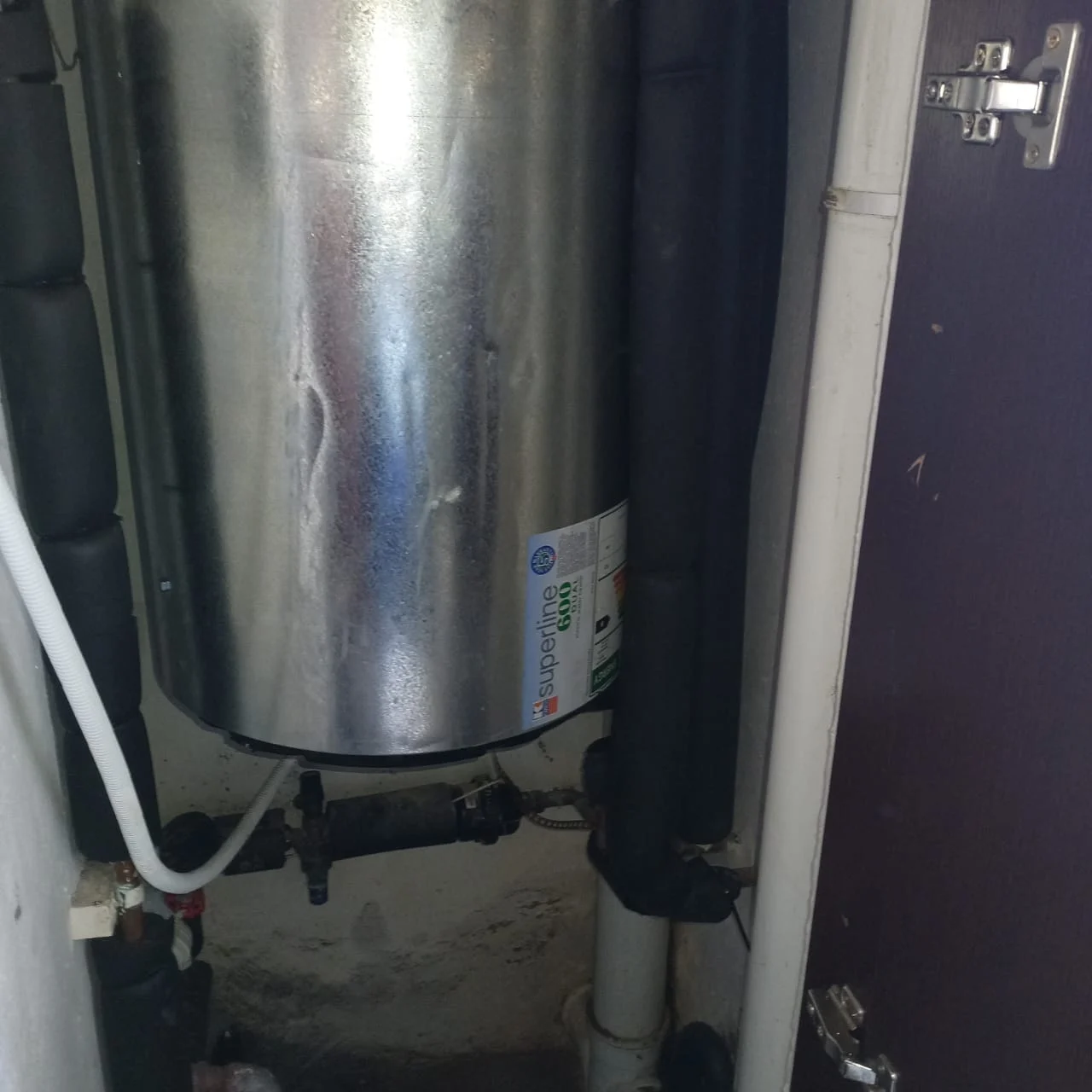
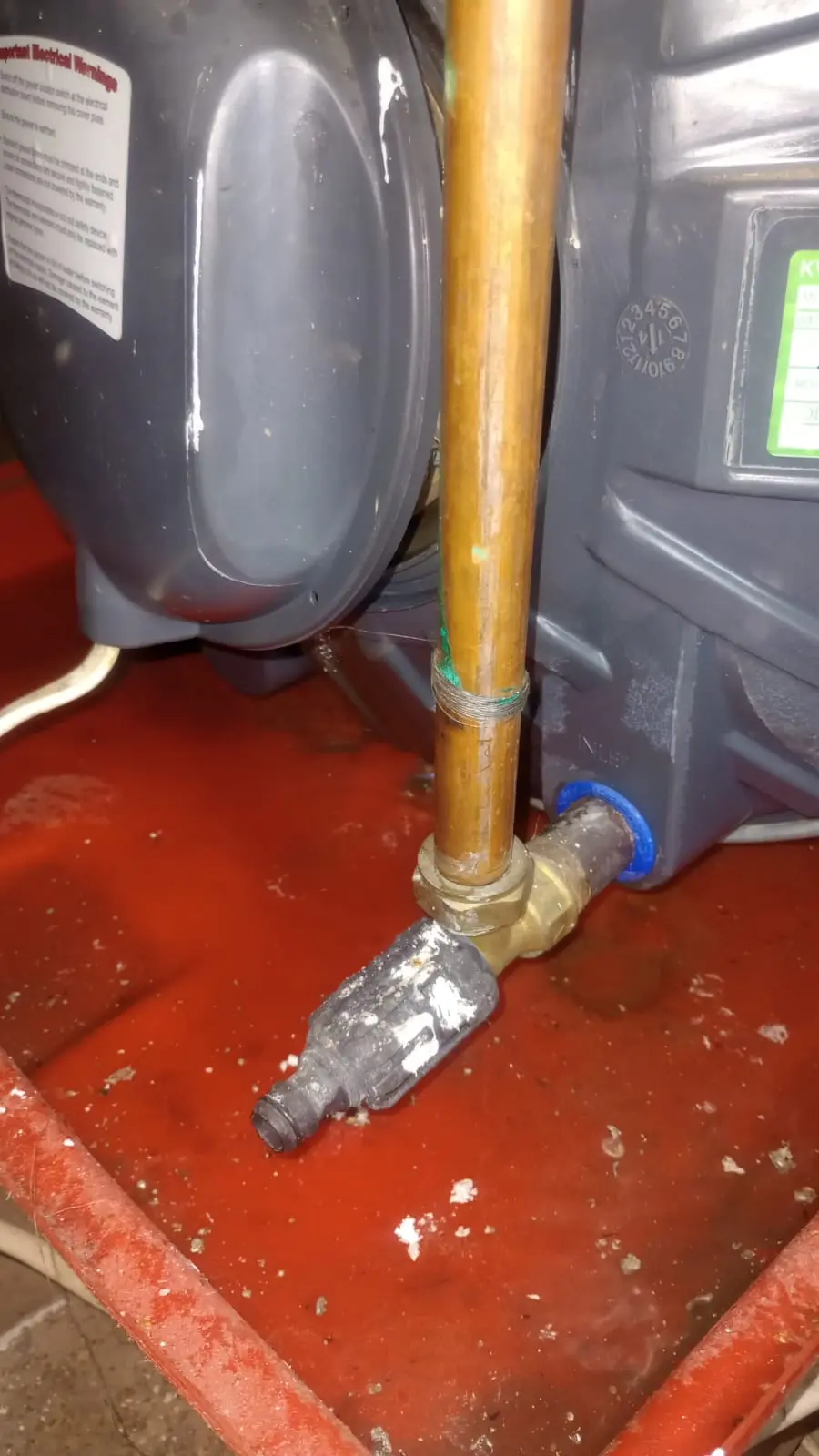
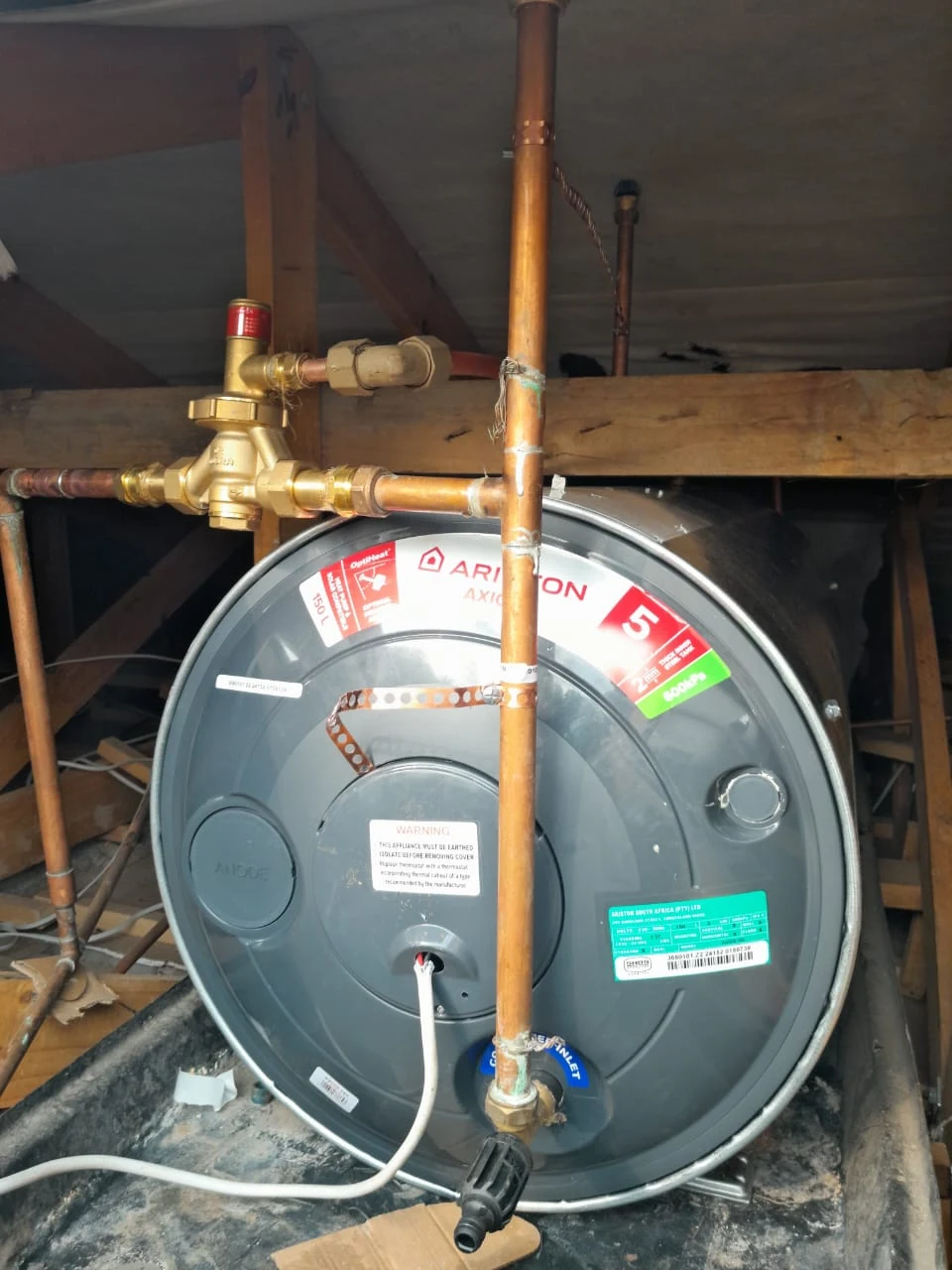
Hot water cylinder and installation pipework
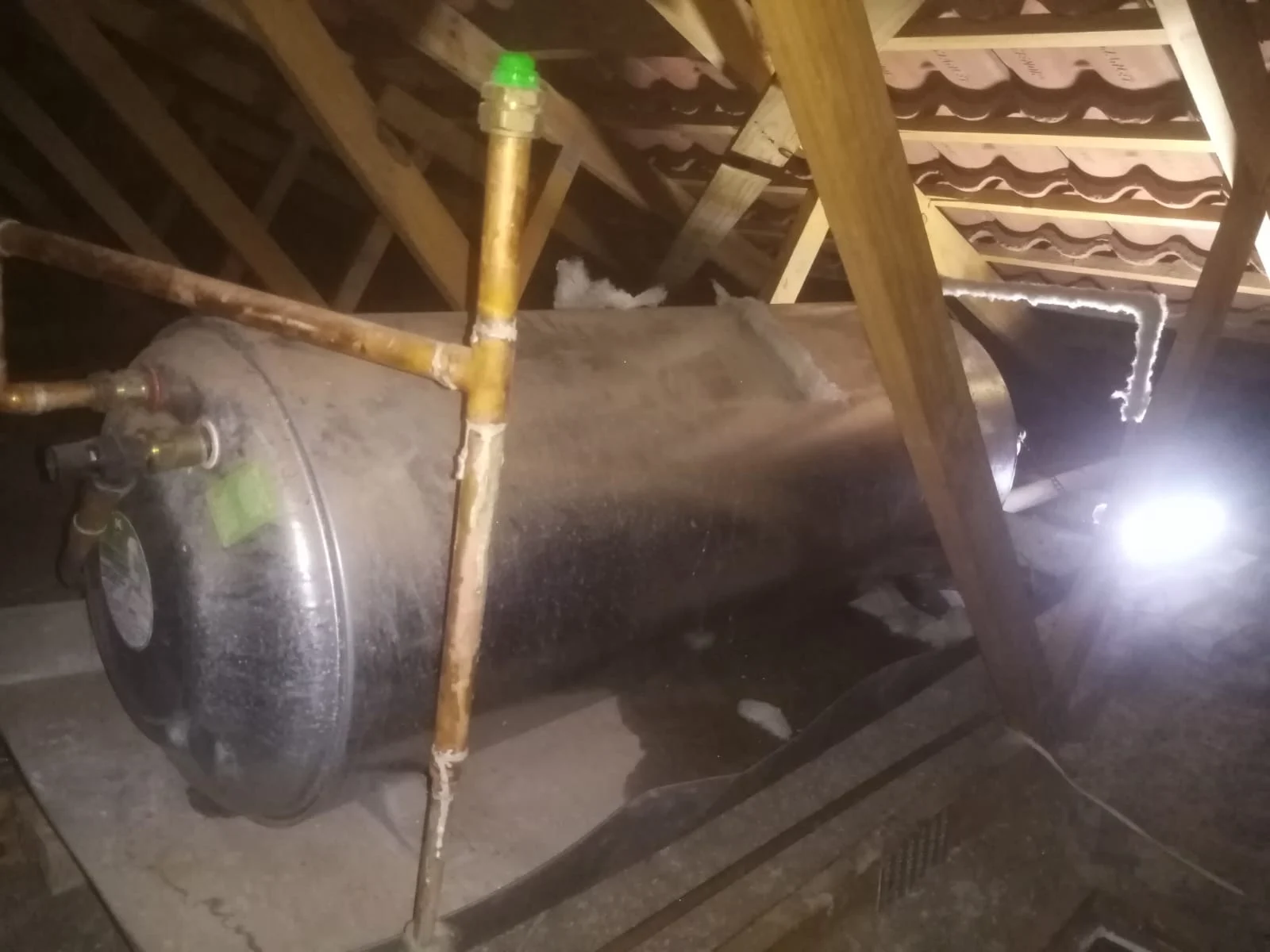
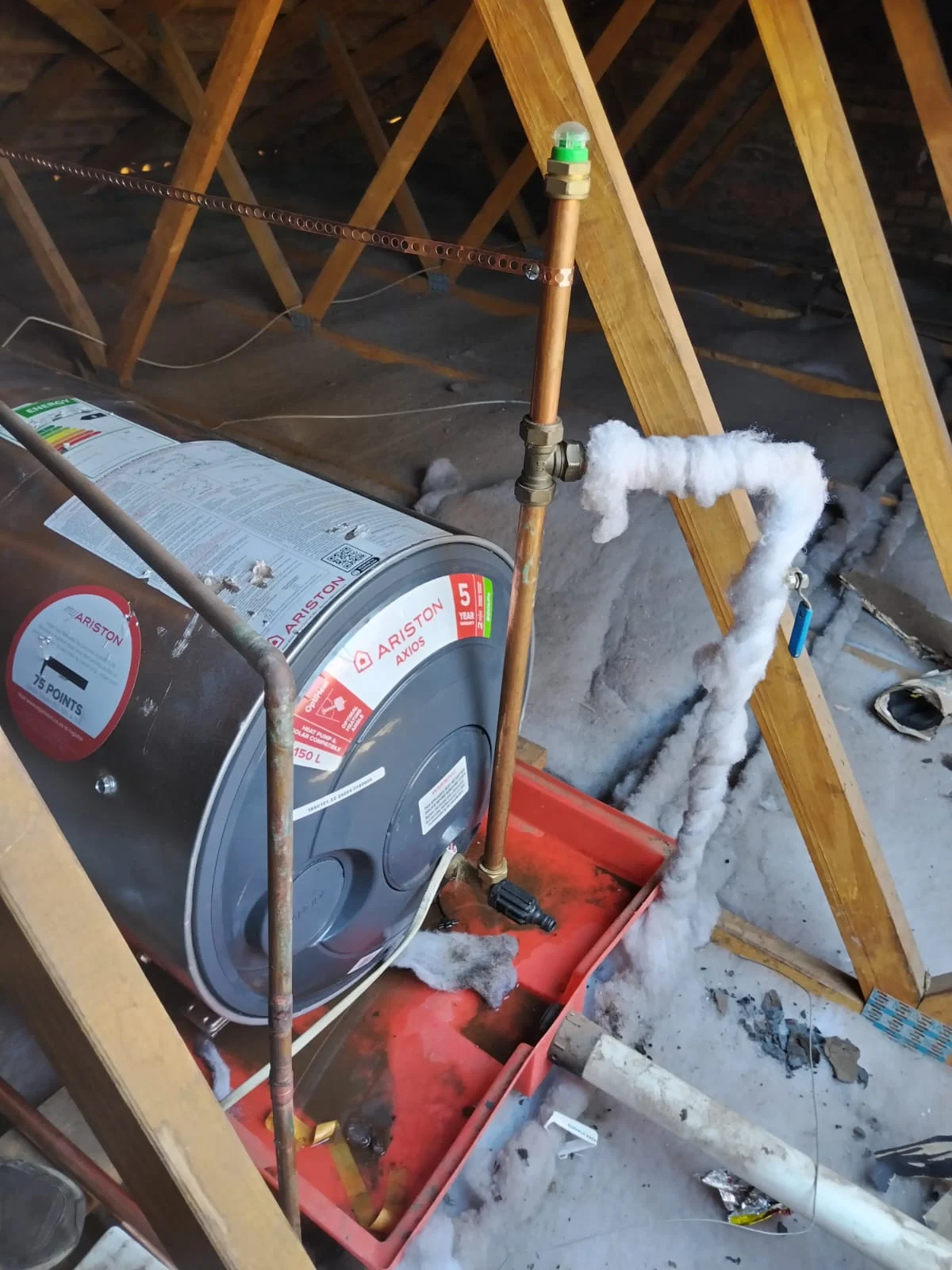
The cylinder, its connections and the available installation space need to be considered together. A photograph of accessible components helps explain the layout, while the condition of the system determines the work required.
Hot water cylinder and installation pipework
A hot water service assessment should include accessible water connections and the surrounding installation space. Report where water is visible and whether heating or supply has changed so the enquiry can be directed appropriately.
COMPLETE GEYSER SERVICE
More than simply changing a part
Reliable geyser work depends on diagnosis, safe isolation, correct installation and final testing. Each stage matters because a repair that appears successful while the plumber is present may fail again when the system reaches full temperature and pressure.
Inspection and fault confirmation
We start with the customer’s description and visible symptoms, then inspect the cylinder, valves, pipe connections, discharge arrangements and accessible electrical components. This creates a fuller picture of why the problem occurred.
Photographs and access information supplied before arrival can help the plumber prepare, particularly where the geyser is inside a roof, cupboard or difficult service area.
Careful repair or installation
Water and power are isolated before work begins. Components are selected to suit the installation, connections are completed carefully and surrounding pipes are supported rather than left under strain.
Where another defect is discovered, it is explained before additional work proceeds so that the customer remains in control of the decision.
Checking the repair
The system is refilled gradually, air is released, joints are inspected and hot-water operation is checked. Safety and discharge components are observed for obvious abnormal behaviour.
Before leaving, we explain what was done, what the customer should monitor and whether any follow-up work is recommended.
Hot water cylinder and installation pipework
The cylinder, its connections and the available installation space need to be considered together. A photograph of accessible components helps explain the layout, while the condition of the system determines the work required.
Geyser heating access flange and service components
An exposed heating service area helps identify the component involved in an enquiry. Work on electrical components requires suitable isolation and qualified attention, followed by checks appropriate to the agreed repair.
CHOOSING A LOCAL PLUMBER
What customers should expect from geyser plumbers near them
Being nearby is helpful, but professionalism matters more than distance alone. The plumber should communicate clearly, respect the property, protect the work area and give advice based on evidence rather than pressure.
Clear communication from the first call
Describe where the geyser is located, what you can see, whether hot water is available and whether water is actively escaping. A good service provider uses this information to judge urgency and prepare for access.
You should receive realistic guidance rather than guarantees made before the installation has been inspected.
Respect for your home or business
Geyser work often requires roof access, movement through occupied rooms or work above ceilings. Careful plumbers plan access, protect surfaces where practical and avoid unnecessary disturbance.
The work area should be left orderly, with removed components and packaging handled as agreed.
Advice that supports a lasting result
The plumber should be willing to explain why the fault occurred and what can reduce the chance of recurrence. That may include pressure control, pipe support, maintenance, replacement of aged components or correction of a poor previous installation.
Good advice gives the customer a basis for future decisions instead of leaving the repair unexplained.
WHAT HAPPENS NEXT
A straightforward process from first contact to restored hot water
The process is designed to help customers move from uncertainty to a practical solution without needing to diagnose the geyser themselves.
1. Tell us what is happeningShare the visible symptom, the geyser location, when the problem started and whether water or electricity has been isolated.
2. We assess the urgencyAn active leak, ceiling damage or electrical risk is treated differently from a geyser that is simply heating slowly.
3. The installation is inspectedThe plumber checks the cylinder and related components, confirms the likely cause and discusses the available options.
4. Approved work is completedThe repair or replacement proceeds according to the agreed scope, with careful isolation and installation.
5. The geyser is testedWater is restored, accessible joints are checked and the system is observed before handover.
6. You receive practical guidanceWe explain the completed work and any signs that should prompt further attention.
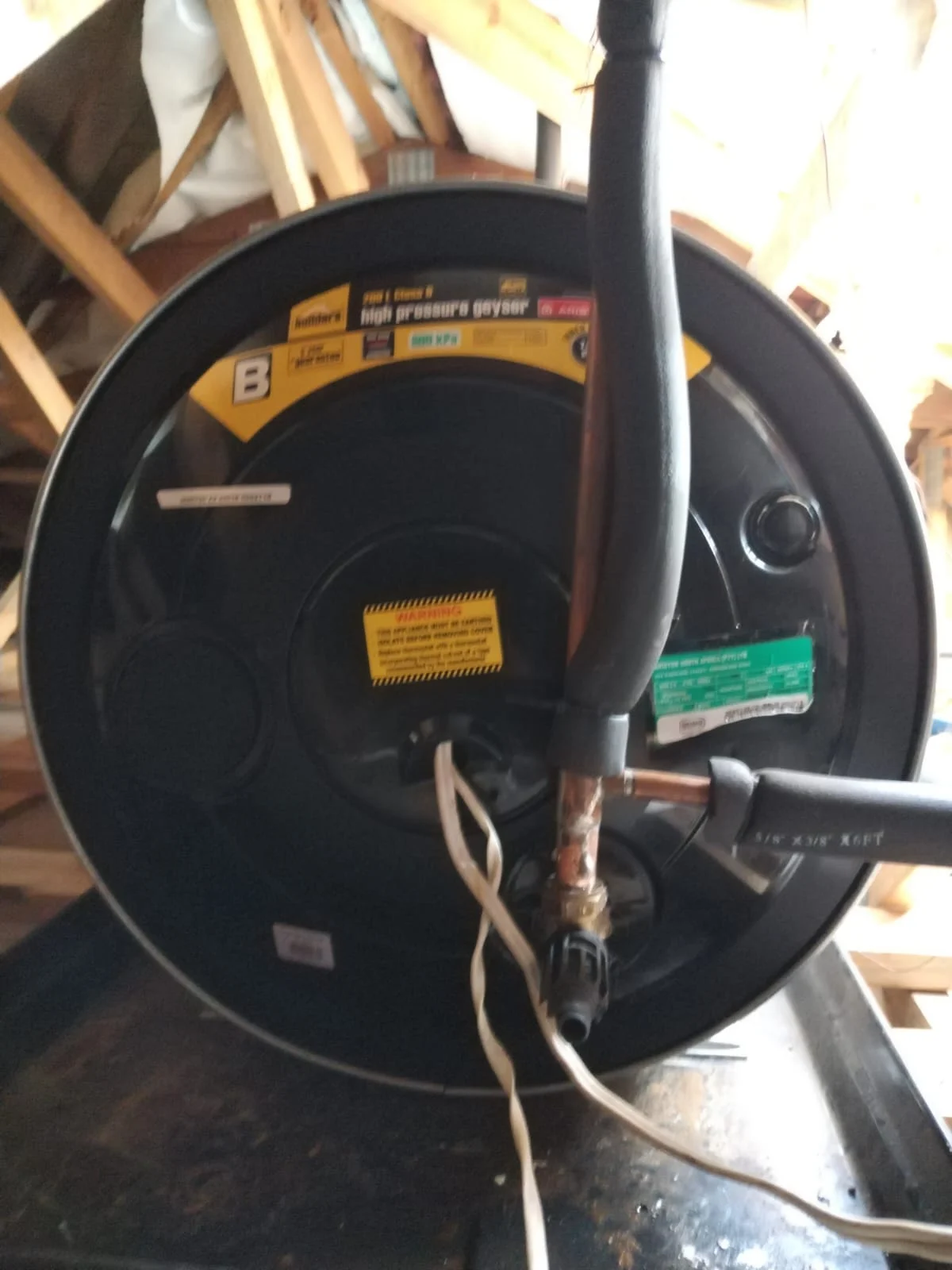
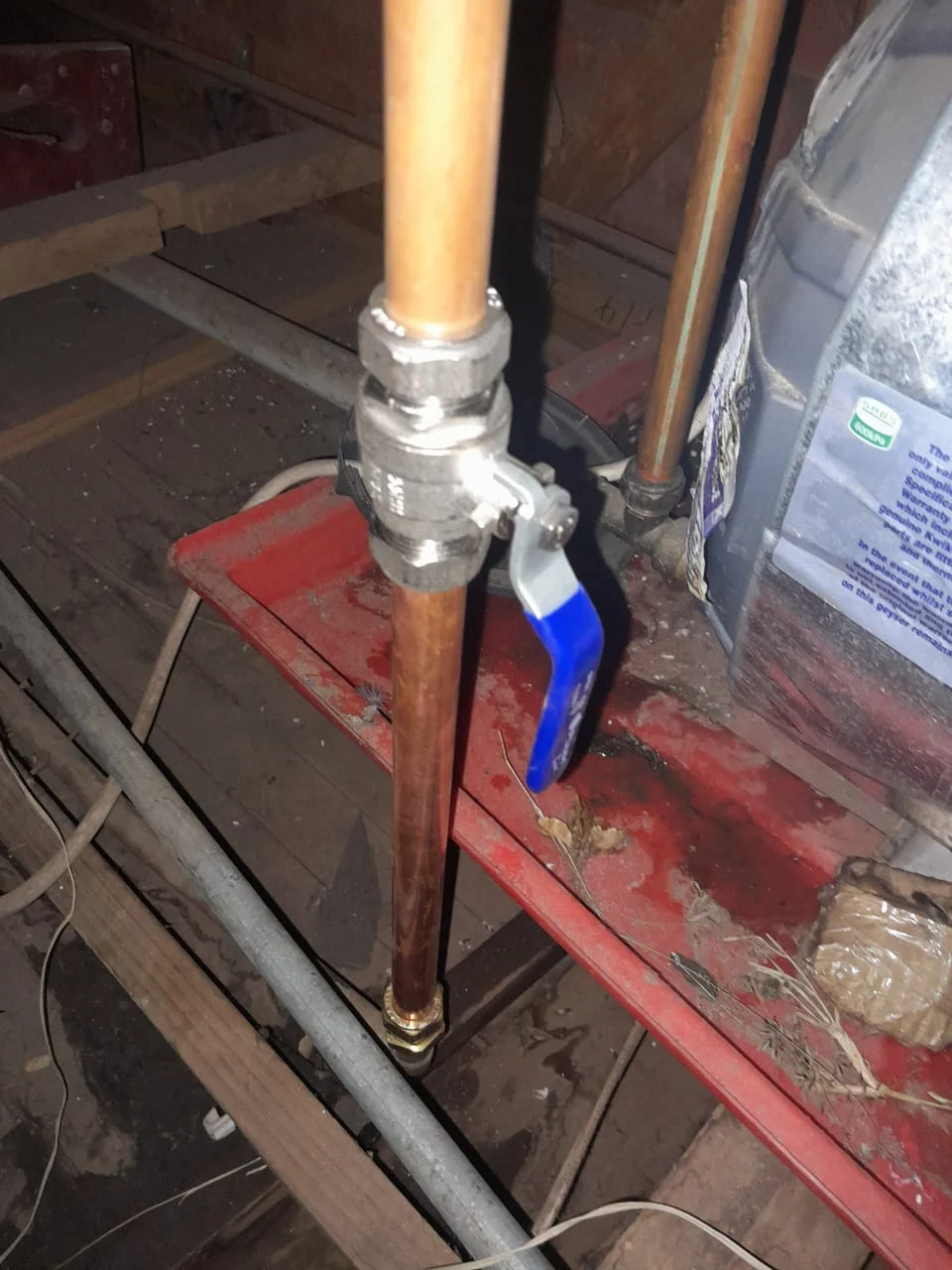
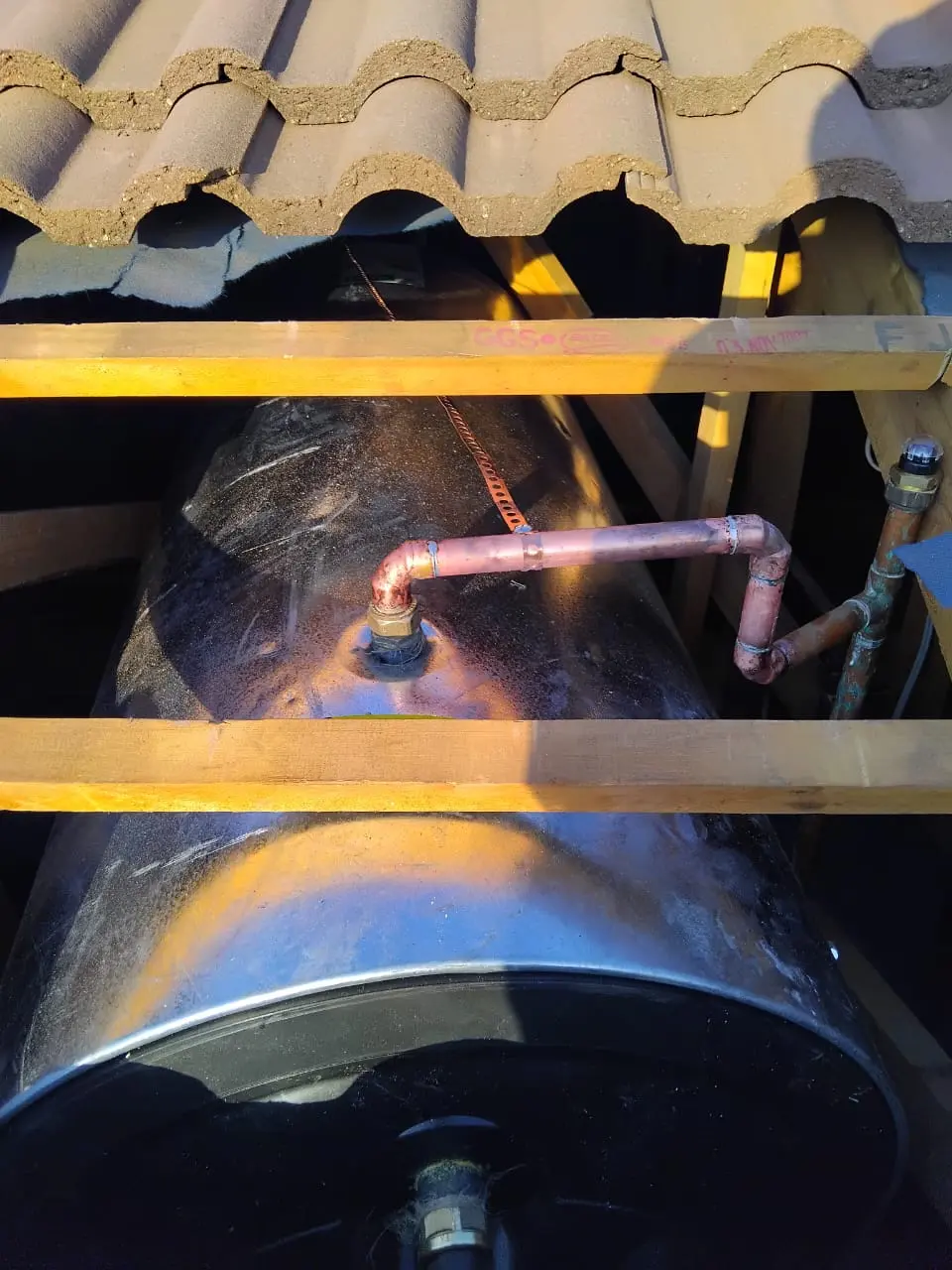
Copper geyser supply pipe and isolation fitting in a roof space
The cylinder, its connections and the available installation space need to be considered together. A photograph of accessible components helps explain the layout, while the condition of the system determines the work required.
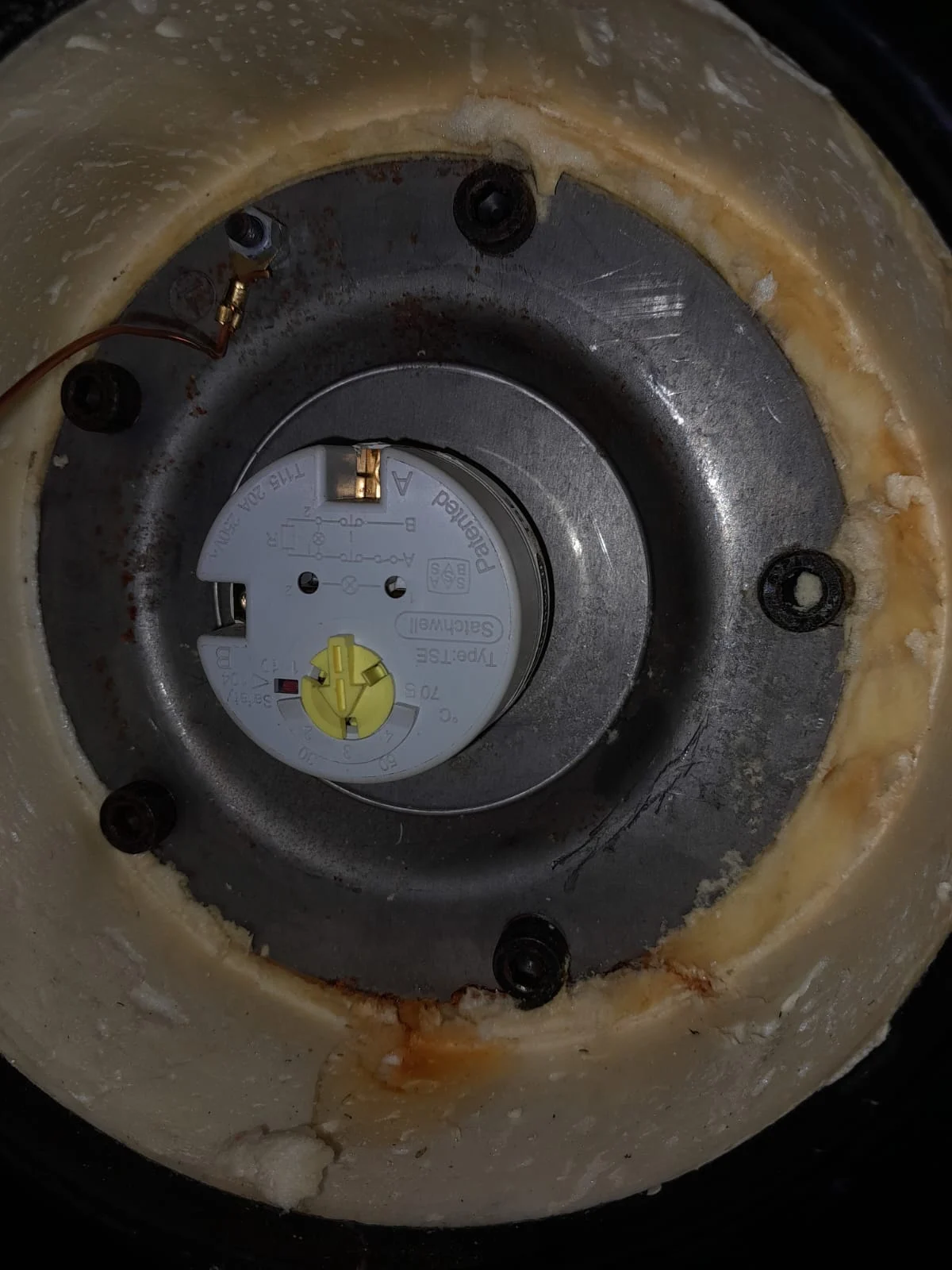
Geyser element flange and thermostat connection
An exposed heating service area helps identify the component involved in an enquiry. Work on electrical components requires suitable isolation and qualified attention, followed by checks appropriate to the agreed repair.
Need a geyser plumber to inspect a fault or restore hot water?
For active flooding, sewage exposure, failed isolation or water near electricity, call immediately. For a contained fault in your area, WhatsApp the location, a short description and a photo where practical. The call-out and quotation are free, and repair work only proceeds after the work and price are approved.
Helpful reading on Trusted Geyser Plumbers in Gauteng: warning signs, first-response steps, and what to expect from a professional visit. Save time, reduce damage, and know when to call 067 657 6109.
When it comes to household appliances, a geyser plays a crucial role in providing hot water for daily activities such as bathing, cleaning, and cooking.…
Geyser installation requirements South Africa: SANS 10254 standards, mandatory valves, venting, and support. Ensure compliance and avoid insurance claim rejections.
As energy costs continue to rise, many homeowners are seeking alternatives to reduce their utility bills and make their households more energy-efficient.…