
Check which other fixtures are affected. A basin that gurgles when the bath empties is worth mentioning because it can point beyond the bath itself.
Start here
Bath drain issues can often seem daunting, but before you panic, it's important to take a breath and assess the situation. Many minor problems can be resolved easily, without the need for professional intervention. Understanding how your bath drain operates can help you distinguish between a small annoyance and a significant plumbing problem. In many cases, a clogged drain or slow draining water can be resolved with simple home remedies or preventative measures.
What could be causing the problem?
The bath drain is a crucial element of your plumbing system, allowing wastewater to flow away from your bathtub. When this system is disrupted, it can lead to various issues, including slow draining, unpleasant odours, or even leaks. Understanding the mechanics of your bath drain will not only help you troubleshoot issues but also enable you to maintain it effectively. Bath drains typically consist of a drain cover, a trap, and a vertical pipe that directs water to the municipal sewer system. When any of these components malfunction, you may experience problems that require attention.
How to Recognise the Problem
Recognising bath drain issues early can save you time, money, and stress. Common signs of a problem include:
- Slow Drainage: If you notice that the water takes longer than usual to drain, it might indicate a blockage in the pipes.
- Unpleasant Odours: A foul smell emanating from the drain can be a sign of stagnant water or decomposing organic matter.
- Water Backflow: If water starts to backflow into the bath, it could mean that the drainage system is severely blocked.
- Visible Blockages: Sometimes, hair, soap scum, or other debris may be visible in the drain, indicating a potential blockage.
Common Causes
Bath drain issues can stem from a variety of causes. Here are some of the most common culprits:
- Hair: One of the leading causes of clogs in bath drains is hair, which can accumulate over time and create a significant blockage.
- Soap Scum: Soap residue can build up in the pipes, combining with hair and other debris to form a stubborn clog.
- Mineral Deposits: Hard water can lead to mineral build-up in the pipes, narrowing them and making clogs more likely.
- Foreign Objects: Items like toys, cotton swabs, or even jewellery can accidentally slip into the drain and cause a blockage.
What You Can Safely Check Yourself
Before calling a plumber, there are a few simple checks you can perform to diagnose bath drain issues:
- Inspect the Drain Cover: Remove the drain cover and check for visible blockages such as hair or debris. Use gloves to remove any obstructions you find.
- Check the Trap: If you’re comfortable, consider checking the drain trap. This U-shaped pipe can often hold debris that needs clearing.
- Run Hot Water: Sometimes, running hot water can help dissolve soap scum or grease that may be causing a blockage.
- Use a Plunger: A plunger can be effective for minor clogs. Ensure there’s enough water in the bath to cover the plunger for optimal suction.
What You Should Never Do
While it’s great to be proactive, there are certain actions you should avoid when dealing with bath drain issues:
- Don’t Use Harsh Chemicals: Drain cleaners often contain caustic chemicals that can damage your plumbing and the environment.
- Avoid Using Unqualified Tools: Using tools that you’re not familiar with can cause more damage than good. If you’re unsure, it’s best to call in a professional.
- Don’t Ignore the Problem: Putting off repairs can lead to more significant issues, including leaks or water damage, which can be costly to fix.
When to Call a Plumber
There are certain situations where it’s best to call in the experts. If you encounter any of the following, don’t hesitate to reach out to a professional:
- Persistent Clogs: If multiple attempts to clear a blockage have failed, it’s time to call a plumber.
- Backflow Issues: Water backing up into the bath is a sign of a serious problem and should be addressed immediately.
- Unexplained Leaks: If you notice water pooling around the bath or on the floor, it could indicate a leak that requires immediate attention.
- Multiple Drain Issues: If you’re experiencing problems in more than one drain in your home, this could indicate a larger plumbing issue.
How we can help
At Plumb A Nator, our team is equipped to handle all types of bath drain issues, from minor clogs to significant blockages. We employ a range of techniques, including:
- Professional Drain Cleaning: We use advanced tools and methods to effectively clear blockages without damaging your plumbing.
- Camera Inspections: Our technicians can conduct camera inspections to identify the root cause of persistent issues, ensuring we address the problem at its source.
- Regular Maintenance: We offer regular maintenance services to keep your plumbing system in peak condition, helping to prevent future problems.
Reducing the chance of another problem
Preventing bath drain issues starts with proper maintenance. Here are some effective strategies:
- Install Drain Screens: Using drain screens can help catch hair and debris before they enter the plumbing system.
- Regular Cleaning: Regularly cleaning your bath drain can help prevent build-up. Pouring hot water and vinegar down the drain every month can keep it clear.
- Avoid Flushing Non-biodegradable Items: Ensure that no foreign objects are entering the drain, as these can lead to blockages.
- Consider Water Softeners: If your area has hard water, installing a water softener can reduce mineral deposits in your plumbing.
Frequently Asked Questions
1. How can I tell if my bath drain is clogged?
Common signs include slow drainage, backflow of water, and unpleasant odours coming from the drain.
2. What is the cost of professional drain cleaning in South Africa?
The cost can vary based on the severity of the blockage and the techniques used, typically ranging from R500 to R1500. For a more accurate quote, contact our team.
3. Can I use boiling water to clear a clog?
In some cases, boiling water can help dissolve soap scum or grease. However, be cautious if you have PVC pipes, as extreme heat can damage them.
4. How often should I have my drains professionally cleaned?
It’s advisable to have your drains professionally inspected and cleaned at least once a year to prevent build-up and potential blockages.
Related Guides
Contact the Plumb A Nator team today. Call 067 657 6109.Need professional plumbing assistance?
Speak directly to our team for practical advice, a free quotation and help arranging the right plumbing service.
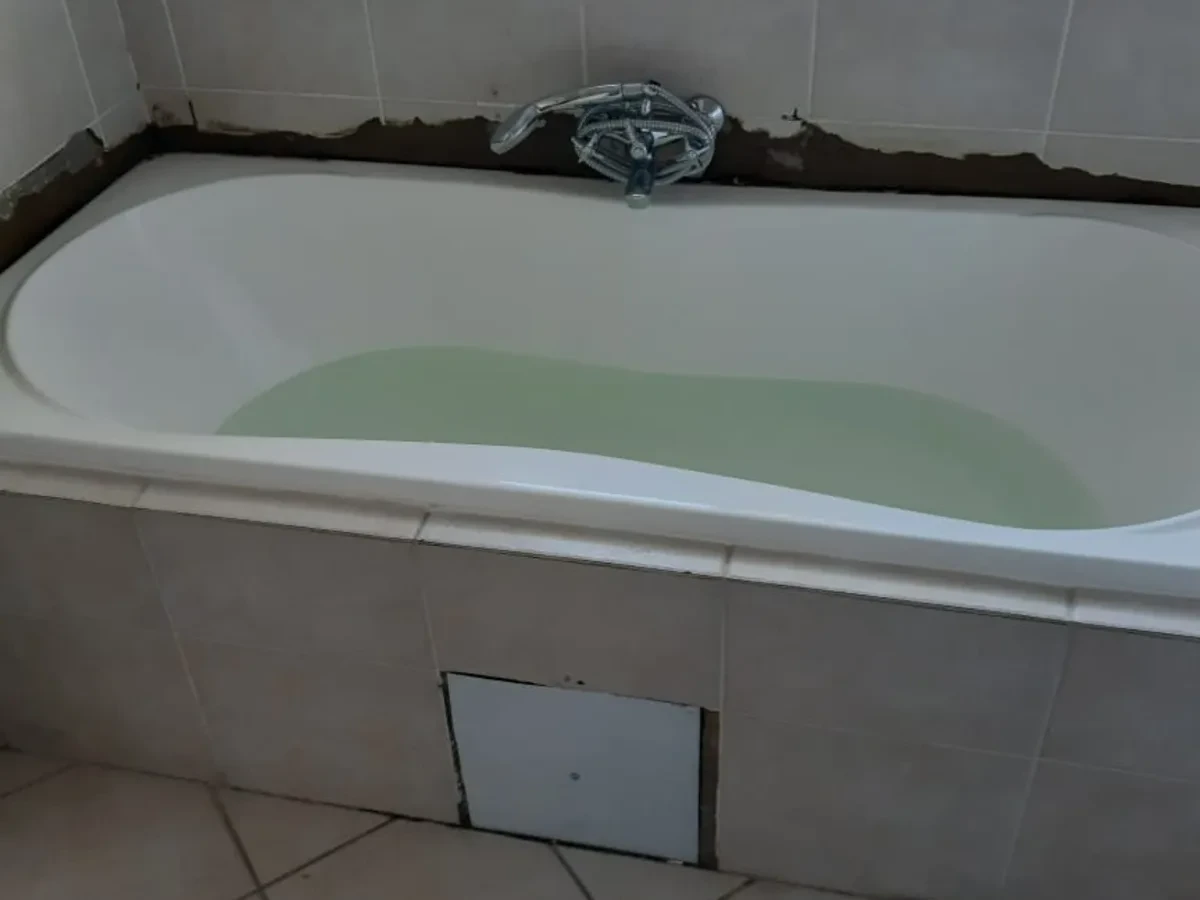
Reaching the bath trap without removing the whole apron
Our bath plumbing work includes reaching the trap and waste connection through an access panel like the one shown here. A slow bath may need the outlet cleared, while water beneath it can call for a waste-seal or trap repair. We check the fault, complete the plumbing work and drain the bath before closing the access; tiling and sealing can be included in the agreed reinstatement.